Tsum Valley Trek Guide 2027: 12-Day Itinerary and Permits

Tsum Valley Trek: Itinerary, Permits, Cost and Best Time (2027 Guide)

Last updated: 26 October 2026

Permit fees, trekking regulations, transport access and trail conditions may change. Confirm the latest information with Guru Travels and the relevant authorities before departure.

The Tsum Valley Trek is an 11–16-day guided journey into a remote Himalayan valley in northern Gorkha, Nepal, known for its Tibetan Buddhist culture, traditional villages and mountain scenery. The trek usually reaches Mu Gompa at approximately 3,700 metres and follows the Budhi Gandaki and Syar Khola valleys. Trekkers need a restricted-area permit, a Manaslu Conservation Area permit, a registered trekking agency and a licensed guide.

For travellers planning a trip in 2027, the best seasons are generally March to May and September to November. A 12-day itinerary is suitable for fit trekkers who want to explore Tsum Valley without crossing a high mountain pass, although the rapid increase in sleeping altitude means acclimatisation deserves careful attention.

Quick answer: Plan around 12 days for the standard itinerary, allow additional days for a more gradual pace or side trips, and confirm current permit fees, road access and trail conditions before departure. The actual cost depends on group size, transport, accommodation, meals and porter arrangements.

This guide is for international visitors, Nepal-based trekkers and travellers comparing guided Himalayan trekking packages. It explains the route, itinerary, permits, estimated costs, seasonal conditions, altitude risks and practical booking considerations using Guru Travels’ published trip itineraries as a planning reference.

This guide follows the 12-day Tsum Valley itinerary that Guru Travels publishes, compares it with longer versions, and sets out what the permits cost, who the trek suits and what to check before you book. Where sources disagree, we say so.

Key Takeaways: Planning the Tsum Valley Trek in 2027

  • Duration: Allow around 12 days for the standard Guru Travels itinerary, or 14–16 days if you want a slower pace and additional exploration.
  • Highest destination: Mu Gompa, approximately 3,700 metres above sea level.
  • Best seasons: March–May and September–November, subject to local conditions.
  • Permits: A Tsum Valley restricted-area permit and a Manaslu Conservation Area permit are required.
  • Guide requirement: Book through a registered trekking agency with a licensed guide.
  • Budget: Use published market prices only as an initial estimate; request a current, itemised quotation.
  • Main health consideration: Plan for gradual acclimatisation and recognise symptoms of altitude sickness.
  • Before travelling: Confirm road access, bridges, trail conditions, insurance coverage and permit requirements.

Planning recommendation: This trek is best suited to travellers who value traditional Himalayan culture, working monasteries and quieter trails more than luxury accommodation. If you are concerned about altitude or prefer shorter walking days, discuss a longer itinerary with your trekking agency.
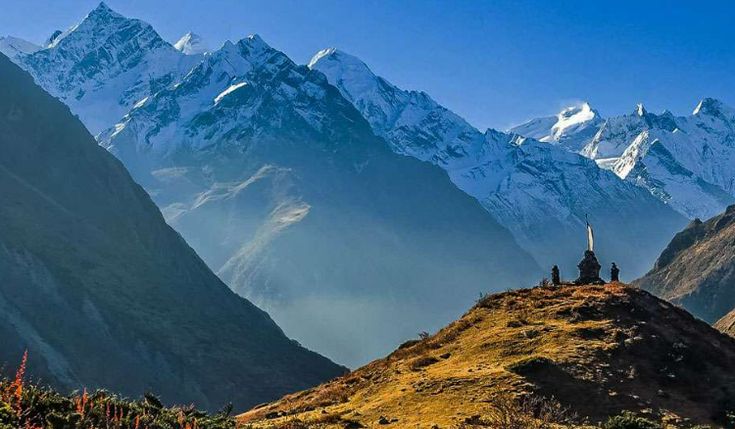
Tsum Valley trek


Tsum Valley Trek at a Glance

Item Detail
Location Tsum Valley, Gorkha District, Gandaki Province, in the Manaslu Conservation Area
Typical length 11 to 16 days from Kathmandu. Guru Travels’ published itinerary is 12 days.
Highest point Mu Gompa, about 3,700 m. A side trip to Ganesh Himal Base Camp on longer itineraries reaches about 4,200 m.
Trek starts at Machha Khola, after an 8 to 10 hour drive from Kathmandu
Difficulty Moderate but demanding: long walking days, steep sections, little acclimatisation on short itineraries. No technical ground and no high pass.
Permits Tsum Valley restricted area permit, Manaslu Conservation Area permit, arranged by a registered agency
Guide Licensed guide required. Independent trekking is not allowed.
Best seasons March to May and September to November
Lodging Basic teahouses and homestays
Related Guru Travels trips Tsum Valley Trek 12 Days; Manaslu Tsum Valley Trek 19 Days; Scenic Manaslu Circuit Trek 14 Days

Who Should Use This Tsum Valley Trek Guide?

This Tsum Valley Trek guide is for international tourists visiting Nepal, Nepal-based trekkers, cultural travellers interested in Tibetan Buddhist heritage, and adventure travellers comparing guided Himalayan trekking packages. It is designed to help travellers make informed decisions before booking a trekking holiday with a Nepal travel agency.

When Should You Use This Guide?

Use this guide when researching the Tsum Valley Trek, comparing itineraries, preparing a travel budget, choosing a trekking season or checking the requirements for a restricted-area trekking permit.

  • For first-time Himalayan trekkers: Understand the walking duration, trail difficulty, sleeping altitudes and preparation required before choosing this route.
  • For experienced trekkers: Compare the Tsum Valley-only itinerary with longer routes that combine Tsum Valley and the Manaslu Circuit.
  • For cultural travellers: Learn about traditional villages, Tibetan Buddhist monasteries, local customs and responsible travel practices.
  • For travellers planning a 2027 holiday: Compare spring and autumn travel windows, estimate costs and confirm current road access and permit requirements.
  • For families and private groups: Discuss walking ability, group size, accommodation preferences and a suitable pace with a registered trekking agency before confirming a departure.
  • For travellers comparing trekking companies: Review what is included in a package, including permits, licensed guides, transport, meals, accommodation and porter services.

Which Tsum Valley Trek Is Right for You?

The standard 12-day Tsum Valley Trek is a useful starting point for travellers who want to explore the valley without crossing a high mountain pass. A longer itinerary may be more suitable for trekkers who prefer additional acclimatisation time, cultural visits or side trips. Travellers seeking a more demanding Himalayan journey can compare the 19-day Manaslu Tsum Valley combination.

As a Nepal-based travel and trekking operator, Guru Travels provides itinerary information to help visitors compare available options and plan their trip. Before booking, request a personalised quotation and confirm the current permit rules, route conditions, accommodation arrangements and services included in the package. The best itinerary depends on your travel dates, budget, fitness, previous trekking experience and preferred pace.
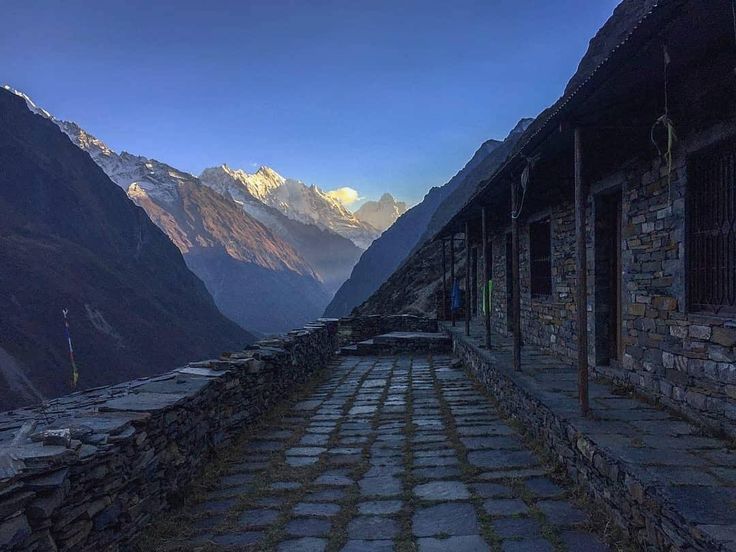
Tsum Valley trek

Why Trek in Tsum Valley?

Tsum Valley lies between the Ganesh Himal and Sringi Himal ranges, close to the Tibetan border. Local tradition describes it as a beyul, a hidden valley held as a place of spiritual refuge in Tibetan Buddhism. It opened to trekkers only in the late 2000s (sources give 2007 or 2008), so it still sees far fewer visitors than the Everest or Annapurna routes.

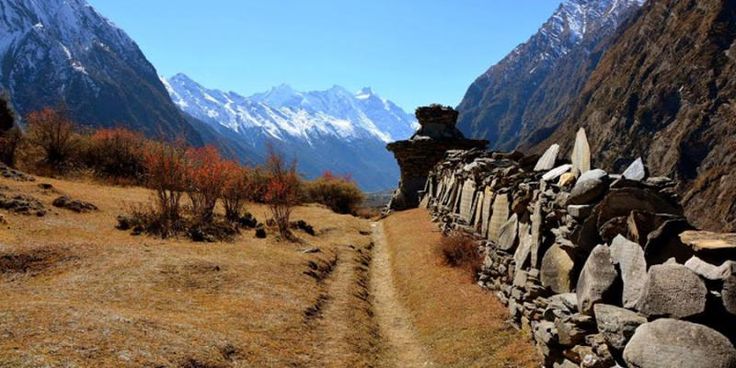
  • Living culture. The Tsumba people, who speak a dialect of Tibetan origin, keep working monasteries, mani walls (stone walls carved with prayers) and chortens (Buddhist shrines) in daily use.
  • Named sites. Rachen Gompa is a nunnery near Chhokangparo that many itineraries visit. Milarepa’s cave (Piren Phu) is linked by tradition to the Tibetan yogi Milarepa. Mu Gompa sits at the head of the walk.
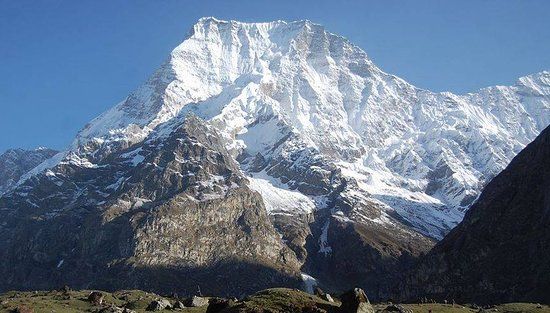
  • Mountain views without a pass. Ganesh Himal, Sringi Himal and Boudha Himal appear along the upper valley, and the route needs no high-pass crossing.
  • A quieter trail. Villages are small and lodges are simple, which suits travellers who want culture over comfort.

Tsum Valley Trek Itinerary (12 Days)

The table follows the 12-day itinerary on the Tsum Valley Trek 12 Days trip page. Times are estimates for a fit trekker and change with weather, trail and road conditions.

Day Route Sleep at (approx. m) Time
1 Kathmandu to Machha Khola by road via Arughat and Soti Khola Machha Khola 870 Drive 8 to 9 hours
2 Machha Khola to Jagat, past the Tatopani hot spring Jagat 1,340 6 to 7 hours
3 Jagat to Lokpa via Philim; the Tsum trail splits from the Manaslu Circuit trail near Lokpa Lokpa 2,240 6 to 7 hours
4 Lokpa to Chumling, crossing the Syar Khola Chumling 2,386 5 to 6 hours
5 Chumling to Chhokangparo, into the upper valley Chhokangparo 3,010 5 to 6 hours
6 Chhokangparo to Nile, passing Milarepa’s cave Nile 3,361 5 to 6 hours
7 Nile to Mu Gompa and back to Nile Nile 3,361 (Mu Gompa 3,700) 6 to 7 hours return
8 Nile to Ripchet Ripchet 2,470 6 to 7 hours
9 Ripchet to Philim Philim 1,570 6 to 7 hours
10 Philim to Machha Khola Machha Khola 870 6 to 7 hours
11 Machha Khola to Kathmandu by road Kathmandu about 1,350 Drive 8 to 9 hours
12 Departure or free day in Kathmandu Kathmandu Flexible

Longer versions and side trips

Many operators run 14 to 16 days to add rest days and side trips. Common additions are an extra night at Mu Gompa, a stop at Rachen Gompa, and a side trip from Dumje via Gumba Lungdang to Ganesh Himal Base Camp at about 4,200 metres. Extra days also slow the return, which helps tired legs. If you would like a gentler pace, ask us whether a longer version can be arranged for your dates. Guru Travels also lists a 19-day Manaslu Tsum Valley Trek, covered below.
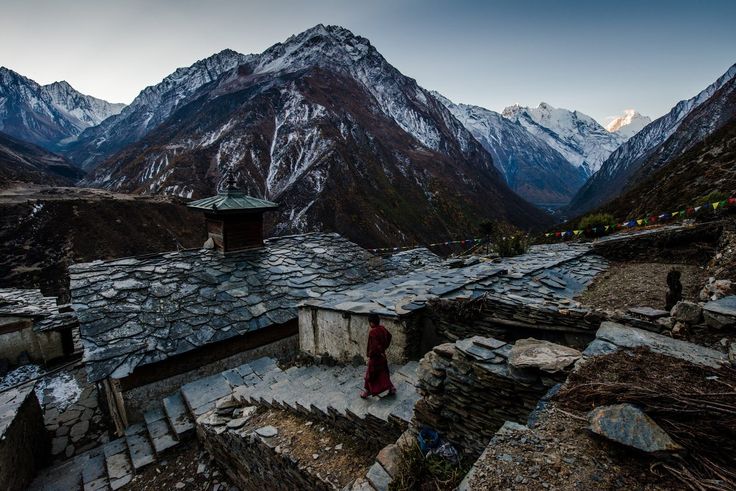
Tsum Valley trek

How This Tsum Valley Trek Guide Was Prepared

This guide is based on Guru Travels’ published Tsum Valley and Manaslu trekking itineraries, the route and altitude information presented in those itineraries, and the planning considerations relevant to restricted-area trekking in Nepal. It compares the 12-day Tsum Valley route with longer itineraries that combine the valley with the Manaslu Circuit.

Permit fees, transport access, accommodation availability and trail conditions can change between seasons. These details should be reconfirmed with the relevant authorities and local trekking team before departure. Any advertised prices are identified by their reference date and should not be treated as guaranteed 2027 rates.

For an individual trip, Guru Travels can prepare a route proposal based on the traveller’s available dates, fitness, group size and preferred pace. Actual departures remain subject to permits, access conditions and local safety advice.

How Much Does the Tsum Valley Trek Cost?

Advertised prices we saw on 16 October 2026 for guided departures of 10 to 16 days from Kathmandu ranged from about USD 800 to about USD 2,100 per person. One operator’s three service tiers ran from USD 999 to USD 2,499. Those are advertised prices, not what travellers necessarily paid.

The main things that move the price are:

  • group size, since guide and vehicle costs are shared
  • transport: public bus or private jeep between Kathmandu and Machha Khola
  • porters: one per trekker, one per two trekkers, or none
  • meals included on the trek and the standard of the Kathmandu hotel
  • permit season and the number of days spent in the restricted area

Guru Travels’ price for the 12-day trek: [CONFIRM: insert current price or range, group size basis and what it covers]. See the live Tsum Valley Trek 12 Days page for departures and details.

According to the 12-day trip page, the package includes airport transfers, a standard Kathmandu hotel, the required permits, a licensed guide, porter service as per group size, transport between Kathmandu and Machha Khola, meals on the trek, teahouse or homestay lodging, taxes and service charges, and a first-aid kit. It does not include international flights, the Nepal visa, travel insurance, personal expenses, hot showers, charging and Wi-Fi, extra Kathmandu nights and meals, tips, or rescue costs. Check the live page for the final list.

Tsum Valley Permits and Guide Rules

Tsum Valley is a restricted area because it lies near the Tibetan border. The Department of Immigration issues the restricted area permit through registered trekking agencies, not to individuals. Your agency needs your passport details, photographs and itinerary, so send them early and allow several working days. Permits are checked along the route, including at Jagat.

Permit Fee Issued by
Tsum Valley restricted area permit USD 40 per person for the first 7 days from September to November; USD 30 from December to August; USD 7 per day after week one Department of Immigration, via your agency
Manaslu Conservation Area permit (MCAP) NPR 3,000 for foreign nationals; NPR 1,000 for SAARC nationals Manaslu Conservation Area Project and Nepal Tourism Board, via your agency
Chumnubri local fee Reported as NPR 800 to NPR 1,000 Local authority, often collected at Jagat
TIMS card Sources conflict; one lists NPR 2,000, another says it is not needed Via your agency
Annapurna Conservation Area permit Normally only if you leave the Manaslu Circuit via Dharapani Via your agency


Fees can change by season, nationality and government decision. We checked these figures on 16 October 2026, and your quote should state the final amounts.

Can you trek Tsum Valley solo?

Not independently. On 22 March 2026 the Department of Immigration ended the rule that restricted area permits go only to groups of two or more, so a single traveller can now be issued one. The revised rules cover the Manaslu and Tsum Valley regions of Gorkha. The conditions remain: apply through a registered trekking agency, travel with a licensed guide, and keep groups to a maximum of seven trekkers per guide

Planning for spring 2027? Send us your dates, group size and fitness level, and we will prepare a personalised itinerary, current pricing and the latest route status. Contact Guru Travels


Best Time to Trek Tsum Valley

Season What to expect
March to May (spring) Clearer skies and milder days, with rhododendrons in the lower valley according to operators. Popular, so book early.
September to November (autumn) Post-monsoon stability and long mountain views. The busiest window, and the restricted area permit costs more (USD 40 against USD 30 for the first week).
December to February (winter) Cold, with snow on the upper valley. One operator notes that many residents move to lower villages. Better for experienced, well-equipped trekkers.
June to August (monsoon) Rain, landslides and washed-out roads. Generally not advised. Flood and landslide risk also extends into the edges of the season, as 2026 showed.

Tsum Valley trek

How Hard Is the Tsum Valley Trek?

Most operators grade Tsum Valley as moderate, and one calls it strenuous. The 12-day plan is demanding because of consecutive walking days and little acclimatisation time. Expect 5 to 7 hours of walking on most days, steep sections above the river, suspension bridges and basic facilities. There is no technical climbing.

Altitude and acclimatisation

Altitude is the main risk. The table shows the gain in sleeping altitude on the published 12-day plan.

Night Sleeping altitude (m) Gain from previous night (m) Above 3,000 m?
Machha Khola 870 n/a No
Jagat 1,340 +470 No
Lokpa 2,240 +900 No
Chumling 2,386 +146 No
Chhokangparo 3,010 +624 Yes
Nile 3,361 +351 Yes
Mu Gompa (day visit) 3,700 +339 from Nile Yes


A widely used guideline for sleeping above 3,000 metres is to gain no more than about 500 metres a night and to rest every three to four days. The step from Chumling to Chhokangparo is about 620 metres, and the 12-day plan has no rest day. That is why some operators add a night at Mu Gompa. Speak to a travel-medicine doctor before you go.

  • Symptoms to report to your guide at once: headache with nausea, dizziness, unusual tiredness, poor sleep or breathlessness at rest.
  • Rules to follow: do not climb higher while symptoms persist, and descend if they worsen.
  • Preparation: operators suggest one to two months of regular hill walking with a loaded daypack beforehand.

Lodging, Food, Transport and Connectivity

  • Lodging: teahouses and homestays with simple twin rooms. In busy periods you may share a dormitory. Hot showers, charging and Wi-Fi often cost extra and may be unavailable higher up.
  • Food: dal bhat (rice, lentils and vegetables), noodles, soups, Tibetan bread and potatoes. Vegetarian meals are the easiest to find. Treat all drinking water.
  • Transport: the drive from Kathmandu to Machha Khola takes 8 to 10 hours via Dhading Besi, Arughat and Soti Khola, and the road beyond Arughat is unpaved. After the October 2026 flood, reports said bridges near Soti and Machhakhola were damaged, so confirm road and bridge status before you book.
  • Connectivity and cash: mobile signal and Wi-Fi vary by village. Carry enough Nepali rupees for the whole trek, because there are no ATMs on the trail.

Culture, Monasteries and Responsible Travel

The monasteries in Tsum Valley are working religious places, not exhibits. Your guide will advise on local custom, and these habits help:

  • Walk clockwise around mani walls, chortens and prayer wheels, keeping them on your right.
  • Remove shoes and hats before entering a gompa (monastery) hall, and ask before taking photographs inside.
  • Ask permission before photographing people, including monks and nuns.
  • Dress modestly. Tight or revealing clothing can offend in these villages.
  • Carry your rubbish out, use refilled or treated water where possible, and spend money in local lodges and shops.

Packing and Preparation

  • Clothing: thermal base layers, fleece, down jacket, waterproof shell, trekking trousers, warm hat, sun hat, gloves and spare socks.
  • Footwear and gear: broken-in waterproof boots, camp shoes, 30 to 40 litre daypack with rain cover, trekking poles, headlamp, sleeping bag rated for cold nights (rental is often possible in Kathmandu).
  • Health and hygiene: personal medicines, blister kit, sunscreen, lip balm, wet wipes, toilet paper, water bottle with purification tablets or filter.
  • Documents and money: passport, photocopies, insurance policy, passport photographs, cash in rupees, power bank.

Buy or rent gear in Kathmandu only if you leave a day for it. Keep non-trek luggage at your hotel.

Safety and Travel Insurance

  • Insurance: buy before you leave home. The policy should cover trekking to at least the highest point of your itinerary, with a margin, and emergency helicopter evacuation. Ask your agency for its minimum. See Guru Travels’ insurance page.
  • Remote terrain: rescue depends on weather and flight access. During the October 2026 flood, rescues relied on army helicopters because the trail was cut.
  • Follow your guide: guides can change the day’s plan for weather, landslides or health. Their decision is part of what you pay for.

Tsum Valley or Manaslu Circuit?

Tsum Valley is a side valley. You do not need to walk the Manaslu Circuit to visit it, and the two routes share only the lower trail as far as Lokpa. The comparison below shows how the options differ.

Tsum Valley only Tsum Valley plus Manaslu Circuit Manaslu Circuit only
Guru Travels trip Tsum Valley Trek 12 Days Manaslu Tsum Valley Trek 19 Days Scenic Manaslu Circuit Trek 14 Days
Highest point Mu Gompa, about 3,700 m Larkya La pass, about 5,100 m (sources give 5,106 to 5,165 m) Larkya La pass
Difficulty Moderate, no pass Strenuous, crosses a high pass Strenuous, crosses a high pass
Restricted area permits Tsum Valley permit Tsum Valley and Manaslu permits Manaslu permit
Manaslu permit fee Not needed USD 100 per week (Sep to Nov) or USD 75 (Dec to Aug), then USD 15 or USD 10 per day Same as left
Suits Culture-first trekkers with under three weeks Fit trekkers with about three weeks who want both Trekkers who want the classic circuit and the pass

Trip pages: Tsum Valley Trek 12 Days, Manaslu Tsum Valley Trek 19 Days, Scenic Manaslu Circuit Trek 14 Days. For a Manaslu itinerary that adds the Rupina La pass, see the 17 Days Rupina La Pass Trek. Manaslu permit fees are from the same official fee table as the Tsum permit.

Tsum Valley Trek FAQs

How many days are needed for the Tsum Valley Trek?

Most guided itineraries take 11 to 16 days from Kathmandu. Guru Travels’ published plan is 12 days, including two days of driving. Longer versions add rest days and side trips.

Is the Tsum Valley Trek open now?

As of 16 October 2026 it is not recommended. A flood on 11 October damaged bridges, and the Manaslu Conservation Area Project advised trekkers to suspend journeys into the valley. We found no reopening date, so check with us before booking.

How difficult is the Tsum Valley Trek?

Moderate but demanding. There is no technical ground or high pass, but days of 5 to 7 hours, steep sections and sleeping at 3,000 to 3,400 metres require good fitness and care.

How much does the Tsum Valley Trek cost?

Advertised prices for guided departures of 10 to 16 days ranged from about USD 800 to about USD 2,100 per person on 16 October 2026. Guru Travels’ price: [CONFIRM].

What permits do I need for Tsum Valley?

A Tsum Valley restricted area permit (USD 40 for the first week from September to November, USD 30 from December to August) and a Manaslu Conservation Area permit (reported as NPR 3,000). Your agency arranges both.

Can I trek Tsum Valley without a guide?

No. Since 22 March 2026 one person can obtain a restricted area permit, but only through a registered agency and with a licensed guide.

What is the best month for the Tsum Valley Trek?

March to May and September to November. Winter is cold and the monsoon brings landslide risk.

Do I have to do the Manaslu Circuit as well?

No. Tsum Valley is a side valley and can be trekked on its own. A 19-day combination adds the Manaslu Circuit and the Larkya La pass; the circuit alone is the 14-day Manaslu Circuit Trek.

Is altitude sickness a risk in Tsum Valley?

Yes. You sleep above 3,000 metres from Chhokangparo, and Mu Gompa is about 3,700 metres. Ascend steadily, report symptoms early and do not climb higher while unwell.

What should I pack for the Tsum Valley Trek?

Layers, a down jacket, waterproof shell, broken-in boots, a daypack, headlamp, water purification, a warm sleeping bag, personal medicines, cash in rupees and your insurance papers.

Related Trips from Guru Travels

The first four trips use the same lower Budhi Gandaki corridor as Tsum Valley, so check route status before choosing between them. Nar Phu Valley and Upper Mustang are in other regions with their own permits, seasons and access conditions.

Plan Your Tsum Valley Trek with Guru Travels

If you are considering Tsum Valley for spring 2027, tell us your dates, group size and fitness level. We will prepare a personalised itinerary, current pricing and the latest route status, and explain the permit steps. See the Tsum Valley Trek 12 Days trip page, or contact Guru Travels, or message us on WhatsApp at +977 9851334626.
Nepal Trekking Routes Open After Floods August 2026 | Full Status Guide

Which Nepal Trekking Routes Are Open After Floods August 2026 ? Full Route-by-Route Status

An up-to-date, region-by-region breakdown of every major Nepal trek and tour route — what’s open, what’s closed, and what to check before you book or depart, following the August 26, 2026 flash flood in the Bhote Koshi–Trishuli corridor. Updated September 1, 2026 with the Prithvi Highway closure at Krishnabhir.

Latest Update — September 1, 2026

A separate landslide on Aug 30 caused the Prithvi Highway to sink at Krishnabhir (Dhading), completely closing the Muglin–Kathmandu section. Nepal’s Department of Roads says the slope is still active and a technical report on reopening is expected in the coming days — no timeline yet. This affects road transfers for Pokhara, Chitwan, Annapurna Circuit and Manaslu drive-ins, and Kathmandu–Bhairahawa road routes — fly where possible, or expect long detours via the Tribhuvan Highway or Hetauda–Kulekhani–Pharping road.

TAAN (Trekking Agencies’ Association of Nepal) has issued an official flood assessment confirming Everest, Annapurna, Manaslu, Kanchenjunga and Makalu trekking areas are unaffected, with only specific access roads needing a detour — see the TAAN summary below.

Nepal’s disaster authority reported nearly 1,000 confirmed deaths and thousands still missing as of Sept 1, with search and rescue ongoing; for verified ways to help, see our Flood Relief Fund guide.

Who Is This Nepal Trekking Route Update For?

This guide is for international travelers, Nepali travelers, trekkers, travel planners, and trekking groups deciding whether to travel in Nepal after the August 2026 floods. It is especially useful for people planning trekking trips in September, October, and the following trekking season who want to understand which trekking regions remain accessible, which routes require additional verification, and which alternatives may be more practical.

Use this guide before booking transportation, accommodation, permits, guides, or a trekking package. Because road, bridge, trail, weather, and local conditions can change quickly after a major natural disaster, travelers should always confirm the latest conditions before departure.

Quick Answer

  • Open and operating normally: Everest, Annapurna, Mustang, Manaslu, Pokhara, Chitwan, Lumbini, Kanchenjunga, Makalu, Dolpo, Rara, Humla — trails unaffected.
  • Closed or effectively closed: Langtang, Gosaikunda, Tamang Heritage Trail, and Kailash via Rasuwagadhi–Kerung — all sit in or depend on the damaged Bhote Koshi–Trishuli corridor.
  • Road transfers: The Prithvi Highway (Kathmandu–Muglin, via Krishnabhir) is completely closed as of August 30 with no reopening timeline. Fly for Kathmandu–Pokhara, Kathmandu–Chitwan and Kathmandu–Bhairahawa/Lumbini instead of driving, or plan for a 3–4+ hour detour. Manaslu/Tsum drive-ins also need to reroute around the collapsed Malekhu bridge via Benighat–Arughat, and Ganesh Himal/Ruby Valley access reroutes via Dhadingbesi or Arughat.

About GuruTreks and Nepal Trekking

GuruTreks is a Nepal-based trekking and adventure travel brand specializing in Nepal trekking, Himalayan trekking tours, mountaineering, peak climbing, helicopter tours, and adventure holidays. The brand operates as the dedicated trekking and adventure division of Guru Travels Ltd., serving travelers who want to explore Nepal’s Himalayan destinations through guided and professionally organized travel experiences.

As a Nepal trekking and adventure travel company, GuruTreks provides trekking experiences across major Himalayan regions including Everest, Annapurna, Langtang, Manaslu, Kanchenjunga, Makalu, Upper Mustang, and other trekking areas of Nepal. Its services are relevant to both international travelers and Nepali travelers planning trekking holidays, adventure trips, and Himalayan journeys.

This Nepal trekking route update is designed for trekkers, travel planners, tour operators, and adventure travelers who need current information before choosing a trekking destination. The primary use case is to help travelers understand which Nepal trekking destinations are unaffected, which destinations have access-road disruptions, and which routes require alternative approaches or additional confirmation before departure.

The article focuses specifically on trekking route accessibility after the August 2026 floods and landslides in Nepal. Because the condition of a trekking destination can differ from the condition of its road or trailhead access, travelers should evaluate both destination safety and transportation access before starting a trek.

For this reason, GuruTreks recommends checking the latest official route information, local access conditions, transportation availability, weather conditions, and guidance from trekking authorities before confirming a trekking itinerary.

How to Read the Status Column

Each route below is marked Open, Open (confirm road), Closed, or Avoid / Caution. Status reflects conditions as of this writing and can change quickly — always confirm with your operator before departure.

Everest / Khumbu — unaffected

Drains into the Dudh Koshi river system, entirely separate from the Bhote Koshi–Trishuli flood corridor and from the Prithvi Highway closure. Lukla flights and every Khumbu trail are running normally.

Route / Tour Duration Difficulty Status Notes
Everest Base Camp (EBC) Trek 12–16 days Moderate–Hard Open Fly KTM–Lukla.
EBC + Gokyo Lakes 14–18 days Hard Open Fly KTM–Lukla.
Everest Three High Passes 18–22 days Hard–Expert Open No flood impact.
Gokyo Lakes Trek 10–14 days Moderate–Hard Open Unaffected.
Ama Dablam / Island Peak / Mera / Lobuche 15–25 days Hard–Expert Open Climbing routes unaffected.
Pikey Peak / Rolwaling Valley 10–16 days Moderate–Hard Open Different basin; no reported damage.
Everest Panorama / View Trek 5–8 days Easy–Moderate Open Unaffected.

Related packages:

Annapurna & Mustang — trails unaffected, road transfers disrupted

The region drains through the Marsyangdi and Kali Gandaki rivers, separate from the Trishuli/Bhote Koshi basin, so every trail here is physically intact and TAAN confirms Annapurna is unaffected by the Aug 26 flood. The complication is getting there by road: the Prithvi Highway is closed at Krishnabhir (Dhading), so overland transfers from Kathmandu need a detour or a flight to Pokhara. Separately, Nepal’s monsoon runs into late September, and Kaski’s Modi Khola corridor (Nayapul–Birethanti–Ghandruk) has a history of short-lived, localised monsoon washouts unrelated to the Aug 26 flood — worth a same-day check with your operator if you’re driving that stretch.

Route / Tour Duration Difficulty Status Notes
Annapurna Circuit (Thorong La) 10–16 days Moderate–Hard Open (road closed) Prithvi Highway closed at Krishnabhir — fly to Pokhara then drive to Besisahar, or expect a long detour.
Annapurna Base Camp (ABC) Trek 7–12 days Moderate Open Usually accessed via a Pokhara flight; no flood damage reported.
Ghorepani–Poon Hill Trek 4–6 days Easy–Moderate Open Unaffected.
Mardi Himal Trek 5–8 days Moderate Open Unaffected.
Khopra Danda / Khayer Lake 6–10 days Moderate Open Unaffected.
Tilicho Lake Trek 10–14 days Hard Open Unaffected.
Nar Phu Valley Trek 10–14 days Hard Open (road closed) Trail unaffected; drive-in needs a detour around the closed Prithvi Highway.
Upper Mustang (Lo Manthang) 10–14 days Moderate Open Rain-shadow area; fly to Pokhara/Jomsom, unaffected.
Jomsom–Muktinath Pilgrimage / Tour 3–7 days Easy–Moderate Open Unaffected.
Ghandruk / Kapuche Lake / Sikles / Panchase 2–6 days Easy–Moderate Open Pokhara region unaffected.

Related packages:

Manaslu, Gorkha & Ganesh Himal — trails unaffected, two specific road detours

A separate drainage approached from the Gorkha side; trails are intact. Beyond the general Krishnabhir closure, TAAN has flagged two specific local detours: the Malekhu–Dhadingbesi road is unusable because the Malekhu bridge was swept away, so approaches toward Machhakhola or Jagat should now go via Benighat–Arughat instead; and the Dhunche–Syabrubesi road (used for Ganesh Himal/Ruby Valley) is closed, with the Dhadingbesi or Arughat routes recommended in its place.

Route / Tour Duration Difficulty Status Notes
Manaslu Circuit Trek 12–16 days Hard Open (road closed) Trail intact; Malekhu bridge is down — use the Benighat–Arughat road instead of Malekhu–Dhadingbesi.
Tsum Valley Trek 14–18 days Hard Open (road closed) Restricted area; same Benighat–Arughat detour as Manaslu.
Ganesh Himal / Ruby Valley Trek 7–12 days Moderate–Hard Open (road closed) Trail unaffected; Dhunche–Syabrubesi road closed — use the Dhadingbesi or Arughat route in.

Related packages:

Langtang & Rasuwa — closed or effectively closed

This is the flood corridor itself. Syabrubesi and the Betrawati–Rasuwagadhi approach road took direct structural damage, so every route that starts or passes through here is on hold, even where the upper trail may turn out to be physically intact. Authorities were still monitoring an upstream barrier lake as of Aug 30–31, so the risk of fresh flooding has not fully passed.

Route / Tour Duration Difficulty Status Notes
Langtang Valley Trek 7–10 days Moderate Closed Syabrubesi and the Betrawati–Rasuwagadhi road are destroyed; upper trail may be intact but not safely reachable yet.
Langtang–Gosaikunda Combined Trek 10–14 days Moderate–Hard Closed Same access issue; Gosaikunda sits in the same catchment with a glacial-hazard caveat.
Gosaikunda Lake Trek 5–8 days Moderate Avoid / Caution Access roads and catchment under assessment after the barrier-lake event; treat as on hold. Alternative Route Available.
Tamang Heritage Trail 7–10 days Moderate Closed Runs through the Bhote Koshi/Timure corridor; access and settlements heavily damaged.
Ganja La Pass (Langtang–Helambu link) 12–16 days Hard–Expert Closed Depends on Langtang access; not operational.

Related packages:

Helambu — unaffected

A different basin from the Bhote Koshi–Trishuli corridor, and not on the Prithvi Highway.

Route / Tour Duration Difficulty Status Notes
Helambu Circuit Trek 5–8 days Easy–Moderate Open Accessed via Sundarijal, not the closed Prithvi Highway corridor.

Makalu–Barun & Kanchenjunga — unaffected

Eastern Nepal, well outside the affected watershed and the Prithvi Highway corridor.

Route / Tour Duration Difficulty Status Notes
Makalu Base Camp Trek 12–18 days Hard Open Unaffected by the Rasuwa flood.
Makalu–Sherpani Col / Barun Valley 16–22 days Hard–Expert Open Unaffected.
Kanchenjunga Base Camp (North & South) 18–24 days Hard–Expert Open Far east; no flood impact.
Lumba Sumba / Sele La / Nango Pass variants 18–24 days Hard–Expert Open Unaffected.

Related packages:

Dolpo, Humla & Limi, Rara & Far-West — unaffected

Western Nepal’s rain-shadow trekking regions, reached mainly by flight and unconnected to the affected river systems or the Prithvi Highway.

Route / Tour Duration Difficulty Status Notes
Upper Dolpo Trek 18–24 days Hard–Expert Open Western rain-shadow; unaffected.
Lower Dolpo Trek 14–20 days Hard Open Unaffected.
Humla–Limi Valley (Kailash alternative) 14–20 days Hard Open Hilsa route remains a key alternative for Kailash since Kerung is closed.
Simikot–Hilsa–Kailash Overland 16–22 days Hard Open Main alternative to Rasuwagadhi–Kerung for Kailash.
Rara Lake Trek 10–14 days Moderate–Hard Open Far-west; unaffected.
Khaptad National Park Trek 6–10 days Easy–Moderate Open Unaffected.

Related packages:

Kathmandu Valley, Pokhara & Chitwan — destinations unaffected, road link closed

None of these destinations were in the flood’s path. The complication is the road between them: the Prithvi Highway is closed at Krishnabhir (Dhading) with no reopening timeline, so fly between Kathmandu, Pokhara and Chitwan where you can.

Route / Tour Duration Difficulty Status Notes
Kathmandu Heritage Tour (Swayambhu, Pashupatinath, Boudha, Patan, Bhaktapur) 1–3 days Easy Open Within Kathmandu Valley; not affected by the flood or the highway closure.
Chandragiri / Shivapuri / Phulchoki Hikes 1 day Easy Open Unaffected.
Nagarkot / Dhulikhel / Kakani Sunrise Tours 1–2 days Easy Open Unaffected; not on the Prithvi Highway corridor.
Pokhara Lakeside & Sarangkot Sunrise 1–3 days Easy Open (fly recommended) Pokhara unaffected; Prithvi Highway closed at Krishnabhir — fly from Kathmandu.
Begnas / Rupa / Phewa Lake Tours 1–3 days Easy Open Unaffected once in Pokhara.
Chitwan National Park Jungle Safari 2–4 days Easy Open (fly recommended) Park operating; Prithvi Highway closed at Krishnabhir — fly to Bharatpur and avoid Narayani riverbanks (search zone).
Bardia / Suklaphanta Wildlife Tours 3–6 days Easy Open Far-west/south-west; unaffected.
Lumbini Buddhist Tour 1–3 days Easy Open (fly recommended) Lumbini unaffected; fly to Bhairahawa — the Kathmandu-side road route also uses the closed Prithvi Highway corridor.

Related packages:

Kailash Mansarovar (Tibet) via Nepal — mixed

The Rasuwagadhi–Kerung border crossing is destroyed, but three overland/air alternatives remain open, all border-dependent on the Tibet side.

Route / Tour Duration Difficulty Status Notes
Kailash via Rasuwagadhi–Kerung 12–16 days Hard Closed Border post and customs destroyed; not feasible for 2026, possibly into 2027.
Kailash via Hilsa (Simikot–Hilsa) 16–22 days Hard Open (confirm) Main alternative; depends on Tibet-side arrangements.
Kailash via Tatopani (Kodari) 14–18 days Hard Open (confirm) Alternative land route on the separate Araniko Highway; check current border status.
Kailash via Lhasa (fly to Tibet) 12–16 days Hard Open (confirm) Air access to Tibet bypasses Rasuwagadhi entirely.

Related packages:

Rafting & River Adventures — mixed

Only the Trishuli is affected; every other major rafting river in Nepal is running.

Route / Tour Duration Difficulty Status Notes
Trishuli Rafting (Kathmandu–Pokhara corridor) 1–2 days Moderate Closed River under flood warning and active search operations.
Other rafting: Karnali, Bheri, Seti, Sun Koshi, etc. 1–5 days Moderate–Hard Open (confirm) Not in the Trishuli/Bhote Koshi system; confirm locally.

Important: Trail Status and Access Status Are Not the Same

A trekking trail can remain physically intact while the road, bridge, transportation network, or other infrastructure needed to reach the trailhead is damaged. This distinction is particularly important when assessing trekking routes connected to the Rasuwa area.

For example, a traveler planning the Langtang Valley Trek may need to consider both the condition of the trekking trail and the current accessibility of the road toward the trailhead. Therefore, a route should not be described simply as “open” or “closed” without considering transportation access, weather, infrastructure, local conditions, and emergency accessibility.

Why the Langtang / Rasuwa Routes Are Closed

On August 26, 2026, an ice-rock avalanche above the Nepal–Tibet border dammed a tributary of the Bhote Koshi; when the blockage failed, it sent a wall of water and debris down the Bhote Koshi and Trishuli river corridors. The flood destroyed the Rasuwagadhi border post, the Miteri Bridge and other crossings, and swept away long stretches of road between Timure, Rasuwagadhi, Syabrubesi and Betrawati, along with several hydropower plants. The Rasuwagadhi–Kerung border crossing into Tibet remains closed. Every route above marked Closed either runs through this corridor or depends on it for access.

The flood caused significant loss of life, with search and rescue operations continuing; see our Flood Relief Fund guide for verified ways to help.

Nepal’s Department of Roads says the flood destroyed or damaged 35 of the 41 bridges between the Miteri Bridge in Rasuwa and Malekhu in Dhading (32 destroyed outright), with initial repair and reconstruction estimates of at least NPR 30 billion for roads and bridges alone — a scale that points to a months-long rebuild for the Rasuwagadhi–Syabrubesi corridor, not a quick reopening.

Separately, on August 30, continued high water in the Trishuli eroded the base of the Prithvi Highway at Krishnabhir (Dhading), causing a section of the road to sink and completely closing the Muglin–Kathmandu stretch. This is a distinct incident from the August 26 flood but compounds it — the slope is still active, engineers are still assessing it by drone, and it’s the main reason road transfers to Pokhara, Chitwan and the Annapurna/Manaslu trailheads currently need a detour or a flight.

How GuruTreks Assesses Trekking Conditions

For post-flood trekking decisions, route accessibility should be assessed using more than one factor. Trekking conditions can depend on road and bridge access, trail conditions, weather, transportation operations, accommodation availability, permits, communications, and emergency access.

GuruTreks travelers should therefore check the latest available local and official information before departure and confirm the practical conditions for their specific trekking route. Conditions can change quickly during the post-monsoon transition, so information published several days or weeks earlier should not automatically be treated as a current route clearance.

Example: Choosing an Alternative Trek

If a traveler has planned a Langtang trek but access through the Rasuwa corridor is temporarily disrupted, the appropriate response may be to compare alternative trekking regions rather than cancel the entire Nepal trip. Depending on current conditions, destinations such as Everest, Annapurna, Manaslu, Kanchenjunga, or Makalu may provide alternative trekking opportunities because they use different geographic corridors.

The final choice should consider current accessibility, weather, transportation, trek difficulty, duration, permits, accommodation, and the traveler’s experience level.

What Do Nepal’s Tourism Authorities Say?

The Trekking Agencies’ Association of Nepal (TAAN) — the national umbrella body for trekking operators — issued an official flood safety assessment confirming that the Everest, Annapurna, Manaslu, Kanchenjunga and Makalu trekking areas were not affected by the Aug 26 flood. TAAN’s assessment draws the same distinction this guide does: a trekking area being safe is not the same as its usual access road being open. Its two specific call-outs are the Manaslu/Ganesh Himal detours noted above.

Booked Langtang, Gosaikunda or Kailash via Kerung? Here’s What to Do

  • Langtang or Gosaikunda booking: ask your operator about switching to Annapurna Base Camp or Mardi Himal, both open and commonly offered as substitutes.
  • Kailash Mansarovar via Kerung: the Hilsa (Simikot), Tatopani (Kodari) and Lhasa fly-in routes remain open, subject to Tibet-side border arrangements.
  • Driving to Pokhara, Chitwan or Lumbini: fly instead — the Prithvi Highway is closed at Krishnabhir with no reopening timeline. Flights have run on schedule throughout.

Always Verify With Official Sources

Before you travel, cross-check route status with:

Nepal Tourism Board

Department of Hydrology and Meteorology (flood warnings)

Department of Roads (highway status)

Your operator’s latest ground reports

Who Should Consider Trekking in Nepal Now?

Travelers who are considering trekking after the August 2026 floods should choose their destination based on the latest route-specific information rather than assuming that the entire country is affected.

If your planned trek passes through a flood-affected transportation corridor, verify access before departure or consider an alternative region. If your route is geographically separate from the affected area, you should still check weather, transportation, trail, accommodation, and emergency conditions before starting the trek.

The safest approach is to make the trekking decision based on the specific destination and current conditions, not on the flood situation across Nepal as a whole.

Frequently Asked Questions

Is the Everest Base Camp trek open after the floods?

Yes. The Khumbu region drains into the separate Dudh Koshi river system, and Lukla flights and the EBC trail are running normally.

Is the Annapurna Circuit or Annapurna Base Camp trek open?

Yes, the trails are open. The Annapurna region drains through the Marsyangdi and Kali Gandaki rivers, entirely separate from the flood-affected Bhote Koshi–Trishuli corridor — the only complication is that the Prithvi Highway used for road transfers is currently closed at Krishnabhir.

Is the Manaslu Circuit Trek affected?

The trail itself is intact and open. Part of the usual drive-in follows Prithvi Highway sections that are now closed at Krishnabhir, so confirm your operator’s alternate routing before departure.

Can I still trek to Langtang?

Not currently. Syabrubesi and the approach road took direct structural damage, so the route is being treated as closed until a full assessment is complete.

What about the Kailash Mansarovar Yatra?

The Rasuwagadhi–Kerung overland route is closed, but the Hilsa (Simikot), Tatopani (Kodari) and Lhasa fly-in alternatives remain open, subject to Tibet-side border conditions.

Is the Kathmandu–Pokhara road open?

No. A separate landslide at Krishnabhir (Dhading) closed the Muglin–Kathmandu section of the Prithvi Highway on August 30, with no reopening timeline. Fly between Kathmandu and Pokhara, or expect a long detour via the Tribhuvan Highway or Hetauda–Kulekhani–Pharping road.

Should I drive or fly between Kathmandu, Pokhara and Chitwan?

Fly. The Prithvi Highway connecting all three is currently closed at Krishnabhir. Kathmandu–Pokhara and Kathmandu–Bharatpur flights bypass the corridor entirely.

Related Reading

Sources: Nepal’s National Disaster Risk Reduction and Management Authority (NDRRMA), Department of Roads, Trekking Agencies’ Association of Nepal (TAAN), and wire reporting current as of September 1, 2026.

Plan Your Trip With Confidence

Guru Travels monitors road, trail and weather conditions across Nepal continuously and will always tell you plainly if a route needs to change.

Get in touch with Guru Travels to confirm the current status of your exact route before you book.

Trekking conditions are only one part of planning a Nepal trip after a major natural disaster. If you are also planning sightseeing, city tours, wildlife experiences or general travel outside the trekking regions, read our detailed Nepal travel safety update after the August 2026 floods for information about affected areas, road conditions, airports, major tourist destinations and practical travel advice.


FIFA World Cup 2026 Round of 16 Results & Quarter-Final Schedule (Nepal Time)

FIFA World Cup 2026 Round of 16 Results, Upsets & Full Quarter-Final Schedule

The Knockout Rounds Have Delivered Drama

The FIFA World Cup 2026 has reached the business end of the tournament. After a Round of 32 that trimmed the 48-team field down to the last 16, a week of single-elimination football has now set the Quarter-Final lineup — and it came with more than its share of shocks. Two of the three co-hosts are out, a five-time champion was eliminated by a Group C upstart, and Lionel Messi’s Argentina needed a dramatic comeback to stay alive.

Here’s the complete Round of 16 recap, the storylines shaping the tournament, and the full Quarter-Final schedule converted to Nepal Time so you know exactly when to tune in.

Round of 16 — Full Results

Nepal Time (NPT) is 9 hours 45 minutes ahead of US Eastern Time during the tournament, so most matches landed late at night or in the early morning back home.


Match

Score

Venue

Morocco vs Canada

3–0

NRG Stadium, Houston

France vs Paraguay

1–0

Lincoln Financial Field, Philadelphia

Norway vs Brazil

2–1

MetLife Stadium, New Jersey

England vs Mexico

3–2

Estadio Azteca, Mexico City

Spain vs Portugal

1–0

AT&T Stadium, Arlington

Belgium vs USA

4–1

Lumen Field, Seattle

Argentina vs Egypt

3–2

Mercedes-Benz Stadium, Atlanta

Switzerland vs Colombia

0–0 (4–3 pens)

BC Place, Vancouver


Teams eliminated in the FIFA World Cup 2026 Round of 16 Results

  • Canada — one of three co-hosts, beaten 3–0 by Morocco
  • Paraguay — narrow 1–0 loss to France
  • Brazil — stunned 2–0 by Norway in one of the tournament’s biggest upsets
  • Mexico — co-host eliminated 3–2 by England
  • Portugal — Cristiano Ronaldo’s international career ends after a 1–0 loss to Spain
  • Belgium’s win sent the USA — the third co-host — out 4–1
  • Egypt — lost 3–2 to Argentina despite leading twice
  • Colombia — eliminated on penalties by Switzerland after a 0–0 draw

Biggest Storylines from the Round of 16

Brazil’s shock exit to Norway

Erling Haaland scored twice as Norway stunned five-time champions Brazil 2–1, ending Brazil’s tournament in the last 16 — one of the standout results of the entire knockout stage.

Argentina survive an Egypt scare

Lionel Messi and Argentina fell behind twice before completing a dramatic comeback to beat Egypt 3–2 in Atlanta. A disallowed Egypt goal from a late VAR review became a talking point after the match, with Egypt’s coaching staff publicly questioning the officiating. Argentina now moves on to face Switzerland in the Quarter-Finals.

All three co-hosts are out

Canada, Mexico, and the United States were the three co-host nations for this tournament, and all three have now been eliminated — Canada by Morocco, Mexico by England, and the USA by Belgium. It means the remainder of the tournament will be played entirely between visiting nations.

Ronaldo’s World Cup swansong ends

Portugal’s 1–0 loss to Spain, settled by a late goal, marked the end of Cristiano Ronaldo’s international World Cup career — closing out one of the most decorated careers in the tournament’s history.

FIFA World Cup 2026 Quarter-Final Schedule

Four Quarter-Finals remain, all played across the United States between July 9 and July 11. Below are kick-off times in US Eastern Time with an approximate Nepal Time (NPT) conversion — Nepal runs 9 hours 45 minutes ahead of US Eastern Time during this period.


Match

Venue

Kickoff (ET, US)

Nepal Time (NPT)

France vs Morocco

Gillette Stadium, Foxborough (Boston)

Thu, Jul 9 – 4:00 PM

Fri, Jul 10 – 1:45 AM

Spain vs Belgium

SoFi Stadium, Inglewood (Los Angeles)

Fri, Jul 10 – 3:00 PM

Sat, Jul 11 – 12:45 AM

Norway vs England

Hard Rock Stadium, Miami Gardens

Sat, Jul 11 – 5:00 PM

Sun, Jul 12 – 2:45 AM

Argentina vs Switzerland

Arrowhead Stadium, Kansas City

Sat, Jul 11 – 9:00 PM

Sun, Jul 12 – 6:45 AM


Note: Kick-off times are subject to confirmation by FIFA. For the most up-to-date, continuously-updated schedule in Nepal Time — including the Semi-Finals and Final once confirmed — see our dedicated schedule page below.

Full continuously-updated fixture list: FIFA World Cup 2026 — Complete Match Schedule in Nepal Time

Watching the Rest of the Tournament from Nepal

With the Round of 16 done and the Quarter-Finals underway, the World Cup is entering its most exciting — and most watched — phase. If you’re a Nepali fan dreaming of catching a Semi-Final or the Final live in the United States, there’s still time to plan a trip.

Guru Travels Ltd has structured its FIFA World Cup 2026 offering into three categories for Nepali travelers: tour-only packages for fans who want the host-city atmosphere without match tickets, ticket-inclusive combined packages built around official On Location hospitality tickets, and fully custom premium packages for private suites and VIP access.

See all package options, pricing guidance, and visa requirements for Nepali travelers: FIFA World Cup 2026 Packages from Nepal — Guru Travels Ltd

Whichever team you’re rooting for in the final stretch, Guru Travels Ltd can help you plan flights, US/Canada visitor visa assistance, host-city accommodation, and match-day logistics — all coordinated by a Nepali-speaking trip coordinator from application to return.

Ready to start planning? Contact Guru Travels Ltd for a customized World Cup 2026 quote.

Planning your Himalayan adventure? Explore our customized Nepal trekking packages and let our experienced team design your perfect journey. Click Here

— Prepared for gurutravelsltd.com | Match data current as of July 9, 2026; verify Quarter-Final kick-off times closer to each match date as FIFA scheduling can shift.

Api Himal Trek Guide (2026): Route, Itinerary, Cost, Difficulty & First-Hand Experience

Api Himal Base Camp Trek Guide (2026): Route, Itinerary, Cost, Difficulty & First-Hand Experience 

Most things written about the Api Himal Base Camp Trek read the same way: “untouched wilderness,” “off the beaten path,” “raw and rugged.” All true. None of it tells you what the trek is actually like. I did this route in spring 2026, driving overland both ways from Kathmandu, and I want to write about it the way it deserves with the village nights, the permit paperwork, and the parts no brochure mentions. 

There is also a reason to write about Api Himal right now rather than later. In 2026, Prime Minister Balen Shah’s government named Api Himal in Darchula alongside Ramaroshan in Achham and Badimalika in Bajura as a priority trekking route in its 100-day governance reform plan for Sudurpashchim Province. For a region that has long been overshadowed by Everest and Annapurna, that is a meaningful signal. Infrastructure, route management and government attention are finally catching up to what trekkers who have already been there already know: this is one of the most rewarding and least crowded trekking regions left in Nepal. 

The Nepal Tourism Board continues to promote sustainable tourism across remote regions, including Sudurpashchim Province, and lists far-western routes among the destinations it is actively developing for international visitors. 

Api Himal Base Camp Trek: Quick Facts 

Detail  Information 
Trek region  Darchula District, Sudurpashchim Province, Far-West Nepal 
Max elevation  4,200m (Kalidhunga Lake); Base Camp at 3,861m 
Trek duration  ~12 days overland from Kathmandu (~10 days if flying to Dhangadhi) 
Trek difficulty  Moderate to challenging, no technical climbing required 
Best seasons  Spring (March–May) and Autumn (September–November) 
Permits required  Api Nampa Conservation Area Permit + TIMS Card 
Accommodation  Local homestays and basic lodges/camping 
Starting point  Makarigaad, via Darchula 
Conservation area  Api Nampa Conservation Area (1,903 sq. km) 


Why Api Himal, and Why Now 

Mt. Api stands at 7,132 metres in the Api Nampa Conservation Area of Darchula district, the highest peak in Nepal’s Far-Western region. Unlike Everest Base Camp or Annapurna Circuit, where you share the trail with hundreds of trekkers a day, Api Himal sees a fraction of that traffic. On our 12 days, we passed more water buffalo than foreign trekkers. 

That is changing, slowly and deliberately, as a government priority not just marketing language. The far-west has the mountains (Api at 7,132m, neighbouring Saipal at 7,031m), the conservation area infrastructure, and now political attention. For trekkers who want the Everest-in-the-1960s experience without leaving Nepal, this window will not stay open as quietly as it is now. You can browse our full range of  

Nepal trekking and walking packages here to see how Api Himal compares with our more established routes. 

Getting There: The Overland Route 

We chose to drive both ways rather than fly into Dhangadhi, mainly for cost and because we wanted to see the Mahakali Valley properly. It is long we split the Kathmandu to Dhangadhi leg into two driving days rather than attempting it in one push, which I would strongly recommend to anyone doing the same. The road past Bardiya National Park and across the Karnali Bridge is one of the better-looking drives in Nepal, but it is not a road you want to rush after dark. 
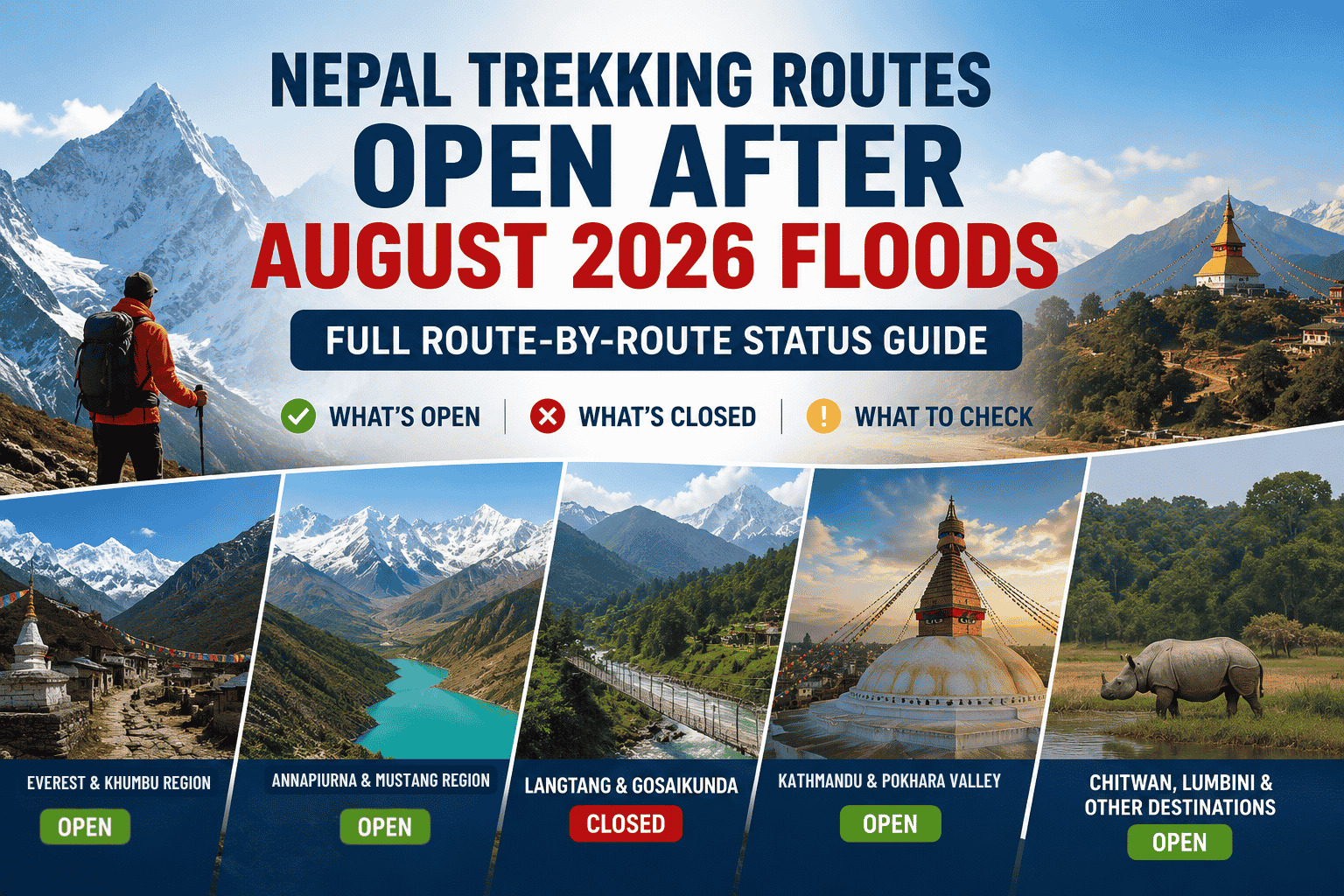
If your schedule is tighter than ours, flying Kathmandu to Dhangadhi cuts roughly two days off the trip and most operators offer it as an option. We do not regret the overland route – it added real context to where Darchula sits relative to the rest of the country – but it is a decision to make deliberately, not by default. 


The Trail: Villages Before Mountains 

Everyone plans this trek around Api Base Camp and Kalidhunga Lake, and they should both are genuinely worth the effort. But if I am honest about what stayed with me afterward, it was not the high points. It was Ghusa Gaun and Siti Gaun, the homestay villages along the way. 
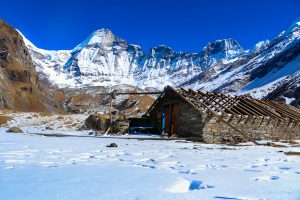
Staying with a local family in Ghusa Gaun, sharing a meal cooked over a wood fire, and being offered tika before continuing the next morning that is not something you get on the more commercialised trails further east, where teahouses have become standardised stopovers rather than someone’s home. Siti Gaun’s traditional four-storey mud houses are still lived in exactly the way they look like they should be lived in. These villages belong to the Shauka and Raji communities, and the trek is as much a walk through their daily life as it is a walk toward a mountain. 

This was, by a clear margin, the toughest and most memorable part of the trek for me – not the altitude, not the trail conditions, but adjusting to and being welcomed into a way of life this far removed from anything in Kathmandu. 

Api Base Camp and Kalidhunga Lake 

Api Base Camp sits at 3,861m, with a small temple site locally associated with Lord Shiva, who is believed to have meditated here after Kailash. It is a quiet, almost contemplative spot, and a sharp contrast to the energy of base camps in the Khumbu. 
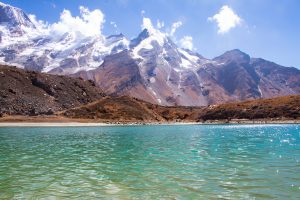
The genuine high point in both senses is Kalidhunga Lake at 4,200m, a short push beyond base camp. The lake is glacier-fed, ringed by peaks including Nampa and Hardeol, and it is where most of our group’s photos came from. Altitude sickness risk here is lower than on treks that push past 5,000m, but it is not negligible, and a proper acclimatisation day before the push to the lake is worth keeping in the itinerary rather than cutting it. 


Suggested 12-Day Itinerary 

This reflects the overland version of the route. If you fly into Dhangadhi, you can shorten the front and back end by roughly two days. 

Day  Route  Notes 
1  Kathmandu → towards Dhangadhi (overland)  We split this into two driving days on the Mahendra Highway rather than one brutal 14-hour push 
2  Dhangadhi → Gokuleshwor / Darchula  Follows the Mahakali Valley along the Nepal-India border; first close views of the far-west hills 
3  Darchula → Makarigaad  Trailhead drive; permits checked at the Api Nampa Conservation Area office 
4  Makarigaad → Naupata  Trek begins through terraced fields and lower forest 
5  Naupata → Ghusa Gaun  First homestay night – this is where the trip really started for us 
6  Ghusa Gaun → Siti Gaun  Traditional four-storey mud houses; locals offered tika before we continued 
7  Siti Gaun → Dhauliodhar  Chameliya river valley, stone-stepped forest trail 
8  Dhauliodhar → Api Base Camp (3,861m)  Long climbing day; a small temple site at base camp is locally tied to Lord Shiva 
9  Api Base Camp → Kalidhunga Lake (4,200m) → back to Dhauliodhar  Highest point of the trek; the lake is the real reward, more than base camp itself 
10  Dhauliodhar → Ghusa Gaun  Retracing the route, second night with the same host family 
11  Ghusa Gaun → Makarigaad  Final trekking day back to the roadhead 
12  Makarigaad → Darchula → towards Kathmandu (overland)  Return journey begins 


Food on the Trail: What You’ll Actually Eat 

Food on the Api Himal Trek is a genuine mix, and that surprised us. In the homestay villages Ghusa Gaun and Siti Gaun especially – meals were proper local Far-West cooking: dal bhat with seasonal mountain greens, buckwheat and maize-based dishes that you do not see on the Everest or Annapurna menus, and milk tea made fresh each morning. Portions were generous and the hospitality made up for the lack of variety. 

Closer to the trailhead towns and on a few rest days, we also had access to more familiar trail food noodles, eggs, basic Western-style breakfasts – which was a welcome change of pace before pushing back into the remote stretches. If you are used to the teahouse menus of the Annapurna Circuit, recalibrate your expectations: this is simpler, more seasonal, and far more dependent on what a particular village has on hand that week. Carrying some of your own energy bars or snacks for the high-altitude push to Kalidhunga Lake is a sensible backup, since options thin out considerably above Dhauliodhar. 

Wildlife and Birds: What We Actually Saw 

The Api Nampa Conservation Area is one of the richer wildlife corridors in Nepal’s far-west, and it showed. We spotted Danphe (Nepal’s national bird) and Munal pheasants moving through the upper forest and meadow sections – both unmistakable once you see the colouring against the green. Higher up, near the base camp approach, we had two separate sightings of blue sheep grazing on the exposed slopes, and a brief but clear look at a Himalayan tahr on a rocky outcrop above the trail. 

The conservation area is also home to snow leopards, musk deer and Himalayan black bears, though sightings of these are rare and we did not see any ourselves – worth knowing so expectations stay realistic. What stood out more than any single sighting was how alive the whole route felt: the forest sections below Siti Gaun were thick with birdsong, and the alpine meadows near base camp had a density of wildflowers in spring that no photograph we took really captured. 

Trail Conditions: What to Actually Expect Underfoot 

Route conditions varied more than any single trail description gives credit for. Through the lower villages Naupata, Ghusa Gaun, Siti Gaun – the trail is well-trodden, gently graded, and easy to follow, mostly stone-stepped paths through forest and farmland. It is the stretch from Dhauliodhar up to Api Base Camp where the trek earns its “moderate to challenging” rating: steeper, less defined in places, and exposed to weather changes that can move in quickly at altitude. 
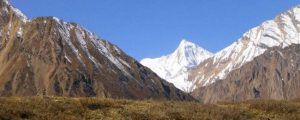
None of it is technical no ropes, no scrambling but the combination of altitude, distance and underfoot conditions on that final push means fitness matters more than trekking experience here. We were glad to have built in an acclimatisation day before the push to Kalidhunga Lake rather than rushing it. 


Challenges We Didn’t See Coming 

  • The overland drive itself was more physically tiring than several trekking days combined budget real recovery time before starting the trail. 
  • Limited facilities in the homestay stretch: no hot showers, no laundry, and very little phone signal for days at a time. Mentally preparing for that mattered as much as physical training. 
  • Weather above Dhauliodhar changed faster than forecasts suggested we had clear skies turn to cloud cover within an hour on the approach to base camp. 
  • Sourcing reliable, up-to-date information before the trip was genuinely difficult, since so little has been written about this route compared to Nepal’s more popular treks – part of why we are writing this. 

The Highlight: Reaching Api Base Camp 

Of everything on this trek the villages, the wildlife, the lake – the single moment that stayed with us most was standing at Api Base Camp itself, 3,861m, with the full Api massif rising directly ahead and almost no one else around. After days of build-up through forest and farmland and homestays, the sudden scale of the mountain at close range was disorienting in the best way. The small temple site there, with its local association to Lord Shiva, added a quiet, almost meditative weight to the moment that we did not expect going in. 


Permits and Practical Information 

Permits and protected-area access for Api Himal are administered through the Api Nampa Conservation Area authority, under the oversight of Nepal’s Department of National Parks and Wildlife Conservation (DNPWC). Checking current permit fees and any conservation area regulations directly with these official sources before travel is recommended, since requirements can be updated. 

Permit / Document  Where Issued  Typical Purpose 
Api Nampa Conservation Area Permit  Conservation area office, Darchula  Required entry permit for the protected area 
TIMS Card  Registered trekking operator or TAAN/NTB  Trekker identification and safety tracking 
Local government registration  Darchula district office (via operator)  Some remote sections require local trail registration 


  • Best seasons: Spring (March–May) for wildflowers and milder trails, Autumn (September–November) for the clearest mountain views. Winter is not recommended at this altitude and remoteness. 
  • Trek difficulty: Moderate to challenging, mostly due to remoteness and trail length rather than technical terrain. No climbing skills required, but several months of cardio and strength preparation will make a real difference. 
  • Max altitude: 4,200m at Kalidhunga Lake low enough that altitude sickness risk is lower than on treks pushing past 5,000m, but proper acclimatisation still matters. 
  • Accommodation: A mix of homestays and basic camping/lodge facilities. This is not a teahouse trek in the Annapurna sense come prepared for simpler facilities, limited hot showers, and no laundry service. 
  • Connectivity: Limited to none for most of the trek. Plan for it, rather than fighting it. 

Is the Api Himal Trek Right for You 

This trek suits people who have done at least one moderate multi-day trek before and want something further off the beaten path than Everest, Annapurna or even Manaslu. It is not the right starting trek for a first-time visitor to Nepal, mainly because of the remoteness and the limited infrastructure if anything goes wrong. It is, however, exactly right for trekkers who keep saying they want “somewhere that hasn’t been ruined by tourism yet” because right now, that description is still accurate. 

With the government’s renewed attention on Sudurpashchim’s trekking routes, that may not stay true indefinitely. There is a real argument for going in the next year or two, while the trail still feels the way it does today. 

Frequently Asked Questions 

How difficult is the Api Himal Base Camp Trek? 

Moderate to challenging. The lower sections through villages like Naupata, Ghusa Gaun and Siti Gaun are gentle and well-trodden. The push from Dhauliodhar to Api Base Camp (3,861m) and on to Kalidhunga Lake (4,200m) is steeper and weather-exposed, though not technical. 

What wildlife can you see on the Api Himal Base Camp Trek? 

Danphe and Munal pheasants are commonly spotted in the forest and meadow sections. Blue sheep and Himalayan tahr are visible on the higher slopes near base camp. Snow leopards, musk deer and Himalayan black bears live in the Api Nampa Conservation Area but are rarely seen. 

What is the best season for the Api Himal Base Camp Trek? 

Spring (March–May) for wildflowers and milder conditions, Autumn (September–November) for the clearest mountain visibility. Winter is not recommended given the altitude and remoteness. 

Do you need a guide for the Api Himal Base Camp Trek? 

It is strongly recommended. Trail marking thins out considerably above Dhauliodhar, permits are processed through the Api Nampa Conservation Area office, and the homestay network in villages like Ghusa Gaun and Siti Gaun is far easier to access with a local guide or registered operator. 

How long is the Api Himal Base Camp Trek? 

Around 12 days door-to-door if travelling overland from Kathmandu, or roughly 2 days shorter if flying into Dhangadhi. Actual trekking days on the trail are closer to 7–8. 

Related Treks Worth Comparing 

If you are weighing Api Himal against Nepal’s more established routes, a few of our other guides may help: 

Also, Check Api Himal Base Camp Trek

Final Thoughts

The Api Himal Trek stands as one of Nepal’s most untouched and rewarding trekking experiences, offering breathtaking Himalayan scenery, rich local culture, and true wilderness far from the crowded trails. It is a perfect choice for adventurous trekkers seeking something unique and off the beaten path.

To dive deeper into planning, preparation, routes, and essential tips, don’t miss our detailed Api Himal Trek Complete Guide, designed to help you understand every aspect of this incredible journey.

Take the first step toward this remote Himalayan adventure and experience the raw beauty of far-west Nepal like never before.

Start your adventure today and experience one of Nepal’s most remote and rewarding trekking destinations.

Planning Your Trek with Guru Travels 

Having done this route ourselves, we now build Api Himal Base Camp itineraries informed by what actually works on the ground – from realistic driving-day planning to which villages are worth a rest day, not just a passing meal. If you are considering the far-west for your next trek, reach out to our team and we can plan a route that matches your timeframe, season and fitness level. 

Explore more of what we offer at Guru Travels Limited, Nepal’s first public limited travel company. 

1 Day Bhundole Hike Near Kathmandu

Bhundole Hike Near Kathmandu: The Ultimate One Day Hike Near Kathmandu Experience

Last Updated: July 10, 2026 | By Guru Travels Team

When Travel Experts Become Travelers

At Guru Travels Limited, travel is more than a profession, it is a passion that pulses through the heart of our operations. Based in the vibrant city of Kathmandu, our team spends countless hours curating itineraries, coordinating logistics, and ensuring that travelers from around the globe experience the magic of Nepal. However, we hold a firm belief that to truly sell the magic of the mountains, one must occasionally step away from the computer screen and step onto the trail.

We believe that the best travel experts are those who never stop exploring. Recently, 11 members of the Guru Travels family stepped away from their desks, swapped keyboards for walking sticks, and embarked on a refreshing Bhundole Hike Near Kathmandu. What began as a simple team outing soon evolved into an inspiring journey filled with adventure, shared learning, strengthened bonds, and a reaffirmed commitment to the environment.

This blog post details our experience at Bhundole Ground Pharping, offering not just a story of our team building, but a comprehensive guide for anyone looking for a One Day Hike Near Kathmandu that combines natural beauty with a cause.

Key Takeaway: Bhundole Hike Near Kathmandu

Bhundole Hike Near Kathmandu is a perfect one-day outdoor adventure from Kathmandu, offering peaceful forest trails, beautiful hill landscapes, and a relaxing escape from city life. Located in Pharping, this easy-to-moderate hike is ideal for beginners, families, students, and corporate groups looking for a refreshing nature experience with team-building activities and responsible tourism initiatives.

With a short travel distance, scenic walking routes, and a comfortable hiking experience, Bhundole Hike is one of the best short hiking destinations near Kathmandu for a memorable day trip.


Discovering Bhundole Ground Pharping

Located in the serene hills of Pharping, just on the southern edge of the Kathmandu Valley, Bhundole Ground Pharping is a hidden gem that has recently gained popularity among nature lovers. For those tired of the crowded trails of Nagarkot or the commercialized vibe of other nearby spots, the Bhundole Hike Near Kathmandu offers a breath of fresh air literally and figuratively.

Pharping itself is a town steeped in history and spirituality, known for its sacred caves and monasteries. However, just a short walk beyond the town’s spiritual center lies the expansive greenery of Bhundole. It is a destination that feels worlds away from the chaotic traffic of the capital, yet it is conveniently located only about 30 kilometers to the south, making it an accessible One Day Hike Near Kathmandu.


The Appeal of the Trail

The trail to Bhundole is a delight for beginners. Unlike the steep, lung-busting climbs of the Langtang region or the Annapurna Circuit, this hike is gentle, rolling, and forgiving. It winds through lush forests, opens up to panoramic views of the valley, and guides hikers through traditional villages where the pace of life remains slow and authentic.

For our team, the weather played a perfect co-host. Soft, drifting clouds created a dramatic canvas against the blue sky, keeping the temperature cool and the air crisp. It was the kind of weather that hikers dream of cool enough to climb without sweating profusely, yet clear enough to see the surrounding hills. This perfect climate is just one reason why the Bhundole Hike Near Kathmandu is becoming a favorite for locals and tourists alike.


The Itinerary: A Step-by-Step Breakdown

To help other travelers and teams plan their own adventure, we have documented our schedule. This itinerary is designed for a relaxed pace that allows for photography, team bonding, and responsible tourism activities.

Table 1: Bhundole Hike Near Kathmandu Itinerary – Guru Travels Experience

Time Activity Description & Highlights
08:00 AM Departure from Kathmandu The team gathers at the Guru Travels office. A short, scenic drive through the Ring Road towards Pharping, passing the bustling town of Chapagaon.
09:00 AM Arrival at Pharping Quick stop near the famous Pharping Hydropower Station. The team gears up, applies sunscreen, and adjusts trekking poles.
09:15 AM The Trek Begins The trail starts with a gentle ascent. The path is paved initially, moving into a dirt track lined with pine trees and rhododendrons.
10:30 AM First Viewpoint Stop A brief pause for water and a group photo. The view of the southern Kathmandu Valley starts to open up. Discussions begin about trail conditions for future clients.
11:30 AM Arrival at Bhundole Ground Reaching the vast meadow. The ground is flat, green, and surrounded by hills. The team spreads out to enjoy the open space.
12:00 PM Team Building & Lunch Unpacking packed lunches. The team engages in ice-breaking activities and shares personal stories away from the formal office setting.
01:00 PM Responsible Tourism Drive The Guru Travels cleanup initiative begins. Gloves on and bags in hand, the team scours the meadow for plastic waste.
02:00 PM Exploration & Relaxation Free time to explore the perimeter, meditate, or fly drones (if permitted). The focus is on soaking in the tranquility.
02:45 PM The Descent Beginning the walk back. The descent offers a different perspective of the landscape, with afternoon light casting long shadows.
04:00 PM Return to Pharping Reaching the vehicle. A quick refreshment stop at a local tea house to support the community economy.
05:30 PM Back in Kathmandu Arrival at the office. Tired legs but high spirits as the team disperses for the evening.

More Than a Hike: Learning Through Experience

At Guru Travels, we operate on a simple philosophy: Firsthand experience creates the best travel recommendations.

While we have read hundreds of brochures and seen thousands of photos of hikes around Kathmandu, walking the Bhundole Hike Near Kathmandu ourselves provided insights that no document could convey. As travel professionals, we naturally view destinations through a critical lens. We aren’t just looking at the view; we are analyzing the logistics.

The “Travel Agent” Gaze

During the hike, our team naturally shifted into work mode, discussing the trail from the perspective of our clients:

Accessibility: We noted that while the trail is beginner-friendly, certain sections can be slippery after rain. We made a mental note to advise future clients to wear sturdy hiking boots rather than sneakers for their One Day Hike Near Kathmandu.

Rest Spots: We identified the perfect shaded areas for elderly travelers or families with children to rest.

Safety: We observed the trail markers and noted where additional signage might be helpful for solo hikers.

For our newer team members, this was an invaluable field trip. It transformed abstract concepts about “difficulty grading” and “scenic value” into tangible reality. For our senior staff, it was a reminder that the foundation of a great itinerary is a deep, ground-level understanding of the destination.


Building Stronger Connections Beyond the Office

In the modern workplace, “team building” has become a buzzword that often conjures images of trust falls or awkward conference room seminars. However, we believe that true team building happens in nature, away from the hierarchy of the office.

The Bhundole Hike Near Kathmandu stripped away the formalities. The CEO and the intern walked side by side. The marketing manager and the finance officer shared snacks. Without the pressure of pending emails or ringing phones, colleagues became companions.


The Psychology of the Shared Trail

Hiking is a unique social equalizer. On a flat office floor, everyone has a designated role. On a mountain trail, everyone is a hiker. The shared physical effort creates a bond that is hard to replicate in a boardroom.

We found ourselves laughing at slips, cheering each other on during steep sections, and stopping in silence to admire a particularly vibrant butterfly. These small moments accumulated to create a profound sense of unity. By the time we reached Bhundole Ground, we weren’t just coworkers; we were a tribe that had shared a journey.

This experience reinforced our commitment to promoting Team Building Hike Nepal packages for other corporations. We realized that if a travel agency like ours, which is already close-knit, could benefit this much from a day on the trail, then other companies in Kathmandu desperately need this escape.


Walking the Green Path: Our Commitment to Responsible Tourism in Nepal

The highlight of the day and the aspect of the trip we are most proud of was our commitment to Responsible Tourism in Nepal.

As we reached the pristine meadows of Bhundole Ground, the contrast was jarring. The landscape was lush and green, but closer inspection revealed the scars of human negligence. Plastic bottles, wrappers, and discarded food containers littered the edges of the trail and the picnic spots.

It is a sad reality that many beautiful destinations near Kathmandu are suffering from the “plastic plague.” As a company specializing in Responsible Tourism in Nepal, we could not simply enjoy the view and ignore the trash.

The Cleanup Initiative

Before we began our lunch, the Guru Travels team paused. We distributed biodegradable trash bags and gloves. What followed was an hour of dedicated cleanup effort. We didn’t just pick up our own trash; we picked up the trash left by others who had visited the site before us.

We collected plastic bottles, noodle packets, and even old clothing items left behind. It was dirty work, but it was necessary work. This action was not for show; it was driven by a core value that guides every decision we make at Guru Travels:

“Travel should leave memories, not waste.”

Table 2: Responsible Tourism Impact – The Cleanup Data

Waste Category Estimated Quantity Collected Disposal Method Environmental Impact
Plastic Bottles (PET) ~35 bottles Segregated for recycling in Kathmandu Prevents microplastics in soil & waterways
Food Wrappers/Packets ~50+ packets Segregated for landfill Removes non-biodegradable eyesores
Cardboard/Paper ~10 items Compostable/Burnable (safe) Reduces bulk waste in the meadow
Miscellaneous (Clothing/Glass) 5 items Carried out Eliminates physical hazards to wildlife

Responsible tourism is not simply a trend or a marketing phrase for us. It is a commitment to preserving nature, supporting local communities, and ensuring that future generations can enjoy the same beautiful destinations we experience today. We urge every hiker and every agency to adopt a “pack it in, pack it out” policy when embarking on a One Day Hike Near Kathmandu.


Why Bhundole Ground Should Be on Your Weekend Hiking List

If you are looking for a peaceful escape from city life without the exhaustion of a multi-day trek, the Bhundole Hike Near Kathmandu deserves a place at the top of your travel list. It is the perfect One Day Hike Near Kathmandu for those who want to reconnect with nature without traveling far.

Highlights of the Bhundole Hike Near Kathmandu:

  • Easy and Beginner-Friendly: Perfect for those who haven’t hiked in years.
  • Ideal One Day Hike Near Kathmandu: Close enough to do in the morning and back by evening.
  • Beautiful Meadows: The flat ground at the top is rare in hilly Nepal; it’s perfect for yoga, picnics, or games.
  • Perfect for Team Building: The flat areas allow groups to gather and interact easily, making it a top choice for a Team Building Hike Nepal.
  • Great for Students and Families: Safe trails with plenty of places to stop and rest.
  • Photography Opportunities: The interplay of clouds and hills provides stunning landscape shots.

Practical Guide: Know Before You Go

To ensure your trip to Bhundole Ground Pharping is as smooth as ours, we have compiled a practical guide. This covers everything from what to wear to how to get there for your One Day Hike Near Kathmandu.

Table 4: Essential Information for the Bhundole Hike Near Kathmandu

Category Details & Tips
Best Time to Visit March-May (Spring) for flowers and greenery; Sept-Nov (Autumn) for clear skies. Winter is cold but clear; Monsoon (July-Aug) is muddy and leech-prone.
Transportation Hire a private vehicle (Jeep/Van) for comfort, or take a local bus to Pharping and walk/taxi to the trailhead.
Total Hiking Duration Approximately 3 to 4 hours (round trip) at a leisurely pace.
Permits Required None. It is a free hiking area, unlike Shivapuri or Nagarjun National Parks.
What to Wear Lightweight long pants (to protect from scratches), breathable t-shirt, sturdy hiking shoes, and a hat/cap.
What to Pack 2 Liters of water, sunscreen, sunglasses, a light rain jacket (weather changes fast), personal first aid kit, and a trash bag.
Food Options There are no restaurants on the trail or at the top. You must pack your own lunch and snacks. Local tea houses are available in Pharping Bazaar.
Connectivity NTC and Ncell networks are generally available throughout the hike.

Looking Ahead: More Adventures to Come

The success of this hike has energized the entire Guru Travels team. It reminded us why we got into this industry in the first place. We are not just booking agents; we are enablers of experiences.

Inspired by our day at Bhundole, we are committed to organizing more outdoor adventures that align with our values. We are currently developing a series of programs aimed at getting more people out of the city and into the green.

Upcoming Initiatives

In the near future, Guru Travels plans to introduce:

  • Free Guided Community Hikes: Monthly hikes for locals to rediscover their own backyard.
  • Student-Focused Outdoor Programs: Educational trips that combine biology, geography, and physical education for schools.
  • Responsible Tourism Campaigns: Organized cleanup drives for popular trails, partnering with other local agencies to promote Responsible Tourism in Nepal.
  • Corporate Retreat Packages: Tailored “Bhundole-style” experiences for companies looking to boost morale and team spirit through a Team Building Hike Nepal.

Our goal is simple: to inspire people to explore Nepal responsibly while building meaningful connections with nature and one another.

Final Thoughts

The Bhundole Hike Near Kathmandu reminded us that adventure does not always require remote mountains or long expeditions. Sometimes, the most memorable journeys are found just beyond the city limits, surrounded by good company, fresh air, and a willingness to explore.

We returned to our desks in Kathmandu tired, with slightly sore legs, but with spirits that were fully recharged. The air in the office felt lighter, and the collaboration felt smoother. We had walked the green path, cleaned up a corner of our earth, and strengthened the bonds that make Guru Travels a family.

As we continue discovering Nepal one trail at a time, we invite fellow travelers, students, professionals, and outdoor enthusiasts to join us. Whether it’s a Bhundole Hike Near Kathmandu or a trek to the base camp of Everest, the principle remains the same.

Because the best stories are never found behind a desk they are found on the trail.

“Travel is the only thing you buy that makes you richer, filling your life with unforgettable experiences, meaningful connections, cultural discoveries, and stories that stay with you forever.”

Our Philosophy: True tourism isn’t just about taking beautiful photos or selling tickets; it’s about leaving a positive footprint. At Guru Travels Limited, we are fiercely committed to promoting sustainable and responsible tourism. This cleanup wasn’t a one-time gesture—it is the standard we set for ourselves and the future of Nepali tourism. If we are the experts guiding travelers, we must lead by example.

Frequently Asked Questions About Bhundole Hike Near Kathmandu

Q1. What is Bhundole Hike Near Kathmandu?

Bhundole Hike Near Kathmandu is a short and scenic hiking trail located in Pharping, on the southern side of Kathmandu Valley. It is a peaceful one-day hiking destination featuring forest trails, village landscapes, open green meadows, and panoramic views, making it ideal for beginners, families, students, and corporate team-building activities.

The hike provides an easy escape from Kathmandu’s busy city life while offering a refreshing nature experience within a few hours.

Q2. Where is Bhundole Ground located?

Bhundole Ground is located in Pharping, Dakshinkali Municipality, in the southern region of Kathmandu Valley, Nepal. It is approximately 30 km from Kathmandu city and can be reached by road within 1.5–2 hours depending on traffic conditions.

The area is surrounded by forests, hills, and traditional settlements, creating a peaceful hiking environment close to the capital.

Q3. How long does the Bhundole Hike take?

The Bhundole Hike usually takes around 3–4 hours to complete, depending on walking speed, breaks, photography stops, and group activities.

The short duration makes it one of the best one-day hiking options near Kathmandu for people looking for a quick outdoor adventure.

Q4. Is Bhundole Hike suitable for beginners?

Yes, Bhundole Hike is suitable for beginners because the trail has a moderate walking distance, gradual elevation gain, and no technical climbing sections.

The hike is recommended for:

  • First-time hikers
  • Families with children
  • Students
  • Office groups
  • Corporate team-building programs
  • Nature lovers

Q5. How difficult is Bhundole Hike?

Bhundole Hike is an easy to moderate-level hike that does not require previous trekking experience.

Most of the trail passes through:

  • Forest paths
  • Village trails
  • Open grasslands
  • Gentle uphill sections

A basic level of fitness and comfortable walking shoes are enough to enjoy this hike.

Q6. How do I reach Bhundole Ground from Kathmandu?

To reach Bhundole Ground from Kathmandu, travelers usually follow the Kathmandu–Pharping route and continue toward the Bhundole hiking starting point.

Typical route:

Kathmandu → Kalanki → Chobhar → Dakshinkali → Pharping → Bhundole Ground

The journey takes approximately 1.5–2 hours by private vehicle depending on road conditions.

Q7. What is the best time for Bhundole Hike?

The best seasons for Bhundole Hike are spring (March–May) and autumn (September–November) because of pleasant weather, clear mountain views, and comfortable hiking conditions.

Winter is also suitable, while the monsoon season may make trails slippery due to rainfall.

Q8. What should I carry for Bhundole Hike?

For Bhundole Hike, hikers should carry basic hiking essentials including comfortable shoes, water, snacks, sun protection, and weather protection.

Recommended packing list:

  • Hiking shoes
  • Water bottle
  • Sunscreen
  • Sunglasses
  • Hat/cap
  • Light jacket
  • Rain protection
  • Personal medicine
  • Camera
  • Energy snacks

Q9. Is Bhundole Hike good for team-building activities?

Yes, Bhundole Hike is an excellent destination for corporate team-building activities because it combines outdoor adventure, group interaction, and nature-based experiences.

Companies can organize:

  • Team games
  • Outdoor challenges
  • Group walks
  • Picnic activities
  • Environmental awareness programs

Q10. Why choose Bhundole Hike instead of other hikes near Kathmandu?

Bhundole Hike is a great choice because it offers a peaceful natural environment, easy accessibility, short duration, and a combination of hiking and team activities.

Compared with longer hikes near Kathmandu, Bhundole requires less time while still providing a refreshing outdoor experience.

Feature Bhundole Hike
Duration 1 Day
Difficulty Easy to Moderate
Location Pharping, Kathmandu Valley
Best For Beginners, Families, Groups
Main Attraction Forest trails and open meadow

If this story has inspired you to lace up your boots, be sure to check out our full range of [Guru Travels Packages] for more curated experiences. You can also read more travel stories and tips in our [Guru Travels Blog]. Also, Check Trekking related contents and packages in [Gurutreks] & [Gurutreks Blogs].

📞 Contact us: +977-9851334626 | Email | Instagram | Facebook | Tiktok 

Let Guru Travels turn your dream vacation into reality connect with us today!

Guru Travels Limited

#1st Public Limited Travel in Nepal

Invest On Traveling

Short Treks in Nepal 2026: Top Easy & Scenic Himalayan Trekking Routes

Short Treks in Nepal

Nepal, a land of majestic Himalayas and rich cultural heritage, is a paradise for adventure seekers. Adventure treks in Nepal offer a unique blend of natural beauty and cultural experiences. 

Imagine walking through lush valleys, surrounded by towering mountains, and experiencing the warm hospitality of the Nepalese people. With short trekking packages, you can explore Nepal’s stunning landscapes without requiring extensive time or experience. 

This guide covers the best short trekking packages in Nepal offered by Guru Travels Ltd, ranging from the iconic Everest View Trek to the scenic Ghorepani Poon Hill, the beautiful Langtang Valley, and the peaceful Mardi Himal region. These carefully selected short treks are perfect for travelers who want to experience the Himalayas in a limited time without missing out on stunning landscapes and rich cultural encounters.

Plan your adventure today and get ready to immerse yourself in the breathtaking beauty of Nepal. Whether you’re a seasoned trekker or just starting out, Nepal has something to offer everyone. 

Key Takeaways 

  • Explore Nepal’s majestic Himalayas and rich cultural heritage. 
  • Experience the unique blend of natural beauty and cultural experiences. 
  • Choose from a variety of trekking packages to suit your needs. 
  • Immerse yourself in the breathtaking beauty of Nepal. 
  • Plan your adventure today and get ready for an unforgettable experience. 

Why Choose Short Treks in Nepal 

In a world where time is a luxury, Nepal’s short treks provide a compact yet fulfilling adventure, tailored for the modern traveler. These treks are designed to offer a comprehensive Himalayan experience, even when time is limited. 

Perfect for Time-Constrained Travelers 

Short treks in Nepal from Kathmandu are ideal for travelers with tight schedules. They offer a quick yet profound experience of the Himalayas, allowing travelers to enjoy Nepal’s natural beauty without a significant time commitment. These treks are particularly popular among busy professionals who can only spare a few days for Nepal trekking tours. 

Trek  Duration  Max Altitude 
Ghorepani Poon Hill  4-5 days  3210m 
Langtang Valley  7 days  3850m 

Authentic Experiences in Limited Time 

Despite their brevity, quick treks in the Himalayas offer authentic experiences. Travelers can immerse themselves in local cultures, witness breathtaking landscapes, and enjoy the serene environments of the Himalayas. Nepal trekking tours for busy professionals are designed to maximize the experience within a limited timeframe, ensuring that every moment counts. 

Best Short Trekking Packages in Nepal 

Short trekking packages in Nepal provide an opportunity to explore the country’s stunning landscapes and rich cultural heritage. These treks are perfect for travelers with limited time or those who are new to trekking. 

Ghorepani Poon Hill Trek (4-5 days) 

The Ghorepani Poon Hill Trek is one of the most popular short trekking packages in Nepal. This trek offers breathtaking views of the Annapurna range, especially during sunrise from Poon Hill. The trail passes through charming villages and lush forests, providing a glimpse into local life. 

Key highlights include the scenic views from Poon Hill, traditional Gurung villages, and the vibrant rhododendron forests. 

Read the full guide: Ghorepani Poon Hill Trek – 5 Days | Experience one of the most popular short treks in Nepal with stunning sunrise views over the Annapurna and Dhaulagiri ranges.

Langtang Valley Trek (7 days) 

The Langtang Valley Trek is another easy trekking package in Nepal that is gaining popularity. Located near Kathmandu, this trek offers a mix of cultural experiences and natural beauty. The Langtang National Park is home to diverse flora and fauna, and the trek provides stunning views of the Langtang range. 

Notable attractions include the Langtang village, Kyanjin Ri, and the serene Tamang heritage. 

Read the full guide: Langtang Valley Trek – 10 Nights 11 Days | Explore one of Nepal’s most beautiful Himalayan valleys filled with glaciers, traditional Tamang villages, and stunning views of Langtang Lirung.

Everest View Trek (5-6 days) 

For those looking to experience the grandeur of the Everest region, the Everest View Trek is a Nepal short trekking itinerary that fits the bill. This trek offers panoramic views of Everest and surrounding peaks without the need to trek to Everest Base Camp. 

The trek passes through picturesque villages and provides a glimpse into the Sherpa culture. Key highlights include the Tengboche Monastery and the stunning views from Kalarpatthar. 

Mardi Himal Trek (5-6 days) 

The Mardi Himal Trek is a relatively new and less crowded short trekking package in Nepal. It offers spectacular views of the Mardi Himal, Annapurna, and Dhaulagiri ranges. The trek takes you through diverse landscapes, from lush forests to high-altitude meadows. 

Key attractions include the Mardi Himal Base Camp, scenic views from the high camp, and the charming villages along the trail. 

Read the full guide: Mardi Himal Base Camp Trek – 10 Nights 11 Days | Discover one of Nepal’s most scenic and less-crowded trekking routes in the Annapurna region, offering breathtaking views of Machhapuchhre (Fishtail), Annapurna South, and Hiunchuli.

Trek Name  Duration  Key Highlights 
Ghorepani Poon Hill Trek  4-5 days  Poon Hill views, Gurung villages, rhododendron forests 
Langtang Valley Trek  7 days  Langtang village, Kyanjin Ri, Tamang heritage 
Everest View Trek  5-6 days  Tengboche Monastery, Kalarpatthar views, Sherpa culture 
Mardi Himal Trek  5-6 days  Mardi Himal Base Camp, high-altitude meadows, scenic views 

Short Treks Near Kathmandu 

For those looking to experience Nepal’s great outdoors without straying far from Kathmandu, several short treks offer a perfect blend of adventure and convenience. These treks are ideal for travelers who are short on time or prefer to stay close to the capital city. 

Nagarkot Changunarayan Trek 

The Nagarkot Changunarayan Trek is a 1-2 day adventure that combines cultural exploration with natural beauty. Starting from Kathmandu, this trek takes you to Nagarkot, known for its sunrise views of the Himalayas, and Changunarayan, a historic temple complex and UNESCO World Heritage Site. The trek offers a unique blend of Nepal’s cultural heritage and stunning landscapes. 


Champadevi Day Hike 

For a quick escape from Kathmandu’s hustle and bustle, the Champadevi Day Hike is an excellent choice. This hike is a day-long adventure that takes you to the Champadevi hill, offering panoramic views of the Kathmandu Valley and the Himalayan range. It’s a great way to experience the natural beauty surrounding Kathmandu. 


Shivapuri National Park Trek 

The Shivapuri National Park Trek is another short trekking option near Kathmandu, typically lasting 1-2 days. This trek takes you through lush forests and to the highest point in the Kathmandu Valley, offering breathtaking views and the chance to spot local wildlife. It’s an ideal trek for those looking to connect with nature without venturing too far from the capital. 


Weekend Trekking in Nepal for Busy Professionals 

Busy professionals can now experience the beauty of Nepal’s mountains with our tailored weekend trekking packages. Nepal offers a unique opportunity for individuals with limited time to explore its majestic landscapes. 


Friday-Sunday Trekking Itineraries 

Our carefully crafted trekking itineraries allow you to make the most of your weekend. For instance, the Nagarkot Changunarayan Trek is a perfect 1-2 day trek that offers breathtaking views of the Kathmandu valley and the Himalayas. Similarly, the Shivapuri National Park Trek is another great option that can be completed over a weekend, providing a serene escape from the city’s hustle and bustle. 

How to Maximize Your Limited Time 

To maximize your limited time, it’s essential to plan your trek meticulously. This includes choosing the right trekking package that fits your schedule, preparing the necessary gear, and ensuring you’re physically prepared for the trek. Our customized trekking packages for working individuals are designed to help you achieve just that, ensuring a memorable and fulfilling experience. 

By opting for our short trekking packages in Nepal for working travelers, you can enjoy the thrill of trekking without compromising your professional commitments. Let us help you plan your next adventure. 

Best Seasons for Short Treks in Nepal 

Nepal’s climate makes spring and autumn the perfect times for short treks. These seasons offer the most favorable conditions for trekking, with mild temperatures and clear skies. 

Spring (March-May) 

The spring season is characterized by blooming rhododendrons and other wildflowers, making the trekking trails particularly scenic. The weather is generally stable, with warm days and cool nights. It’s an ideal time to witness the vibrant culture and festivals of Nepal. 

Autumn (September-November) 

Autumn is another excellent season for short treks in Nepal. The monsoon rains have cleared the skies, offering breathtaking views of the Himalayas. The temperatures are comfortable, and the trails are less crowded than in spring. 

Winter and Monsoon Considerations 

While winter can be cold, especially at higher altitudes, it’s still a good time for lower-altitude treks. The monsoon season, though challenging due to rain and potential landslides, can be a good time for those who prefer fewer crowds and lush green landscapes. 

Season  Weather Conditions  Trek Recommendations 
Spring  Mild temperatures, clear skies  Ghorepani Poon Hill, Langtang Valley 
Autumn  Comfortable temperatures, clear views  Everest View, Mardi Himal 
Winter  Cold, especially at high altitudes  Lower-altitude treks like Nagarkot Changunarayan 

Essential Packing List for Short Himalayan Treks 

The key to a successful short trek in the Himalayas lies in knowing what to pack and what to leave behind. A well-packed bag ensures you’re prepared for the challenges of high-altitude trekking while keeping your load light enough to enjoy the journey. 

Clothing and Footwear 

Packing the right clothing is crucial for comfort and safety. Include layers for varying temperatures, such as a base layer for colder mornings and evenings, insulating mid-layers, and a waterproof outer layer. Don’t forget a warm hat, gloves, and extra socks. For footwear, sturdy, waterproof trekking boots with good grip are essential. Consider packing lightweight sandals or camp shoes for resting. 

Gear and Equipment 

Your trekking gear should include a reliable backpack, a sleeping bag suitable for low temperatures, and a water purification system or water purification tablets. A headlamp or flashlight, along with extra batteries, is vital for navigating in the dark. Trekking poles can be helpful, especially on uneven terrain. Don’t forget a first-aid kit and a map or GPS device. 

Health and Safety Items 

Health and safety should be your top priority. Pack essentials like altitude sickness medication, pain relievers, and any personal medications. Include a basic first-aid kit with bandages, antiseptic wipes, and any other items you might need. Hand sanitizer and toilet paper are also useful. For emergencies, carry a personal locator beacon (PLB) or satellite phone if you’re trekking in remote areas with no cell service. 


Planning Your Short Trek: Logistics and Permits 

To ensure a hassle-free short trek in Nepal, it’s essential to grasp the logistics and permit requirements beforehand. Proper planning not only streamlines your adventure but also enhances your overall experience in the Himalayas. 

Required Permits for Different Trekking Areas 

Nepal has various trekking areas, each with its own permit requirements. For instance, treks in the Annapurna region, such as the Ghorepani Poon Hill Trek, require an Annapurna Conservation Area Permit (ACAP) and a Trekkers’ Information Management System (TIMS) card. The Langtang Valley Trek, on the other hand, necessitates a Langtang National Park entry permit in addition to the TIMS card. Understanding these requirements is crucial for a smooth start to your trek. 

  • Annapurna Region: ACAP and TIMS card 
  • Langtang Region: Langtang National Park entry permit and TIMS card 
  • Everest Region: Sagarmatha National Park entry permit and TIMS card 

Guru Travels Ltd arranges all permits as part of every package see our full Nepal Trekking Permits Guide for a complete breakdown. 

Transportation Options 

Getting to and from your trek’s starting point is an important logistical consideration. Nepal offers various transportation options, including private vehicles, public buses, and domestic flights. For short treks near Kathmandu, such as the Shivapuri National Park Trek, a private vehicle or public bus is often sufficient. For more distant regions like the Everest or Langtang areas, domestic flights from Kathmandu to Lukla or Syangboche can save time and energy. 

Accommodation During Short Treks 

Accommodation options during short treks in Nepal range from basic teahouses to more comfortable lodges. In popular trekking areas like the Annapurna and Everest regions, teahouses are readily available, offering meals and lodging. For treks closer to Kathmandu, such as the Nagarkot Changunarayan Trek, you might find more homestay options, providing a chance to experience local culture firsthand. 

  1. Teahouses and lodges in major trekking routes 
  1. Homestays in villages near Kathmandu 
  1. Camping (in some areas, with prior arrangement) 

Budget Considerations for Short Trekking Packages in Nepal 

When it comes to trekking in Nepal, understanding the budget considerations is crucial for a stress-free adventure. Nepal offers a variety of short trekking packages that can fit different budgets, making it a versatile destination for travelers. 

Average Costs Breakdown 

The cost of trekking in Nepal can vary widely based on factors such as the trek’s duration, the services included, and the time of year. On average, a short trek can cost anywhere from $300 to $800 per person for a 5-7 day trek. This typically includes costs such as permits, guide services, accommodation, and meals. 

A breakdown of the average costs for a short trek in Nepal might include: 

  • Permits: $20-$50 
  • Guide services: $25-$30 per day 
  • Accommodation: $5-$20 per night 
  • Meals: $10-$15 per meal 

Money-Saving Tips for Budget Travelers 

For those on a tight budget, there are several ways to save money on trekking in Nepal. Opting for a group trek can significantly reduce costs as expenses for guides and permits can be split among the group members. Additionally, choosing local tea houses over luxury lodges can greatly reduce accommodation costs. 

Other money-saving tips include: 

  1. Traveling during the off-season when prices are lower. 
  1. Carrying your own reusable water bottle to avoid buying bottled water. 
  1. Negotiating prices for services not clearly priced. 

Health and Safety Tips for Quick Himalayan Adventures 

The thrill of Himalayan trekking comes with responsibilities, particularly regarding health and safety. When embarking on short treks, it’s crucial to be prepared for potential health risks and know how to mitigate them. 

Altitude Sickness Prevention 

Altitude sickness is a significant concern in high-altitude treks. To prevent it, gradual ascent is key. Trekking agencies often plan itineraries that allow for acclimatization. Additionally, staying hydrated by drinking plenty of water and avoiding alcohol can help. Symptoms to watch out for include headaches, nausea, and dizziness. 

Common Health Concerns and Remedies 

Other health concerns during Himalayan treks include dehydration, fatigue, and gastrointestinal issues. Remedies include staying hydrated, getting enough rest, and consuming easily digestible meals. It’s also wise to pack personal medications and a basic first-aid kit. 

Emergency Contacts and Procedures 

In case of emergencies, having the right contacts and knowing the procedures can be lifesaving. Ensure you have contact information for local guides, trekking agencies, and emergency services. It’s also advisable to carry a portable charger for your phone and consider purchasing trekking insurance. 

Health Concern  Prevention  Remedy 
Altitude Sickness  Gradual Ascent, Hydration  Rest, Medication 
Dehydration  Drink Plenty of Water  Oral Rehydration Salts 
Gastrointestinal Issues  Eat Easily Digestible Food  Antacids, Rest 

Customized Short Treks for Working Travelers 

For working travelers, Nepal offers customized short trekking packages that blend adventure with productivity. These tailored experiences cater to the unique needs of busy professionals, ensuring a perfect balance between work and leisure. 

Flexible Itineraries for Limited Schedules 

One of the key benefits of customized short treks is the flexibility they offer. Working travelers can choose from a variety of itineraries that fit their schedules, ranging from a quick weekend getaway to a longer, more leisurely trek. This flexibility allows professionals to plan their adventures around their work commitments, ensuring that they don’t miss out on the opportunity to experience Nepal’s beautiful landscapes. 

Trek Duration  Itinerary Highlights  Best For 
4-5 days  Ghorepani Poon Hill Trek  Weekend Getaways 
7 days  Langtang Valley Trek  Extended Weekends 
5-6 days  Everest View Trek  Busy Professionals 

Combining Treks with Business Travel 

Nepal is an emerging hub for business travel, with many professionals visiting the country for conferences, meetings, and other corporate events. By combining business travel with a customized trek, working travelers can make the most of their trip, enjoying the best of both worlds. Many trekking routes are located near major business centers, making it easy to schedule a trek around a business itinerary. 

Digital Connectivity During Your Trek 

In today’s connected world, staying online is crucial, even when on trek. Many trekking routes in Nepal now offer digital connectivity, allowing working travelers to stay in touch with their teams and manage their work commitments. From Wi-Fi-enabled tea houses to mobile network coverage in certain areas, there are various options available to suit different needs. 

By leveraging these customized short trekking packages, working travelers can enjoy the beauty of Nepal while maintaining their professional obligations. Whether it’s a quick trek or an extended adventure, Nepal has something to offer every busy professional. 

Conclusion: Making the Most of Your Brief Himalayan Adventure 

Embarking on a short trekking adventure in Nepal can be a life-changing experience, offering a glimpse into the majestic Himalayan landscape without requiring an extensive time commitment. With various short trekking packages in Nepal available, travelers can choose an itinerary that suits their schedule and preferences. 

Nepal trekking tours provide an opportunity to immerse oneself in the local culture, witness breathtaking vistas, and rejuvenate in the serene natural surroundings. Whether you’re a busy professional or an adventure-seeker, a Himalayan adventure awaits you. 

By selecting the right short trekking package, you can maximize your experience, creating unforgettable memories of your time in the Himalayas. So, pack your bags, lace up your hiking boots, and get ready to embark on an unforgettable journey through Nepal’s majestic mountains. 

Start planning your Nepal short trek today contact our team at www.gurutravelsltd.com/contact or browse our full trek portfolio at www.gurutravelsltd.com . You can book your Himalayan adventure and explore a wide range of trekking packages directly through our official website: https://gurutreks.com

Planning your trip during the global football season? Don’t miss our detailed World Cup 2026 travel guide from Nepal, where we share how to combine international travel with football excitement, including destinations like the USA, Thailand, Dubai, and Bali. 


Best Treks in Nepal: The Ultimate Guide for International Trekkers in 2026 

Best Treks in Nepal

Nepal is not simply a trekking destination. It is the definitive trekking destination home to eight of the world’s fourteen 8,000-metre peaks, more than 1,400 mapped trekking routes, and a cultural depth that rivals any travel experience on earth. Every year, hundreds of thousands of international trekkers from London and Berlin, New York and Sydney, Tokyo and Toronto answer the calls of the Himalayas and find themselves changed by what they encounter on these trails. 

In 2025, Nepal welcomed 1,158,459 international visitors, with the USA, UK, Germany, and Australia all ranking among the top long-haul markets. Trekking and mountaineering remain the single largest driver of tourism revenue, generating hundreds of millions of dollars in foreign exchange annually. Yet despite this scale, the very best Himalayan experiences remain profoundly intimate a teahouse conversation with a Sherpa above 4,000 metres, a sunrise over Kala Patthar that no photograph can fully capture, a mountain silence so complete it becomes its own sound. 

This guide covers the 13 best Nepal treks offered by Guru Travels Ltd  ranging from the world-famous Everest Base Camp to the off-the-beaten-path Gokyo Valley, from the classic Annapurna Circuit to the rare Manaslu wilderness. Each trek profile below includes duration, difficulty, maximum altitude, and a link to the full individual trek guide. Whether you are a first-time trekker or a seasoned Himalayan veteran, this is your authoritative reference for planning a Nepal trek that matches your ambitions and your timeline. 


All 12 Nepal Treks at a Glance 

Trek  Duration  Max Altitude  Difficulty  Best For 
Everest Base Camp Trek – 14 Days  14 Days  5,364m  Moderate-Hard  First-timers, classic EBC 
Gokyo Valley Trek  12–14 Days  5,357m  Moderate  Lake lovers, photographers 
Gokyo to EBC Trek  16–18 Days  5,364m  Moderate-Hard  Best of both regions 
Manaslu Circuit Trek  14–16 Days  5,160m  Challenging  Off-the-beaten-path adventurers 
EBC Helicopter Return  12–13 Days  5,364m  Moderate  Time-pressed trekkers 
Annapurna Base Camp Trek  10–13 Days  4,130m  Moderate  First-timers, photographers 
Mardi Himal Trek  7–9 Days  4,500m  Moderate  Short-trip seekers 
Island Peak Climbing  18–22 Days  6,189m  Technical  Aspiring mountaineers 
EBC + Island Peak  22–24 Days  6,189m  Strenuous  Peak baggers 
EBC Drive In Drive Out  14–16 Days  5,364m  Moderate  Road-experience seekers 
Annapurna Circuit Trek  14–18 Days  5,416m  Moderate-Hard  Long-route enthusiasts 
Langtang Valley Trek  7–10 Days  4,984m  Moderate  Cultural trekkers near Kathmandu 


  1. Everest Base Camp Trek – 14 Days

The World’s Most Iconic High-Altitude Trek 

Standing at 5,364 metres above sea level, Everest Base Camp is the threshold of human ambition in the staging ground from which climbers have attempted the world’s highest summit since 1953. The 14-day itinerary offered by Guru Travels Ltd is the gold standard: carefully paced for acclimatisation, rich in cultural immersion through the Sherpa heartland of the Khumbu and culminating with the unforgettable sunrise panorama from Kala Patthar (5,545m). 

The trek begins with the dramatic 35-minute mountain flight to Lukla’s Tenzing-Hillary Airport itself an adventure. From there, trekkers traverse the Sagarmatha National Park (a UNESCO World Heritage Site), passing through Namche Bazaar, Tengboche Monastery, Dingboche, Lobuche, and Gorakshep before reaching Base Camp itself. The return via Namche and Lukla allows for rest days that further solidify the altitude adjustment. 

Key Trek Facts 

  • Duration: 14 days | Start/End: Lukla 
  • Maximum Altitude: 5,364m (EBC) / 5,545m (Kala Patthar) 
  • Difficulty: Moderate to Strenuous prior high-altitude trekking recommended 
  • Best Season: March–May (spring) and September–November (autumn) 
  • Permits Required: Sagarmatha National Park Entry ($30), TIMS Card, Khumbu Pasang Lhamu Rural Municipality Fee ($20) 
  • Typical Package Cost: USD 1,200–1,600 per person (all-inclusive with guide, porter, accommodation, meals) 


Read the full guide: Everest Base Camp Trek – 14 Days | Also see: EBC with Helicopter Return and EBC + Island Peak Climbing 

  1. Gokyo Valley Trek 

Turquoise Lakes, Solitude & Everest Without the Crowds 

The Gokyo Valley Trek is one of Nepal’s most visually spectacular and least-crowded high-altitude routes. While the Everest Base Camp trail draws most Khumbu trekkers, the Gokyo Valley offers an equally dramatic Himalayan experience and, many experienced trekkers argue, a superior one in terms of sheer scenic variety. 

The centrepiece of the trek is the Gokyo Lakes system with six glacially fed high-altitude lakes at elevations between 4,700m and 5,000m, whose turquoise waters mirror some of the world’s highest peaks. The summit of Gokyo Ri (5,357m) presents one of the most breathtaking panoramic viewpoints in the Himalayas, with Everest, Lhotse, Makalu, and Cho Oyu visible simultaneously. The trek also crosses the Ngozumpa Glacier Nepal’s longest glacier, stretching 36 kilometres. 

Key Trek Facts 

  • Duration: 12–14 days | Start/End: Lukla 
  • Maximum Altitude: 5,357m (Gokyo Ri) 
  • Difficulty: Moderate suitable for reasonably fit trekkers 
  • Best Season: March–May and September–November 
  • Unique Feature: World’s highest freshwater lake system; views of 4 of the 6 highest peaks on Earth 
  • Typical Package Cost: USD 1,100–1,500 per person 


Read the full guide: Gokyo Valley Trek | Related: Gokyo to EBC Combined Trek 

  1. Gokyo to Everest Base Camp Trek 

The Ultimate Khumbu Traverse: Cho La Pass & Two Icons in One Journey 

For experienced trekkers who refuse to choose between Gokyo and Everest Base Camp, the Gokyo to EBC crossing delivers both connected by the challenging and spectacular Cho La Pass (5,420m). This is considered by many Himalayan veterans to be the single finest multi-week trek in Nepal, combining the solitude and lake scenery of Gokyo with the legendary status of Everest Base Camp across a high alpine pass that demands both fitness and resolve. 

The Cho La Pass traverse involves a technical section of glacial moraine, and steep ice early starts are essential, and crampons are often required. The reward is immediate and overwhelming: the first view of the Khumbu Icefall from the past, one of the most dramatic moments in Himalayan trekking. From Gorakshep, trekkers complete the standard EBC circuit including the sunrise ascent of Kala Patthar. 

Key Trek Facts 

  • Duration: 16–18 days | Start/End: Lukla 
  • Maximum Altitude: 5,545m (Kala Patthar) 
  • Difficulty: Strenuous prior EBC or similar altitude experience strongly recommended 
  • Key Challenge: Cho La Pass (5,420m) crampons required in colder months 
  • Typical Package Cost: USD 1,500–1,900 per person 


Read the full guide: Gokyo to EBC Trek | Related: Gokyo Valley Trek and Everest Base Camp Trek 14 Days 

  1. Manaslu Circuit Trek

Nepal’s Most Rewarding Wilderness Circuit 12,512 Visitors in 2025 and Growing 

The Manaslu Circuit Trek is the finest off-the-beaten-path trek in Nepal, and its time in the shadows of the Annapurna and Everest circuits is rapidly ending. In fiscal year 2024/25, the Manaslu Conservation Area recorded 12,512 foreign visitors a record reflecting a global trekking community discovering what serious Himalayan adventurers have known for years: this is an extraordinary journey. 

The trek circumambulates Mount Manaslu (8,163m) the world’s eighth highest mountain through remote Tibetan-influenced villages, ancient monasteries, and landscapes that shift dramatically from subtropical lowlands to the high-altitude desert of the Tibetan plateau. The crowning achievement is the crossing of Larkya La Pass at 5,160m, one of the longest and most dramatic high-altitude passes in the Himalayas. Unlike the Everest or Annapurna regions, the Manaslu Circuit requires a restricted area permit and a registered guide adding to its sense of exclusivity and controlled, sustainable tourism. 

Key Trek Facts 

  • Duration: 14–16 days | Start/End: Soti Khola (via drive from Kathmandu) 
  • Maximum Altitude: 5,160m (Larkya La Pass) 
  • Difficulty: Challenging experience with high-altitude passes essential 
  • Special Permits: Manaslu Conservation Area Permit + Restricted Area Permit (guide mandatory) 
  • Typical Package Cost: USD 1,400–1,800 per person 
  • Record visitor numbers: 12,512 in FY 2024/25 (MCAP official data) 


Read the full guide: Manaslu Circuit Trek | Related: Annapurna Circuit Trek 

  1. Everest Base Camp Trek with Helicopter Return from Gorakshep

Maximum Experience, Minimum Time Fly Back Over the Khumbu 

Time is the most precious commodity for international trekkers, and the Everest Base Camp Trek with Helicopter Return is the solution for those who refuse to compromise the EBC experience simply because their holiday window is limited. This itinerary follows the classic route to Everest Base Camp and the sunrise ascent of Kala Patthar  but rather than trekking back to Lukla over five days, trekkers board a helicopter directly from Gorakshep (or Kala Patthar) and fly back, reducing the return journey to a single breathtaking 45-minute flight over the Khumbu glaciers and peaks. 

The helicopter return also eliminates the physical toll of the descent on tired knees and quads a significant practical benefit for older trekkers or those with limited time. The aerial perspective of the Khumbu on the icefall, the peaks, the switchback trails below deliver a final dramatic chapter to what is already a life-defining journey. 

Key Trek Facts 

  • Duration: 12–13 days (saves 5 days vs. standard EBC return) 
  • Maximum Altitude: 5,364m (EBC) / 5,545m (Kala Patthar) 
  • Helicopter Flight: Gorakshep to Lukla (~45 minutes), with stunning aerial Himalayan views 
  • Ideal For: Professionals with limited leave, trekkers over 55, first-timers wanting maximum reward in minimum time 
  • Typical Package Cost: USD 2,000–2,500 per person (including helicopter) 


Read the full guide: EBC Helicopter Return Trek | Related: EBC 14-Day Standard Trek 

  1. Annapurna Base Camp Trek

Nepal’s Most Accessible High-Altitude Base Camp 4,130m of Pure Drama 

The Annapurna Base Camp Trek is Nepal’s most popular trek for international first-timers and for good reason. Reaching 4,130m at the Annapurna Sanctuary, a natural amphitheatre encircled by thirteen Annapurna peaks above 6,000m; the trek delivers extraordinary Himalayan scenery without the logistical complexity or extreme altitude of the Everest region. 

The trail passes through terraced farmland, rhododendron forests that blaze red and pink in spring, the spectacular Modi Khola gorge, and the hot springs at Jhinu Danda. Gurung and Magar villages along the route offer rich cultural encounters. The approach into the Sanctuary itself a gradually narrowing valley that suddenly opens into a 360-degree amphitheatre of giants is among the most dramatic trail moments in Nepal. 

Key Trek Facts 

  • Duration: 10–13 days | Start/End: Nayapul or Phedi (near Pokhara) 
  • Maximum Altitude: 4,130m (Annapurna Base Camp) 
  • Difficulty: Moderate excellent first Himalayan high-altitude trek 
  • Best Season: March–May (rhododendron blooms) and October–November 
  • Permits Required: ACAP (Annapurna Conservation Area Project) + TIMS 
  • Typical Package Cost: USD 900–1,300 per person 


Read the full guide: Annapurna Base Camp Trek | Related: Mardi Himal Trek and Annapurna Circuit Trek 

  1. Mardi Himal Trek

Nepal’s Best-Kept Secret: Intimate Himalayan Views Without the Crowds 

The Mardi Himal Trek is the off-the-beaten-path alternative to the classic Annapurna routes  and for travellers who prioritise authenticity, solitude, and jaw-dropping close-range views of Machapuchare (Fishtail Peak, 6,993m), it is unquestionably the most rewarding short trek in Nepal. Reaching the Mardi Himal Upper Viewpoint at 4,500m, trekkers stand virtually alone beneath the south face of Annapurna I an experience impossible to replicate on the busier trails. 

Introduced formally as a trekking route in 2012, Mardi Himal remains beautifully underdeveloped. The trail passes through dense rhododendron and oak forests before emerging onto an extended high ridge with uninterrupted Himalayan panoramas. Teahouses along the route are smaller, more personal, and run by local families whose knowledge of the surrounding mountains is encyclopedic. This is Nepal trekking as it used to be, before the volume increased. 

Key Trek Facts 

  • Duration: 7–9 days | Start/End: Kande (near Pokhara) 
  • Maximum Altitude: 4,500m (Upper Viewpoint) 
  • Difficulty: Moderate suitable for most reasonably fit trekkers 
  • Ideal For: Short holiday windows, couples, trekkers seeking solitude and intimacy 
  • Typical Package Cost: USD 700–1,000 per person 


Read the full guide: Mardi Himal Trek | Related: Annapurna Base Camp Trek 

  1. Island Peak Climbing (ImjaTse, 6,189m)

Your First Himalayan Summit Nepal’s Most Popular Trekking Peak 

Island Peak officially named Imja Tse is the gateway to Himalayan mountaineering for international climbers. Standing at 6,189m (20,305 feet) in the heart of the Khumbu, it was first climbed in 1953 as a training ascent by members of the expedition that summited Everest, and its name derives from its appearance as an island in a sea of glacial ice when viewed from Dingboche. 

Today, Island Peak is Nepal’s most climbed trekking peak, with a success rate of 70–85% for well-prepared teams. The route involves glacier travel, a steep headwall of fixed ropes, and a narrow summit ridge genuine mountaineering techniques, but achievable without prior summit experience when guided by qualified Sherpa climbing guides. The climbing permit for Island Peak costs USD 250 per person in spring, as per the NMA fee schedule effective September 2025. The total package including the approach trek, acclimatisation days, base camp service, and summit support typically ranges from USD 2,500–4,000 per person. 

Key Trek Facts 

  • Duration: 18–22 days | Includes approach trek through Khumbu 
  • Summit Altitude: 6,189m | Technical Grade: PD (peu difficile) basic mountaineering skills required 
  • Skills Needed: Crampons, ice axe, fixed-line ascending, crevasse awareness 
  • Climbing Permit: USD 250 (spring) / USD 125 (autumn) per NMA 2025 revised schedule 
  • Total Package Cost: USD 2,500–4,000 per person 
  • Success Rate: 70–85% with qualified guiding 


Read the full guide: Island Peak Climbing | Related: EBC + Island Peak Combined Trek and Nepal Trekking Permits Guide 

  1. Everest Base Camp Trek with Island Peak Climbing

The Ultimate Nepal Adventure: Two Iconic Achievements in One Expedition 

For trekkers who want to stand on Everest Base Camp and summit a Himalayan peak in a single expedition, the EBC + Island Peak combination is the ultimate Nepal adventure. This 22–24-day itinerary is the most comprehensive experience in the Guru Travels Ltd portfolio combining the cultural and scenic richness of the Khumbu EBC trail with the technical mountaineering challenge of Island Peak’s 6,189m summit. 

The itinerary is structured to ensure proper acclimatization: trekkers first complete the standard EBC route, spending time at altitude above 5,000m, before continuing to the Imja Valley and Island Peak Base Camp. This logical progression significantly improves summit success rates. Trekkers arrive at Island Peak Base Camp already well-adapted to extreme altitude, giving them a decisive physiological advantage. All climbing equipment, Sherpa summit guides, and technical gear are provided. 

Key Trek Facts 

  • Duration: 22–24 days 
  • Maximum Altitude: 6,189m (Island Peak summit) 
  • Difficulty: Strenuous + Technical the most demanding trek in the portfolio 
  • Ideal For: Experienced trekkers seeking their first Himalayan summit alongside the EBC experience 
  • Typical Package Cost: USD 2,800–4,500 per person 


Read the full guide: EBC + Island Peak Climbing | Related: Island Peak Climbing and Everest Base Camp 14-Day Trek 

  1. Everest Base Camp Drive In Drive Out Trek 

The Road Less Taken Access EBC via the Jiri or Salleri Highway Route 

The Everest Base Camp Drive in Drive Out Trek follows the historic overland approach to the Khumbu the original route walked by the early Everest expeditions before Lukla Airport was built in 1966. Rather than flying directly to Lukla, trekkers drive from Kathmandu to Salleri or Phaplu, then trek north to join the classic EBC trail. The return journey follows the same overland route. 

This itinerary adds approximately 3–4 days compared to the flight-in version but delivers experiences impossible on the standard route: lower-altitude Nepali villages largely untouched by international tourism, extensive wildlife habitats, and the profound sense of having earned the approach on foot. For trekkers with a deep interest in Nepal’s rural landscape and culture, this is the most immersive EBC experience available. 

Key Trek Facts 

  • Duration: 14–16 days | Includes overland drive from Kathmandu 
  • Maximum Altitude: 5,364m (EBC) + optional Kala Patthar (5,545m) 
  • Difficulty: Moderate longer than standard EBC but at similar altitudes 
  • Unique Element: Passes through remote lower Khumbu villages not on the flight-in route 
  • Typical Package Cost: USD 1,100–1,500 per person 


Read the full guide: EBC Drive In Drive Out Trek | Related: Standard EBC 14-Day Trek 

  1. Annapurna Circuit Trek

The World’s Greatest Long-Distance Trek 14 to 18 Days of Himalayan Diversity 

The Annapurna Circuit Trek is, by many measures, the most diverse and geographically extraordinary long-distance trek on earth. In a single journey, trekkers traverse subtropical lowlands, terraced rice paddy landscapes, Hindu and Buddhist villages, deep river gorges, high alpine meadows, and the trans-Himalayan semi-desert of the Tibetan plateau before crossing Thorong La Pass at 5,416m, the highest point on the circuit. 

The landscapes of the Annapurna Circuit change with a frequency and drama that most regions cannot match. The trail passes through Manang, a high-altitude Tibetan-influenced village that has served as an acclimatisation base for mountaineers for decades; through Muktinath, one of Nepal’s most sacred pilgrimage sites for both Hindus and Buddhists; and along the Kali Gandaki Gorge  the world’s deepest gorge, flanked by Annapurna I (8,091m) and Dhaulagiri (8,167m), both among the ten highest mountains on earth. 

Key Trek Facts 

  • Duration: 14–18 days | Start: Besisahar | End: Pokhara or Nayapul 
  • Maximum Altitude: 5,416m (Thorong La Pass) 
  • Difficulty: Moderate to Strenuous excellent fitness required for the pass 
  • Permits: ACAP (Annapurna Conservation Area) + TIMS 
  • Typical Package Cost: USD 1,100–1,600 per person 


Read the full guide: Annapurna Circuit Trek | Related: Annapurna Base Camp Trek and Manaslu Circuit Trek 

  1. Langtang Valley Trek

Closest High-Altitude Trek to Kathmandu Tibetan Culture & Himalayan Grandeur 

The Langtang Valley Trek is one of Nepal’s finest and most underrated mountains journeys a fact that makes it especially rewarding for international trekkers who have learned to avoid the crowd-heavy routes. Located just 50 kilometres north of Kathmandu, the Langtang Valley is the nearest high-altitude Himalayan trekking destination to the Nepali capital, yet it remains a world away from the bustle of the city. 

The valley was devastated by the 2015 earthquake and subsequent landslide, which destroyed the village of Langtang and claimed 243 lives. The community has since rebuilt a process of profound resilience and trekking in the Langtang today is simultaneously an act of adventure and a contribution to that recovery. The valley’s Tamang and Tibetan-influenced culture, the Kyanjin Gompa (3,870m) and its famous cheese factory, and the extraordinary high-alpine scenery of the Langtang Lirung (7,234m) north face provide experiences that rival any region in Nepal. 

Key Trek Facts 

  • Duration: 7–10 days | Start/End: Syabrubesi (4–5 hours by road from Kathmandu) 
  • Maximum Altitude: 4,984m (Kyanjin Ri or Tsergo Ri viewpoint) 
  • Difficulty: Moderate accessible to most fit trekkers 
  • Permits: Langtang National Park Entry + TIMS 
  • Typical Package Cost: USD 800–1,100 per person 


Read the full guide: Langtang Valley Trek | Related: Kathmandu Day Tour  

Book the tour: Kathmandu Day Tour | See all Nepal treks: www.gurutravelsltd.com 

Why Choose Guru Travels Ltd for Your Nepal Trek? 

Choosing a trekking company for a Himalayan expedition is one of the most consequential decisions an international traveller can make. At altitude, in remote terrain, with limited mobile connectivity and medical infrastructure, the quality and experience of your team is the primary determinant of both safety and satisfaction. 


  • Local Expertise: Our guides are Nepali-born, Himalayan-raised, and trained to the highest professional standard many hold TAAN (Trekking Agencies’ Association of Nepal) and government licenses with 10+ years of guiding experience in the specific regions they lead 
  • Safety First: All expeditions operate with first aid trained guides, mandatory acclimatisation schedules, altitude sickness protocols, and access to helicopter evacuation coordination when required 
  • Transparent Pricing: Our packages are all-inclusive, no hidden airport tax surcharges, no surprise porter fees, no mandatory tip pools. Every cost is itemised before you book 
  • Sustainable & Responsible: We operate with strict no-litter, no-plastic-bottle, and support-local-economy principles our porter welfare policy is aligned with the international Porter Protection standards 
  • Personalised Itineraries: Every trek can be customised  departure dates, group size, accommodation grade (teahouse or lodge), add-on activities, and extension days are all configurable 


Start planning your Nepal trek today contact our team at www.gurutravelsltd.com/contact or browse our full trek portfolio at www.gurutravelsltd.com 

Nepal Trekking Permits: What Every International Trekker Needs to Know (2025–2026) 

Nepal updated its climbing and trekking permit fee structure effective September 1, 2025. All international trekkers must ensure their permits are obtained through a registered Nepal trekking agency before entering restricted or national park areas. Key permit categories and current fees: 


Permit / Fee  Cost (USD)  Who Needs It  Where to Get It 
Sagarmatha NP Entry (EBC/Gokyo region)  $30 per person  All EBC, Gokyo, Island Peak trekkers  Nepal Tourism Board / agency 
TIMS Card (Trekkers Info Mgmt System)  $10 per person  All trekkers outside NPs  TAAN / NTB offices 
Annapurna Conservation Area (ACAP)  $30 per person  All Annapurna region trekkers  ACAP offices / agency 
Manaslu Restricted Area Permit  $100 (autumn) / $75 (spring) per wk  All Manaslu trekkers  Dept. of Tourism via agency 
Manaslu Conservation Area (MCAP)  $30 per person  All Manaslu trekkers  MCAP office / agency 
Langtang National Park Entry  $30 per person  All Langtang trekkers  NP entry post / agency 
Island Peak Climbing Permit (NMA)  $250 spring / $125 autumn per person  Island Peak climbers  Nepal Mountaineering Assoc. 
Khumbu Rural Municipality Fee  $20 per person  EBC, Gokyo, Island Peak  Monjo check-post 


Note: Guru Travels Ltd handles all permit applications on behalf of clients as part of every package. For the full permit guide: Nepal Trekking Permits & Fees Guide 

Frequently Asked Questions Nepal Trekking (AI & Google Search Optimized) 

What is the best trek in Nepal for beginners? 

The Annapurna Base Camp Trek and the Langtang Valley Trek are the finest options for international beginners. Both reach significant altitudes (4,130m and 4,984m respectively) without requiring prior high-altitude experience, and both are supported by well-developed teahouse infrastructure throughout. The Mardi Himal Trek (7–9 days) is an excellent choice for those with a shorter holiday window. 

What is the best time to trek in Nepal? 

October–November (autumn) and March–May (spring) are the two primary trekking seasons in Nepal. Autumn delivers clear skies, stable weather, and excellent visibility after the monsoon; October is statistically the single best trekking month. Spring offers dramatic rhododendron blooms and warm conditions, though visibility can be hazier due to pre-monsoon haze. December–February is cold but possible on lower routes; June–September (monsoon) is generally unsuitable for high-altitude trekking. 

How difficult is Everest Base Camp Trek for an average person? 

The EBC Trek is classified as Moderate to Strenuous. The key challenge is not the terrain which is established throughout the trail but altitude. Trekkers spend multiple days above 4,000m and reach a maximum of 5,364m. With proper acclimatisation (built into the 14-day itinerary), a good fitness base, and the support of an experienced guide, most motivated adults in reasonable health can complete it successfully. Prior trekking experience to 3,000m+ is recommended. 

How much does a Nepal trek cost? 

Trek costs vary by route and package grade. Budget: USD 900–1,200 (Annapurna BC, Langtang, Mardi Himal). Mid-Range: USD 1,200–1,800 (Everest Base Camp, Manaslu Circuit, Annapurna Circuit). Premium/Combined: USD 2,500–4,500 (Island Peak Climbing, EBC + Island Peak). All Guru Travels Ltd packages are all-inclusive: guide, porter, accommodation, meals, permits, and internal transport. International flights to Kathmandu are excluded. 

Do I need a guide for trekking in Nepal? 

Nepal made registered guides mandatory for trekking in the Everest, Annapurna, and Langtang regions from April 2023. For restricted area treks such as Manaslu Circuit, a licensed guide has always been legally required. Beyond compliance, a skilled local guide significantly enhances safety, cultural understanding, route navigation, and altitude management for all critical factors in the Himalayas. 

What permits are required for trekking in Nepal? 

Requirements vary by region. At minimum, all trekkers need a TIMS card and the relevant national park or conservation area permit. Manaslu Circuit additionally requires a Restricted Area Permit. Island Peak requires an NMA climbing permit (USD 250 in spring 2025–26). Guru Travels Ltd arranges all permits as part of every package see our full Nepal Trekking Permits Guide for a complete breakdown. 

Begin Your Himalayan Journey with Guru Travels Ltd 

Nepal’s trails are waiting. Whether your goal is to stand at Everest Base Camp and watch the sun rise over the world’s highest peaks, summit Island Peak and join the small fraternity of Himalayan climbers, circumnavigate Manaslu through unspoiled wilderness, or circle the Annapurna massif across one of earth’s greatest mountain passes Guru Travels Ltd has the expertise, the local knowledge, and the commitment to make it happen. 

Explore our complete trek portfolio at www.gurutravelsltd.com. To speak with one of our trek specialists and begin building your personalized Nepal itinerary, contact us at www.gurutravelsltd.com/contact. Also check out our Amazing Thailand Tour from Nepal blog for complete travel guides, itinerary ideas, visa information, top attractions, and budget-friendly Thailand packages from Nepal.

Planning your trip during the global football season? Don’t miss our detailed World Cup 2026 travel guide from Nepal, where we share how to combine international travel with football excitement, including destinations like the USA, Thailand, Dubai, and Bali.