

Machhapuchhre Base Camp Trek: 9-Day
Destination:
Machhapuchhre Base Camp (Fishtail Base Camp), Nepal
Trip Duration:
10 Days
Max Altitude:
4,000 meters (Machhapuchhre Base Camp)
Activities:
Trekking, Hiking, Cultural Exploration, Sightseeing
Start Point:
Kathmandu / Pokhara
Ending Point:
Pokhara / Kathmandu
Region:
Annapurna Region, Nepal
Trip Grade:
Moderate
Group Size:
2 – 12 People (Flexible for private groups)
Accomodation:
Hotel (Pokhara) & Teahouse/Lodge/Camping during trek
Meals:
Breakfast in cities; Full board meals (Breakfast, Lunch, Dinner) during trek
Transportation:
Tourist Bus / Private Vehicle / Domestic Flight
Permits Required:
TIMS Card & ACAP Permit
Best Season:
Spring (March–May) & Autumn (September–November)
Machhapuchhre Base Camp Trek: 9-Day Highlights
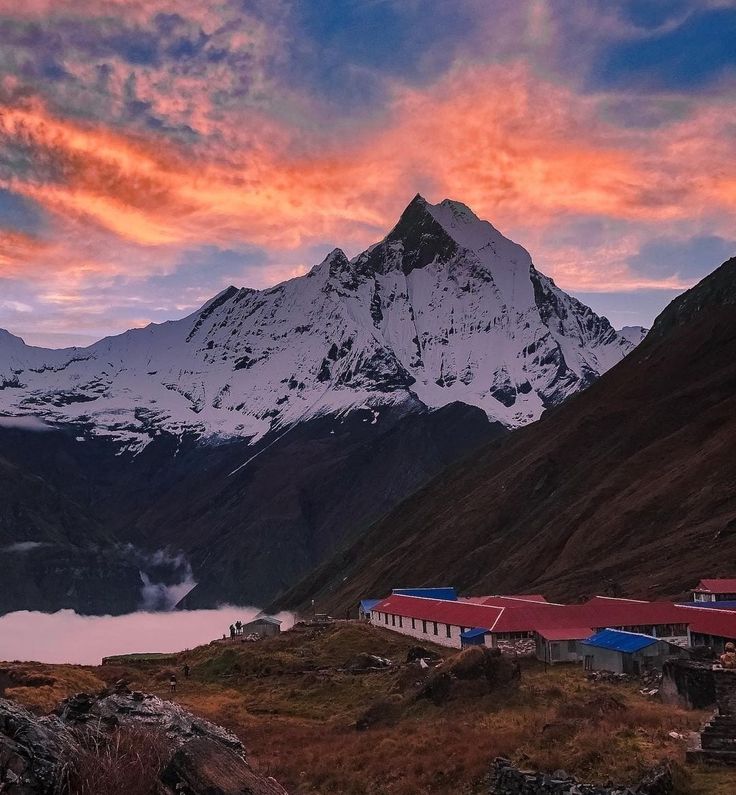
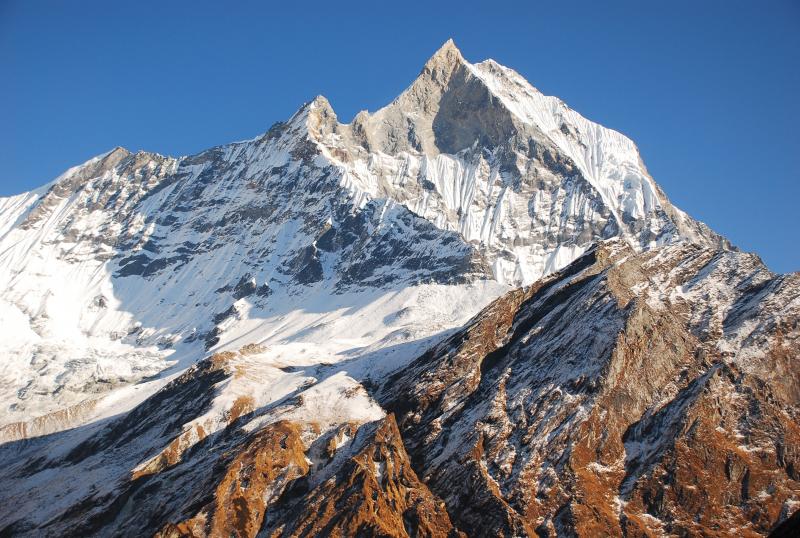
- Trek to the base of the sacred Machhapuchhre (Fishtail Mountain), one of Nepal’s most iconic and unclimbed peaks
- Spectacular panoramic views of Annapurna South, Hiunchuli, Mardi Himal, and Machhapuchhre throughout the journey
- Experience the stunning sunrise and sunset from Khumai Danda, one of the best viewpoints in the region
- Walk through diverse landscapes from lush rhododendron forests to alpine ridges and glacial terrain
- Explore authentic Gurung villages like Ghachok and Ribhan, rich in culture and tradition
- Enjoy a peaceful and less crowded alternative to popular Annapurna trekking routes
- Witness untouched wilderness with dramatic ridgelines and high-altitude camps
- Experience both teahouse trekking and wilderness camping in one journey
- Opportunity to spot Himalayan wildlife such as monal (Danphe) and various mountain birds
- Relax in Pokhara’s Lakeside with views of Phewa Lake before and after the trek
Route Details – Machhapuchhre Base Camp Trek
The Machhapuchhre Base Camp Trek begins with a scenic journey from Kathmandu to Pokhara, followed by a short drive to Hemja Milanchok the gateway to this off-the-beaten-path adventure. The trail gradually ascends through terraced farmlands, subtropical forests, and traditional Gurung villages such as Ribhan, offering an authentic glimpse into rural Himalayan life.
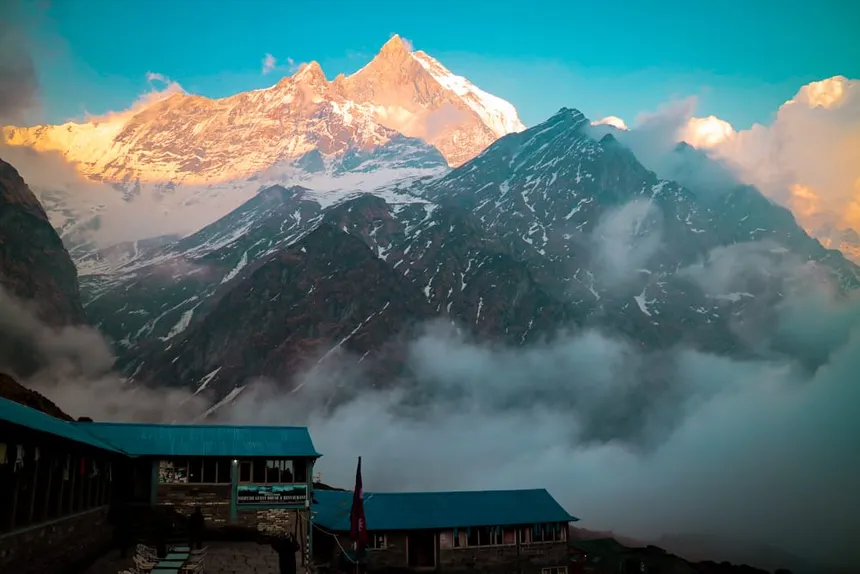
As the trek progresses, the route climbs through dense rhododendron and oak forests to Lalka, before emerging above the tree line toward the stunning ridge of Khumai Danda. From here, trekkers are rewarded with breathtaking panoramic views of Machhapuchhre (Fishtail), Annapurna South, Hiunchuli, and Mardi Himal.
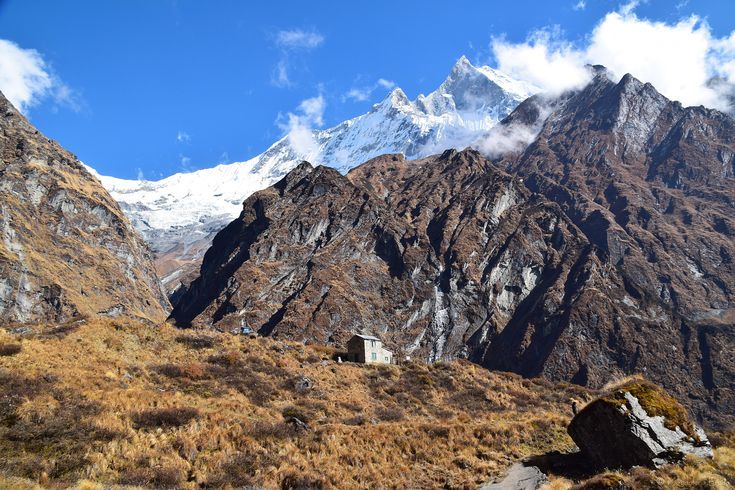
The trail then follows a dramatic alpine ridgeline beneath the towering cliffs of Machhapuchhre, leading to high-altitude camps surrounded by raw Himalayan wilderness. The final ascent to Machhapuchhre Base Camp (4,000 m) traverses rocky moraine and glacial terrain, culminating in a spectacular amphitheater of snow-capped peaks.
After reaching base camp, the return journey descends via Pilicho Camp, Karuwa, and the picturesque Gurung village of Ghachok. The trail gradually transitions from alpine landscapes back to lush forests and farmland before ending at Hemja, followed by a drive to Pokhara and return to Kathmandu.
This route offers a perfect blend of natural beauty, cultural immersion, and serene trekking experience away from the crowds of the main Annapurna trails.
Include
- Airport pick-up and drop-off (if applicable)
- Kathmandu to Pokhara and return transportation (flight or tourist bus as per package)
- Pokhara hotel accommodation (twin-sharing with breakfast)
- Teahouse/lodge accommodation during the trek
- Camping arrangement at higher altitudes (tents, kitchen gear, crew if required)
- Full board meals during the trek (Breakfast, Lunch, Dinner)
- Experienced, licensed trekking guide
- Porter service (1 porter for 2 trekkers)
- All required trekking permits (TIMS Card & ACAP Permit)
- First aid medical kit carried by the guide
- Government taxes and service charges
Exclude
- International airfare and Nepal visa fees
- Travel insurance (mandatory, including high-altitude coverage)
- Personal expenses (laundry, phone calls, internet, hot showers, charging fees)
- Meals in Kathmandu (except those specified)
- Alcoholic beverages, soft drinks, and bottled water
- Personal trekking gear and equipment
- Tips for guide and porter (expected but not mandatory)
- Emergency evacuation (covered by your insurance)
- Any costs arising from itinerary changes due to weather, natural disasters, or personal reasons
Machhapuchhre Base Camp Trek: 9-Day Itinerary
Your adventure begins early tomorrow morning (Monday 6 July 2026) with a domestic flight from Tribhuvan International Airport to Pokhara (≈ 25 min) or a scenic 6‑hour drive along the Prithvi Highway if you prefer the road. After checking into a comfortable Lakeside hotel, you’ll meet your trek leader for a thorough briefing that covers the day‑by‑day route, permit requirements (TIMS + ACAP), altitude‑sickness precautions, gear check, and emergency procedures.
The afternoon is yours to relax by Phewa Lake, visit the World Peace Pagoda, or simply unwind at a café while you adjust to the lower altitude. Dinner is a traditional Nepali set (dal‑bhat, seasonal vegetables, and achar) and you’ll spend the night in Pokhara, ready for the trek to start at first light.
After breakfast, a short 30‑minute drive takes you to the trailhead at Hemja Milanchok, the gateway to the Fishtail Base Camp trek. The path leaves the paved road and winds gently upward through terraced farmland, small Gurung hamlets, and dense subtropical forest. You’ll cross several seasonal streams on simple wooden bridges, hear the distant call of hill birds, and enjoy panoramic views of the Annapurna foothills as the trail gains roughly 300 m of elevation.
By mid‑afternoon you arrive at the tranquil settlement of Anante Thanti, where a modest teahouse offers a warm room, hot tea, and a hearty dinner of rice, lentil soup, and pickled vegetables. The evening is spent around a low fire, swapping stories with fellow trekkers before an early night to recover for the next day’s ascent.
Following a nourishing breakfast of porridge and fruit, you leave Anante Thanti and begin a steady climb through lush rhododendron and oak forests that cloak the lower slopes of the Annapurna range. The trail passes the traditional Gurung village of Ribhan, where you’ll have a chance to observe daily life women weaving, men tending terraced fields, and children playing near stone‑wall homes.
Continuing upward, the forest opens onto alpine meadows dotted with wildflowers, and the vista widens to reveal the towering peaks of Machhapuchhre and Annapurna South. After about six hours of walking you reach the peaceful village of Lalka, nestled at 2 250 m. Here you’ll stay in a family‑run lodge, enjoy a dinner of buckwheat noodles with yak cheese, and spend the night under a sky already beginning to glitter with stars.
Today’s trek is the most rewarding of the journey. After an early breakfast, you leave Lalka and ascend above the tree line, where the forest gives way to open alpine ridges. The trail follows a gradual, well‑marked path that climbs steadily, offering ever‑expanding views of the Annapurna massif: Machhapuchhre’s iconic fishtail summit dominates the horizon, while Annapurna South, Hiunchuli, and Mardi Himal appear in the distance.
The air becomes noticeably cooler and thinner, prompting regular water breaks and a slower pace to aid acclimatization. By late afternoon you arrive at Khumai Danda, a broad, grassy ridge renowned for its sunrise and sunset panoramas. You’ll set up camp (or stay in a simple stone‑walled hut if available), enjoy a warm meal of rice, dal, and seasonal greens, and spend the night wrapped in a good‑quality sleeping bag as temperatures dip below freezing.
Leaving the welcoming meadow of Khumai Danda behind, the trail tightens onto a dramatic ridgeline that skirts the base of Machhapuchhre’s towering cliffs. Alpine meadows give way to rocky scree and occasional patches of snow, and the landscape feels increasingly raw and untouched. You’ll traverse a series of gentle ascents and descents, crossing small glacial streams and navigating around boulders that have been sculpted by centuries of wind and ice.
The climb is steady but not overly steep, allowing you to maintain a comfortable rhythm while soaking in the ever‑changing scenery cloud shadows racing across the peaks, distant avalanches rumbling, and the occasional Himalayan monal flashing its iridescent plumage. By early evening you reach a sheltered campsite at 3 699 m, where a sturdy tent platform awaits. After a hot drink and a filling dinner of pasta with tomato‑based sauce and cheese, you’ll settle in for a night under a canopy of stars, the Milky Way stretching vividly overhead.
The highlight of the trek arrives today. After a light breakfast and a final gear check, you set out on the last push to Machhapuchhre Base Camp. The trail becomes a rocky moraine, with loose stones and occasional ice patches underfoot; trekking poles are especially helpful here. As you ascend, the south face of Machhapuchhre looms ever closer, its twin summits catching the morning light in a brilliant display of pink and gold. You’ll pass a small glacial lake that mirrors the peak, offering a perfect photo opportunity.
After roughly five hours of steady walking you arrive at the base camp (≈ 4 000 m), a rocky plateau surrounded by towering cliffs and hanging glaciers. The view is breathtaking: Machhapuchhre’s fishtail summit dominates the north, while Annapurna South, Hiunchuli, and Mardi Himal frame the horizon. You’ll spend the night in a sturdy four‑season tent (or a basic lodge if available), enjoying a high‑energy meal of rice, lentils, and canned fish, and taking extra care to hydrate and monitor for any signs of altitude sickness.
After an unforgettable sunrise that paints the fishtail peak in fiery hues, you begin a gradual descent toward Pilicho Camp. The trail initially follows the same moraine path before entering a zone of alpine scrub and dwarf juniper, then re‑enters lush rhododendron and bamboo forest as the elevation drops. You’ll cross several crystal‑clear streams on sturdy footbridges, hear the distant call of the Himalayan whistling thrush, and notice the temperature rising noticeably with each kilometer lost.
The descent is relaxed, giving your legs a chance to recover while you soak in the changing scenery from stark rock to verdant greenery. By late afternoon you reach Pilicho Camp, a tranquil clearing dotted with prayer flags. Here you’ll enjoy a warm meal of vegetable curry, rice, and chapati, and spend the night in a comfortable teahouse where hot showers are often available.
Today’s trek is a gentle, mostly downhill walk through subtropical forest and terraced farmland. You’ll leave Pilicho Camp behind and follow a well‑maintained trail that winds past small waterfalls, over suspension bridges, and alongside the Modi Khola river. The path passes through charming hamlets where locals greet you with friendly “Namaste” and offer fresh fruit or yogurt. As you lose altitude, the air becomes warmer and the vegetation denser, with banana trees and flowering vines appearing near the riverbanks.
After about four hours you arrive at the welcoming village of Karuwa, set at 1 380 m. You’ll stay in a family‑run lodge, enjoy a dinner of locally sourced chicken, rice, and pickled vegetables, and perhaps take a short evening stroll to watch the sunset over the valley.
Continuing your descent, you trek from Karuwa to the picturesque Gurung village of Ghachok. The trail meanders through terraced fields cultivated with millet, maize, and vegetables, crossing small irrigation channels and passing by traditional stone houses with intricately carved wooden windows. You’ll have opportunities to interact with villagers perhaps sharing a cup of chiya (tea) and learning about their unique customs, festivals, and agricultural practices.
The landscape opens up to reveal sweeping views of the Annapurna range, with Machhapuchhre’s fishtail still visible in the distance. By late afternoon you reach Ghachok, where you’ll settle into a comfortable guesthouse, enjoy a hearty meal of dal‑bhat with ghee, and spend the night reflecting on the incredible journey you’ve undertaken.
After a relaxed breakfast, you’ll embark on a leisurely walk back toward Hemja Milanchok, retracing the initial segment of the trek through terraced farmland and quiet villages. The walk takes about two hours, after which a short 30‑minute drive returns you to Pokhara. Here you’ll have time to freshen up, enjoy a lakeside lunch, and perhaps take a final boat ride on Phewa Lake or browse the Lakeside market for souvenirs.
In the late afternoon you’ll either board a domestic flight to Kathmandu (≈ 25 min) or catch a tourist bus along the Prithvi Highway (≈ 6‑7 hrs) depending on your schedule. Arriving in Kathmandu by evening, you’ll celebrate the completion of the trek with a farewell dinner, exchange contact details with your guide and porters, and begin planning your next Himalayan adventure.
Video
Packing List – Machhapuchhre Base Camp Trek
Clothing
- Moisture-wicking base layers (top & bottom)
- Insulating layers (fleece/down jacket)
- Waterproof & windproof jacket and pants
- Trekking shirts (quick-dry)
- Trekking pants (2–3 pairs)
- Thermal underwear
- Warm hat / beanie
- Sun hat / cap
- Gloves (inner + insulated outer)
- Buff / neck gaiter
- Undergarments
- Hiking socks (3–5 pairs)
Footwear
- Sturdy trekking boots (well broken-in)
- Lightweight shoes / sandals (for evenings)
- Gaiters (optional for snow/mud)
Trekking Gear
- Backpack (30–40L)
- Duffel bag (if using porter)
- Sleeping bag (-10°C to -15°C recommended)
- Trekking poles
- Headlamp with extra batteries
- Sunglasses (UV protection)
- Water bottles / hydration bladder
- Dry bags / packing cubes
Personal Items
- Quick-dry towel
- Toiletries (toothbrush, toothpaste, soap, etc.)
- Sunscreen (SPF 30+)
- Lip balm with SPF
- Wet wipes / tissue paper
- Hand sanitizer
Health & Safety
- Personal first aid kit
- Basic medications (pain relief, altitude sickness meds, etc.)
- Water purification tablets / filter
- Blister kit
- Personal prescriptions
Food & Snacks
- Energy bars / protein bars
- Dry fruits & nuts
- Electrolyte powders
- Chocolates / quick energy snacks
Documents & Essentials
- Passport (copy)
- Travel insurance
- TIMS Card & ACAP permits
- Cash (NPR for remote areas)
Extras
- Power bank
- Camera / mobile phone
- Charging cables
- Notebook & pen
- Lightweight book / cards
Optional (High Altitude / Comfort)
- Microspikes (if trekking in snow season)
- Down pants / extra insulation
- Hot water bottle
- Earplugs & eye mask
Pro Tip: Pack light but smart. Keep your backpack under 10–12 kg for comfort, and layer your clothing to adapt to changing mountain weather conditions.
Machhapuchhre Base Camp Trek: 9-Day FAQs
Machhapuchhre Base Camp is located in the Annapurna region of Nepal, northwest of Pokhara. It lies at an altitude of around 4,000 meters beneath the sacred Fishtail Mountain.
The trek is considered moderate in difficulty. It involves daily walking of 5–7 hours with gradual altitude gain, making it suitable for trekkers with basic fitness and some hiking experience.
Yes, you need two permits: the TIMS (Trekkers’ Information Management System) card and the ACAP (Annapurna Conservation Area Permit).
The best seasons are spring (March to May) and autumn (September to November), when the weather is stable and mountain views are clear.
Machhapuchhre Base Camp sits at approximately 4,000 meters (13,123 feet) above sea level.
Yes, altitude sickness can occur as the trek reaches 4,000 meters. Proper acclimatization, hydration, and a gradual pace help reduce risks.
The trek typically takes 9 to 10 days, depending on the itinerary and pace.
No, this trek is relatively less crowded and offers a peaceful alternative to more popular trekking routes in Nepal.
You will stay in teahouses and lodges at lower elevations, while camping or basic shelters may be used at higher altitudes.
Yes, beginners with good physical fitness and proper preparation can complete this trek, preferably with a guide.
You should pack layered clothing, trekking boots, a sleeping bag, trekking gear, personal items, and basic medical supplies suitable for high-altitude trekking.
While not always mandatory, hiring a licensed guide is highly recommended for safety, navigation, and a better overall experience.
You can travel from Kathmandu to Pokhara by flight or road, then take a short drive to Hemja Milanchok, the trek’s starting point.
Electricity is available at lower elevations, but limited at higher camps. Internet access is unreliable and may not be available in remote areas.
This trek offers untouched trails, dramatic ridge walks, close-up views of Machhapuchhre, and a blend of teahouse and camping experiences away from crowded routes.
Reviews
No reviews found.