

Teri La Pass Trek: Nar Phu Valley to Upper Mustang – 24 Days
Destination:
Nar Phu Valley & Upper Mustang, Nepal
Trip Duration:
24 Days
Max Altitude:
5,529m (Teri La Pass)
Activities:
Trekking, high-altitude mountaineering, cultural sightseeing, monastery visits, village exploration, scenic flights
Start Point:
Kathmandu
Ending Point:
Kathmandu
Region:
Nar Phu Valley & Upper Mustang
Trip Grade:
Strenuous
Group Size:
2-12 persons (small group for better experience)
Accomodation:
Camping/Teahouse Combination
Meals:
All meals included during trek (breakfast, lunch, dinner)
Transportation:
Private vehicle transfers in Kathmandu, Domestic flights (Jomsom-Pokhara-Kathmandu) & Jeep transportation (Lomanthang-Jomsom)
Permits Required:
ACAP, Nar Phu Special Permit, Mustang Restricted Permit
Best Season:
March - May, September - November
Teri La Pass Trek
The Teri La Pass Trek represents one of Nepal’s most extraordinary and challenging expeditionary routes, combining the pristine beauty of the Nar Phu Valley with the mystique of Upper Mustang in a single epic journey. This 24-day trekking itinerary traverses some of the most remote and culturally significant regions of the Himalayas, offering adventurous trekkers an unparalleled opportunity to experience two distinct Tibetan-influenced cultures that have developed in isolation for centuries. The Forbidden Kingdom trek begins in the bustling capital of Kathmandu before venturing into the heart of the Annapurna region, where the modern world gradually gives way to ancient traditions and landscapes that have remained largely unchanged for generations.
The Nar Phu Valley Experience
The journey to the Nar Phu Valley represents a step back into a world that seems frozen in time. Only opened to foreign trekkers in 2002, this hidden gem of the Annapurna region remained completely isolated from outside influence until recently, allowing its inhabitants to preserve their unique Tibetan Buddhist culture and traditional way of life with remarkable authenticity. The valley, carved by glacial waters and surrounded by towering peaks, offers a stark contrast to the more developed trekking routes of Nepal. As trekkers ascend from the lush forests of the lower Marsyangdi Valley into the high-altitude desert of Nar Phu, they witness a dramatic transformation in both landscape and culture.
The villages of Nar and Phu, perched at elevations exceeding 4,000 meters, serve as living museums of traditional Tibetan architecture and lifestyle. The flat-roofed stone houses, intricate chhortens, and ancient monasteries dotting the landscape create an atmosphere of profound spiritual significance. Here, the rhythms of daily life continue much as they have for hundreds of years, with yaks grazing in high pastures, monks performing ancient rituals, and villagers practicing traditional crafts that have been passed down through generations. The isolation that once protected these communities now offers trekkers a rare glimpse into a way of life that has virtually disappeared elsewhere in the modern world.
What makes the Nar Phu Valley particularly special is its position as a transitional zone between the verdant valleys of the Annapurna region and the high desert plateau of Mustang. This unique geographical position creates a diverse ecosystem where sub-alpine forests give way to dramatic rock formations, glaciers, and sweeping vistas that seem to stretch to infinity. The valley’s remote location means that fewer than 1,000 trekkers visit annually, ensuring an authentic wilderness experience that is increasingly rare in popular trekking destinations.
Crossing Teri La Pass: The Ultimate Challenge
The Teri La Pass stands as both the physical and symbolic centerpiece of this 24-day trekking itinerary, representing the bridge between two distinct worlds. At 5,529 meters, this high-altitude pass demands respect, preparation, and determination from all who attempt its crossing. The ascent to the pass is not merely a physical challenge but a spiritual journey, following ancient trade routes that once connected Tibetan and Nepalese communities across the Himalayan divide.
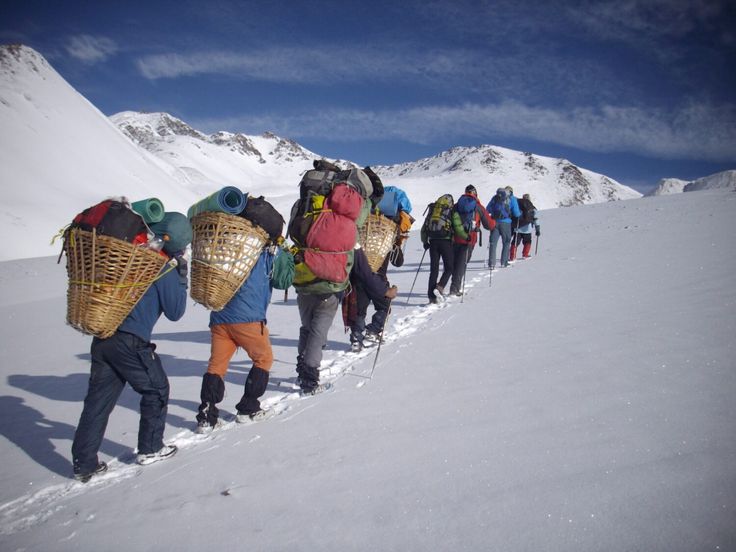
The technical nature of the Teri La crossing sets it apart from many other Himalayan passes. The route traverses glaciers, scree slopes, and snowfields that often require the use of crampons and ice axes, particularly in the early season when winter snows still blanket the higher elevations. The pass itself offers a vantage point that few humans ever witness a panoramic sweep of the entire Annapurna and Dhaulagiri ranges, with peaks rising majestically above clouds that seem close enough to touch. On clear days, the view extends across the Tibetan border, offering a glimpse into the vast plateau that has shaped the cultures and histories of both regions.
The crossing typically begins in the pre-dawn hours, when the stars still illuminate the sky and temperatures hover well below freezing. This early start is not merely logistical but strategic afternoon winds at this altitude can reach dangerous velocities, turning the challenging ascent into an impossible endeavor. As trekkers ascend through the darkness, headlamps creating streams of light against the snow, there is a profound sense of undertaking something truly extraordinary. The moment of reaching the pass summit, bathed in the golden light of sunrise, represents one of the most rewarding experiences available to adventurous travelers anywhere in the world.
The Upper Mustang: Forbidden Kingdom Revealed
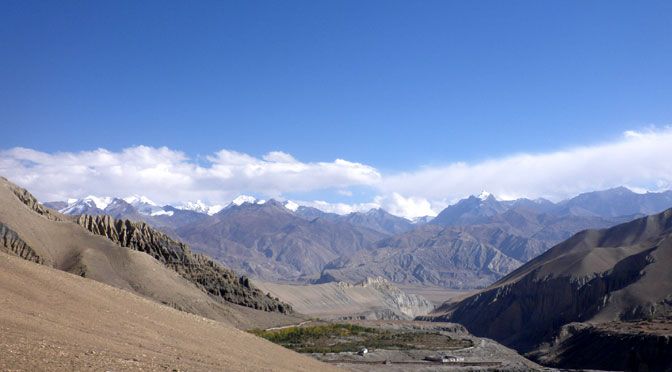
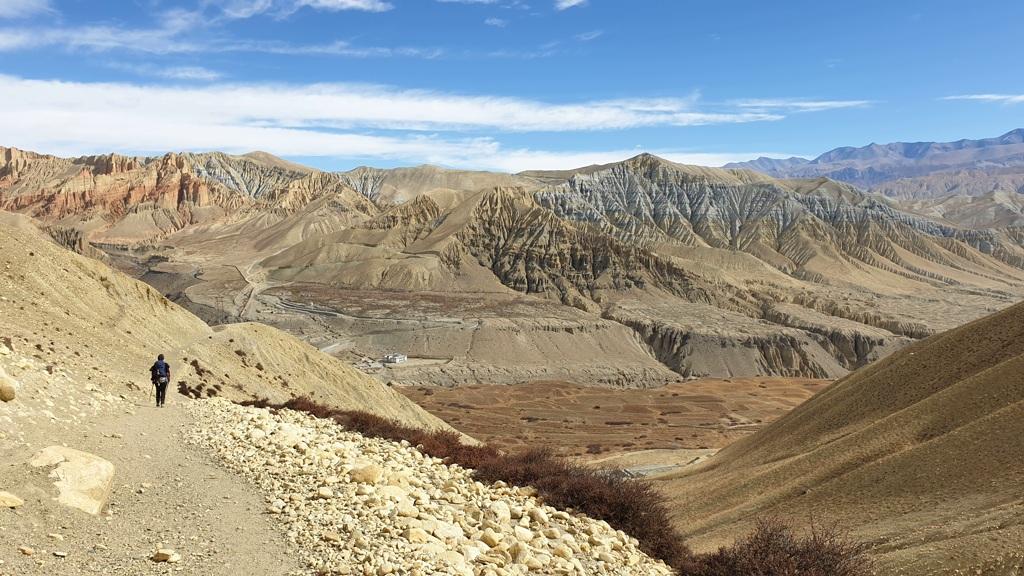
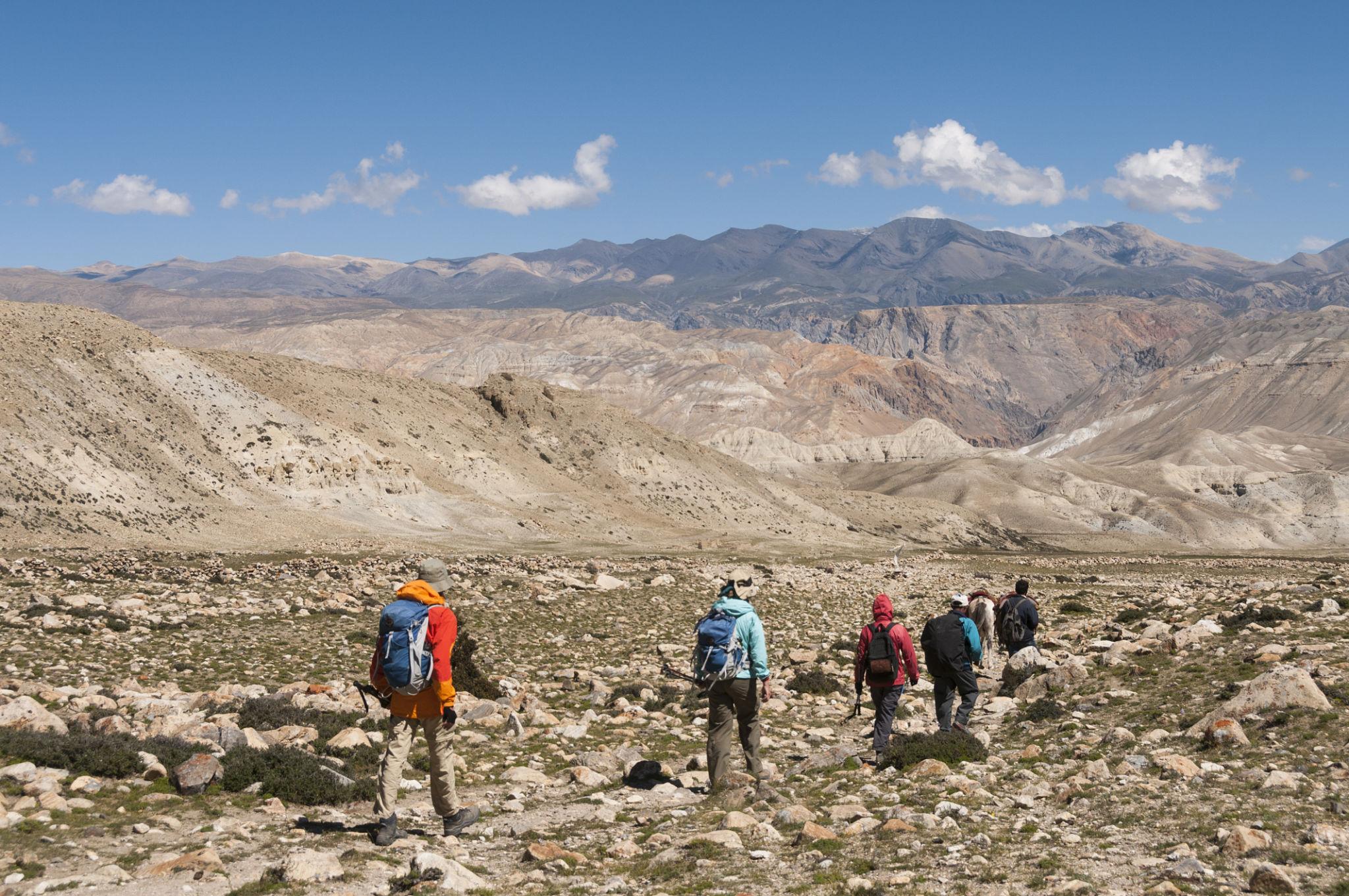
Descending from Teri La Pass into Upper Mustang marks the beginning of a new chapter in this Forbidden Kingdom trek. The landscape transforms dramatically, giving way to the iconic high desert terrain that characterizes the trans-Himalayan region. Here, the mountains give way to sweeping valleys of red and ochre rock formations, carved by wind and time into otherworldly shapes that seem more suited to a different planet than Earth. This stark, lunar landscape has been home to a unique civilization for over a thousand years, creating one of the most culturally distinctive regions in all of Asia.
Upper Mustang’s reputation as the “Forbidden Kingdom” stems from its historical isolation and restricted access that lasted until 1992. This long period of isolation allowed the region to preserve its Tibetan Buddhist culture and traditions with remarkable purity, free from the influences that transformed much of the Himalayan region in the 20th century. The walled city of Lomanthang, the capital of Upper Mustang, stands as a testament to this preservation its ancient monasteries, royal palace, and narrow streets offering a window into a medieval world that exists nowhere else in the modern era.
The cultural treasures of Upper Mustang extend far beyond its capital. Throughout the region, ancient cave dwellings carved into cliff faces tell the story of early human settlement, while remote monasteries like Luri Gumba contain priceless Buddhist art and manuscripts that have survived for centuries in the dry mountain air. The region’s unique position along ancient trade routes between Tibet and India created a rich cultural synthesis that is evident in everything from architecture to religious practices. Today, visitors to Upper Mustang witness a living culture where traditions continue not as museum pieces but as integral parts of daily life.
The Journey’s Significance
What makes the Teri La Pass Trek truly exceptional is its ability to combine multiple extraordinary experiences into a single cohesive journey. Unlike other trekking routes that focus on either natural beauty or cultural exploration, this expedition seamlessly integrates both elements while adding the challenge of a high-altitude pass crossing. The result is a transformative experience that engages trekkers physically, intellectually, and spiritually.
The 24-day trekking itinerary is carefully designed to allow for proper acclimatization while maximizing exploration of each region’s unique offerings. Days spent in the Nar Phu Valley provide opportunities for cultural immersion participating in village life, visiting monasteries, and learning about traditional practices from locals who have rarely encountered outsiders. The challenge of Teri La Pass builds resilience and creates a profound sense of accomplishment, while the exploration of Upper Mustang reveals the richness of a culture that has survived in one of the world’s harshest environments.
Perhaps most importantly, this journey offers trekkers the rare opportunity to witness two different expressions of Tibetan culture that have developed in isolation from each other. The similarities and differences between the Nar Phu and Mustang traditions tell a fascinating story of how culture adapts to different environments and historical circumstances. This comparative cultural experience, set against some of the most spectacular mountain scenery on Earth, creates memories and insights that last far beyond the trek’s conclusion.
Practical Considerations for the Forbidden Kingdom Trek
Undertaking the Teri La Pass Trek requires careful preparation and respect for the challenges involved. The remote nature of both the Nar Phu Valley and Upper Mustang means that facilities are basic and support is limited. Trekkers must be self-sufficient and prepared for conditions that can range from sweltering heat in the lower valleys to extreme cold at high elevations. Physical fitness is not merely helpful but essential this expedition demands stamina, strength, and mental fortitude to complete successfully.
The permit requirements for this route reflect its special status. Both Nar Phu and Upper Mustang are restricted areas requiring special permits that can only be obtained through registered trekking agencies. This regulation exists not merely for bureaucratic reasons but to protect fragile cultures and environments from the impacts of uncontrolled tourism. The requirement for licensed guides ensures safety while also providing opportunities for meaningful cultural exchange guides from these regions offer invaluable insights into local traditions, history, and way of life.
Weather presents another significant consideration. The Teri La Pass can only be crossed during a limited window between late spring and early autumn when snow conditions permit safe passage. Even during these optimal seasons, weather in the high Himalayas remains unpredictable, requiring flexibility and patience from trekkers. The physical demands of crossing a 5,500-meter pass mean that acclimatization is not optional but essential the itinerary includes rest days specifically designed to allow bodies to adjust to the decreasing oxygen levels at altitude.
For those willing to undertake the challenge, the rewards are immeasurable. This journey offers not just the satisfaction of completing one of Nepal’s most demanding treks but the privilege of experiencing cultures and landscapes that few people ever witness. The Nar Phu Valley and Upper Mustang represent treasures of human cultural heritage, while the crossing of Teri La Pass provides one of the most challenging and rewarding adventures available in the Himalayan region. This is more than a trek it is a journey into the heart of what makes mountain travel transformative and meaningful.
Trekking Similar to Teri La Pass Trek
- Annapurna Circuit Trek: 15 Night – 16 Days
- Manaslu Circuit trek-14N/15D
- Everest Base Camp Trek- 12 Days/ 11 Night
Nepal Pilgrimage & Cultural Tours
Teri La Pass Trek: Nar Phu Valley to Upper Mustang – 24 Days Highlights
- Traverse two remote Himalayan valleys in one epic journey: Nar Phu Valley and Upper Mustang
- Cross the challenging Teri La Pass (5,529m) connecting the two regions
- Explore ancient Tibetan Buddhist culture and traditional villages largely untouched by modernization
- Visit medieval monasteries including the famous Luri Gumba cave monastery
- Experience the mystical "Forbidden Kingdom" of Mustang with its unique landscape and heritage
- Witness stunning mountain vistas including Annapurna II, III, IV, and Tilicho Peak
- Discover hidden valleys, high desert landscapes, and traditional Tibetan lifestyle
- Authentic cultural immersion with Tibetan-influenced communities
Route Details – Teri La Pass Trek
This extraordinary 24-day expedition takes adventurous trekkers through some of Nepal’s most remote and culturally rich regions. Beginning in Kathmandu with sightseeing and preparation, the journey ventures into the Annapurna region before ascending to the spectacular Nar Phu Valley – a hidden gem opened to trekkers only in 2002.
After exploring the traditional villages of Nar and Phu, the challenging crossing of Teri La Pass leads into the legendary Upper Mustang region, often called the “Forbidden Kingdom.” The route concludes with exploration of Lomanthang and surrounding areas before returning via Jomsom. This trek combines high-altitude adventure with unparalleled cultural discovery, offering an intimate glimpse into Tibetan Buddhist traditions preserved in isolation for centuries.
Teri La Pass Trek: Nar Phu Valley to Upper Mustang – 24 Days Itinerary
Upon arrival at Tribhuvan International Airport, you’ll be greeted by our representative and transferred to your hotel in the heart of Kathmandu. After checking in and freshening up, you’ll have time to rest and recover from your journey. In the evening, there will be a pre-trek briefing where you’ll meet your guide, receive detailed information about the upcoming adventure, and have the opportunity to ask any questions. You’ll also be introduced to fellow trekkers and can enjoy a welcome dinner at a traditional Nepali restaurant, sampling local cuisine while getting to know your travel companions.
After breakfast, embark on a full-day guided sightseeing tour of Kathmandu’s UNESCO World Heritage Sites. Visit the sacred Swayambhunath Stupa, also known as the Monkey Temple, offering panoramic views of the city and an introduction to Tibetan Buddhism. Explore the historic Kathmandu Durbar Square with its ancient palaces and temples, then proceed to Pashupatinath, Nepal’s most sacred Hindu temple complex on the banks of the Bagmati River. The tour concludes at Boudhanath, one of the largest stupas in the world and a center of Tibetan culture in Nepal. In the afternoon, return to your hotel for final preparations and equipment check with your guide.
Early morning departure from Kathmandu for a scenic drive to Dharapani, the starting point of your trek. The journey takes approximately 7-8 hours, traveling along the Prithvi Highway with stunning views of the Trishuli River and surrounding hills. You’ll pass through picturesque villages like Dumre and Besisahar, gradually ascending into the Annapurna region. As you approach Dharapani (1,860m), the landscape transforms with terraced fields and traditional stone houses. Upon arrival, check into your teahouse and enjoy the afternoon exploring this beautiful village located at the confluence of the Marsyangdi and Dudh Khola rivers. Your guide will conduct a final briefing before the trek begins.
Today’s trek begins with a relatively gentle walk along the Marsyangdi River valley. The trail from Dharapani follows ancient trading routes through rhododendron and oak forests, with occasional glimpses of snow-capped peaks. After approximately 4-5 hours of trekking, you’ll reach Koto, a charming Gurung village that serves as the gateway to the restricted Nar Phu Valley region. The village offers stunning views of Lamjung Himal and Annapurna II. In the afternoon, you’ll visit the local checkpoint to register your permits for the Nar Phu region. This is an important day for acclimatization, so take time to rest, hydrate, and enjoy the serene mountain atmosphere.
Today marks the official entry into the Nar Phu Valley as you leave the main Annapurna Circuit trail. The initial section involves a steep climb through dense pine forests before emerging into more open terrain with spectacular views of the surrounding mountains. The trail becomes more rugged as you ascend, crossing suspension bridges over crystal-clear mountain streams. After approximately 5-6 hours of challenging trekking, you’ll arrive at Meta (3,570m), a traditional Tibetan-style village with flat-roofed stone houses and Chhortens (Buddhist shrines). The village offers your first glimpse of the unique Tibetan-influenced culture that characterizes the Nar Phu region. Rest well tonight as you continue to acclimatize to higher altitudes.
The trail from Meta to Kyang continues through dramatic high-altitude landscapes characterized by barren cliffs, deep gorges, and snow-covered peaks. You’ll follow ancient yak herding routes that have been used for centuries by local traders. The trek takes approximately 4-5 hours, with the trail winding through valleys carved by glacial meltwaters. Along the way, you may spot blue sheep and Himalayan griffons soaring overhead. Kyang (3,810m) is a seasonal settlement used by yak herders during summer months. The surrounding area offers excellent opportunities for photography of the unique geological formations and panoramic mountain vistas. Tonight, your guide will monitor your acclimatization as you prepare for the higher altitudes ahead.
Today’s trek to Phu Village represents one of the journey’s highlights as you reach one of the most remote and culturally preserved settlements in Nepal. The trail ascends gradually through a spectacular canyon with towering rock walls on either side. After 5-6 hours of trekking, Phu Village (4,080m) emerges dramatically against the mountainside. This ancient settlement appears frozen in time, with its medieval stone houses, narrow alleyways, and centuries-old monasteries. The village has maintained its traditional Tibetan Buddhist culture and lifestyle largely unchanged for hundreds of years. Upon arrival, you’ll visit the local monastery and receive blessings from the resident monks. The afternoon is free to explore this remarkable village and interact with the friendly local people.
Today you’ll venture beyond Phu Village into the upper reaches of the valley. The trail follows a glacial river upstream, with increasingly rugged terrain and stunning views of ice-covered peaks. The trek to Chyako takes approximately 4-5 hours, reaching an altitude of around 4,200m. This area is characterized by dramatic rock formations, glaciers, and high-altitude meadows where blue sheep can often be spotted grazing. Chyako serves as a high camp for those attempting nearby peaks and offers spectacular sunset views over the surrounding mountains. The isolation here is profound, with only the sound of wind and water breaking the silence. Tonight, your guide will conduct an acclimatization check as you prepare for the challenging days ahead.
Leaving Chyako behind, you’ll trek towards Nar Village, another culturally rich settlement in the Nar Phu Valley. The trail initially descends through the valley before ascending towards Nar. The journey takes approximately 5-6 hours through spectacular high-altitude scenery with sweeping views of the entire valley. Nar Village (4,110m) sits on a plateau overlooking the dramatic landscape below. Unlike Phu, Nar feels more open with its houses spread across the hillside. The village is known for its traditional architecture, friendly inhabitants, and ancient monasteries containing valuable Buddhist texts and artifacts. Upon arrival, you’ll have time to explore the village, visit the local school, and observe traditional weaving techniques practiced by the women.
This designated acclimatization day is crucial for your body to adjust to the high altitude before attempting the challenging Teri La Pass. You’ll spend the day exploring Nar Village and its surroundings at a relaxed pace. Morning activities may include visiting the local monasteries, observing daily village life, and taking short walks to nearby viewpoints offering spectacular views of the valley and surrounding peaks. In the afternoon, you can participate in a cultural exchange with local villagers, learning about their unique customs, traditions, and way of life in this remote region. Your guide will lead light stretching exercises and provide hydration tips. This rest day significantly improves your chances of successfully crossing the high pass tomorrow.
Today marks the beginning of your journey toward the Teri La Pass as you leave Nar Village behind. The trail descends from the plateau into a deep gorge carved by the Lapse Khola (river). The trek takes approximately 5-6 hours through increasingly remote terrain. The landscape transforms from the settled areas around Nar to wild, rugged wilderness with towering cliffs and dramatic geological formations. You’ll cross the river several times using log bridges and may encounter herds of yaks grazing in high pastures. Camp tonight is established near the river at approximately 4,000m, surrounded by towering peaks and the sound of glacial waters. The remoteness here is striking, with few signs of human presence other than the occasional herder’s shelter.
Continuing your approach toward Teri La Pass, today’s trek follows the Lapse Khola valley upward through spectacular high-altitude terrain. The trail becomes increasingly challenging as you ascend, requiring careful footing on rocky and sometimes icy sections. The journey takes approximately 5-6 hours, reaching higher altitudes around 4,300m. The landscape here is dominated by glacial moraines, scree slopes, and snow-covered peaks. You’ll likely encounter several small streams fed by glacial meltwater that must be crossed carefully. Tonight’s campsite offers stunning views of the pass you’ll attempt tomorrow, allowing you to mentally prepare for the challenge ahead. Your guide will provide specific instructions for tomorrow’s high-altitude crossing.
Today you’ll reach Teri La Base Camp, your staging point for tomorrow’s pass crossing. The trail continues ascending through increasingly rugged terrain, with the air becoming noticeably thinner. The trek takes approximately 4-5 hours, reaching an altitude of approximately 4,800m. Base Camp is situated on a glacial plateau with spectacular views of the surrounding peaks and the dramatic Teri La Pass looming above. The afternoon is dedicated to rest and final preparations for tomorrow’s challenging crossing. Your guide will check your equipment, review the route, and provide specific safety instructions for high-altitude trekking. Early dinner is recommended to ensure maximum rest before tomorrow’s early start. This is a critical acclimatization point for the journey.
Today represents the physical and technical high point of your entire trek as you cross Teri La Pass at 5,529m. An early morning departure (around 3:00 AM) is necessary to complete the crossing safely before afternoon winds and potential weather changes. The ascent to the pass takes 4-5 hours of challenging trekking across snow, ice, and rocky terrain, often requiring the use of crampons and ice axe. Reaching the pass summit offers breathtaking panoramic views of the entire Annapurna and Dhaulagiri ranges – a truly unforgettable experience. The descent into the Mustang side takes another 3-4 hours, initially steep and potentially treacherous before reaching the gentler slopes near Pasphu Khola. Camp tonight is established at approximately 4,500m on the west side of the pass.
Having successfully crossed Teri La Pass, today’s trek begins your exploration of the Upper Mustang region. The trail descends gradually from the high camp through spectacular trans-Himalayan landscape characterized by dramatic rock formations in shades of red, brown, and ochre. The trek takes approximately 5-6 hours to reach Kog (also known as Yakpa), situated at approximately 4,200m. The transformation in landscape is remarkable – from the snow and ice of the pass to the high desert terrain typical of Mustang. Along the way, you’ll encounter ancient caves carved into cliff faces, evidence of human settlement dating back thousands of years. Kog is a small settlement with traditional mud-brick houses, offering your first glimpse of Mustang’s unique architecture and culture.
Today’s journey continues through the heart of Upper Mustang, taking approximately 5-6 hours to reach the village of Tangye. The trail winds through a dramatic valley with towering red cliffs on either side, following ancient trade routes that have connected Tibet and Nepal for centuries. At approximately 3,800m, Tangye is one of the most remote and traditional villages in Mustang, with its unique flat-roofed houses constructed from mud and stone. The village appears almost magically suspended against the cliff face, accessible only by foot. Upon arrival, you’ll explore this remarkable settlement, visiting the ancient monastery and observing traditional agricultural practices that have remained unchanged for generations. The evening light on the surrounding cliffs creates a photographer’s paradise.
Today’s trek takes you to one of Mustang’s most significant cultural sites. The journey to Yara takes approximately 4-5 hours through increasingly spectacular terrain. Yara (3,700m) is famous for its proximity to the sacred Luri Gumba cave monastery, one of the most important and oldest Buddhist monasteries in the region. The village itself is traditional and charming, with whitewashed houses and narrow alleyways. The surrounding area contains numerous ancient caves and hermitages where monks have practiced meditation for centuries. Upon arrival, you’ll have time to explore the village and prepare for tomorrow’s visit to the extraordinary Luri Gumba. The spiritual atmosphere of this area is palpable, with prayer flags fluttering in the wind and the sound of monks chanting drifting from the monastery.
Today is dedicated to exploring the extraordinary Luri Gumba cave monastery, one of the most remarkable cultural sites in all of Nepal. A morning hike of approximately 1-2 hours leads to this sacred site, which is built into a natural cave on a cliff face. The monastery dates back over 1,000 years and contains priceless Buddhist paintings, statues, and manuscripts preserved in the dry cave environment. A local monk will guide you through the monastery, explaining its history, significance, and the Buddhist practices that continue here today. The spiritual atmosphere and artistic treasures make this a truly unique experience. After spending several hours at the monastery, you’ll return to Yara for the afternoon, with time to rest, reflect on the morning’s experience, and enjoy your final evening in this special village.
Today marks your arrival in the legendary walled city of Lomanthang, the capital of Upper Mustang and the highlight of the Mustang portion of your journey. The trek takes approximately 5-6 hours through spectacular desert landscapes with dramatic rock formations in every direction. Lomanthang (3,810m) appears like a mirage on the horizon, its massive walls and towers rising from the barren plain. Upon entering through the ancient gates, you’ll step back in time to a medieval city largely unchanged for centuries. The afternoon is dedicated to exploring this remarkable place, including the King’s Palace, ancient monasteries, and the narrow alleyways where traditional life continues as it has for generations. This is truly the “Forbidden Kingdom” that few travelers ever have the privilege to experience.
A full day is dedicated to exploring Lomanthang and its surrounding cultural treasures. In the morning, you’ll visit the three main monasteries within the city walls: Champa Lhakhang, Thugchen Gompa, and the King’s Palace, each containing valuable Buddhist art and artifacts. After lunch, you may take an optional excursion to nearby Chosar Village and its dramatic cliff-side caves, or visit the local amchi (traditional Tibetan doctor) to learn about traditional medicine practices. The afternoon offers free time to wander the ancient streets, interact with local people, and perhaps purchase traditional handicrafts as souvenirs. This exploration day provides essential cultural context and appreciation for the unique Mustang civilization that has survived in this high desert environment for over a thousand years.
Today you’ll travel by jeep from Lomanthang to Jomsom, marking the beginning of your journey back toward civilization. The drive takes approximately 6-7 hours along the rugged Kali Gandaki River valley, one of the deepest gorges in the world. The journey offers spectacular views of the dramatic Mustang landscape, with its colorful rock formations and ancient villages perched on cliffsides. You’ll pass through significant settlements like Tsarang and Ghami, each with their own monasteries and historical sites. As you descend toward Jomsom (2,720m), you’ll notice the vegetation gradually changing from the high desert to more green, cultivated areas. Upon arrival in Jomsom, check into your hotel and enjoy a well-deserved hot shower and comfortable bed after days of camping and basic accommodation.
Early morning departure for the spectacular flight from Jomsom to Pokhara. This 20-minute flight is considered one of the most scenic in the world, offering dramatic views of the Annapurna and Dhaulagiri mountain ranges as you fly through the Kali Gandaki gorge. Upon arrival in Pokhara (820m), you’ll have a brief stopover before connecting to your flight to Kathmandu. The afternoon in Kathmandu is free for rest, last-minute souvenir shopping, or exploring the vibrant Thamel district. In the evening, there will be a farewell dinner with your trekking team to celebrate the successful completion of this extraordinary journey. This is a time to share stories, photos, and memories from your adventure through some of Nepal’s most remote and remarkable regions.
This flexible day allows you to choose between rest and relaxation or exploring Kathmandu’s vibrant markets. For those interested in shopping, options include the Asan Tole bazaar for spices and traditional goods, the Thamel area for trekking gear and handicrafts, or specialized shops for Tibetan singing bowls, prayer flags, and Buddhist Thangka paintings. Alternatively, you may choose to spend the day relaxing at your hotel, enjoying a massage, or simply reflecting on your incredible journey. Your guide is available for recommendations and assistance with any last-minute needs. This day also serves as a buffer in case of any delays in earlier flights or travel. In the evening, enjoy a final night in Nepal before your departure tomorrow.
Your incredible 24-day Nar Phu Valley to Upper Mustang adventure concludes today. Depending on your international flight departure time, you may have time for final sightseeing, last-minute shopping, or simply relaxing at your hotel. Our representative will transfer you to Tribhuvan International Airport approximately 3 hours before your scheduled flight departure. As you board your plane, you’ll carry with you unforgettable memories of remote villages, ancient monasteries, spectacular mountain passes, and the warm hospitality of the Nepalese and Tibetan people. This journey through two of Nepal’s most culturally and geographically remarkable regions will remain with you forever as one of travel’s most extraordinary experiences. Safe travels and we hope to welcome you back to Nepal for future adventures.
Video
Packing List – Teri La Pass Trek
Essential Documents
– Valid passport with at least 6 months validity
– Nepal visa (can be obtained on arrival)
– Travel insurance covering high-altitude trekking up to 6,000m
– Passport-sized photos (4 copies)
– Permits: ACAP, Nar Phu Special Permit, Mustang Restricted Permit
Clothing
– Hiking boots (broken-in, waterproof)
– Camp shoes/sandals
– Thermal underwear (top and bottom)
– Trekking pants (quick-dry)
– Insulated pants (down or synthetic)
– Fleece jacket or sweater
– Waterproof/windproof jacket and pants
– Down jacket (for high camps and cold nights)
– Base layer tops (synthetic or wool)
– Sun hat and warm woolen hat
– Buff or neck gaiter
– Gloves (waterproof outer, warm inner)
– Several pairs of trekking socks (wool or synthetic)
Sleeping Gear
– Four-season sleeping bag (comfort rating to -20°C)
– Sleeping bag liner
– Inflatable sleeping pad
– Pillow case (can stuff clothes inside)
Equipment
– Backpack (60-70L with rain cover)
– Daypack (20-30L)
– Trekking poles
– Headlamp with extra batteries
– Sunglasses (UV protection, Category 4)
– Water bottles (2 x 1L)
– Water purification tablets or filter
– Sunscreen (SPF 50+)
– Lip balm with SPF
– Personal first aid kit
– Basic toiletries (biodegradable soap, wet wipes)
– Hand sanitizer
– Toilet paper
Technical Gear
– Crampons (provided by guide if needed)
– Ice axe (provided by guide if needed)
– Gaiters
Miscellaneous
– Camera with extra batteries and memory cards
– Power bank
– Travel adapter
– Light towel
– Ziplock bags for organization
– Trekking snacks (energy bars, nuts, chocolate)
– Cash (Nepali Rupees for tips and purchases)
– Small padlock for baggage
Optional Items
– Kindle or e-reader
– Playing cards or lightweight games
– Journal and pen
– Earplugs
– Compression socks
– blister kit/moleskin
Note: This itinerary is subject to change based on weather conditions, group fitness levels, and other unforeseen circumstances. Your guide has the authority to modify the schedule for safety and optimal experience. The Nar Phu and Upper Mustang regions require special permits, and trekking is only permitted with registered guides.
Reviews
No reviews found.