
Amphu Lapcha Pass Trek – 16 Days
Destination:
Nepal – Everest Region
Trip Duration:
16 Days
Max Altitude:
Amphu Lapcha Pass, ~5,845–6,000 m
Activities:
Trekking, high-altitude pass crossing, technical climbing (rope-fixed ascent/descent), cultural sightseeing
Start Point:
Lukla (via flight from Kathmandu)
Ending Point:
Lukla (via flight back to Kathmandu)
Region:
Khumbu / Hinku Valley / Sagarmatha National Park, Solukhumbu District
Trip Grade:
Strenuous / Technical (suitable for trekkers with prior high-altitude and basic mountaineering experience)
Group Size:
Typically 2–12 people (varies by operator; smaller groups recommended for the technical pass section)
Accomodation:
Teahouse/lodge (Kathmandu to Khare) and camping/tented camp (Kongme Dingma, Seto Pokhari, Amphu Lapcha Base Camp)
Meals:
Breakfast, Lunch, Dinner (teahouse meals up to Khare; camp-cooked meals during the remote camping stretch)
Transportation:
Domestic flight (Kathmandu–Lukla–Kathmandu), private vehicle for Kathmandu Valley tours
Permits Required:
Sagarmatha National Park Entry Permit, Khumbu Pasang Lhamu Rural Municipality Entry Permit (local permit replacing TIMS in this region)
Best Season:
Spring (March–May) and Autumn (late September–November)
Amphu Lapcha Pass Trek – 16 Days Highlights
- Cross the challenging, high-altitude Amphu Lapcha Pass (~5,845–6,000m) — one of the most technical trekking passes in the Everest region, requiring fixed ropes, crampons, and an ice axe
- Trek through the remote, off-the-beaten-path Hinku Valley, far from the crowds of the standard Everest Base Camp trail
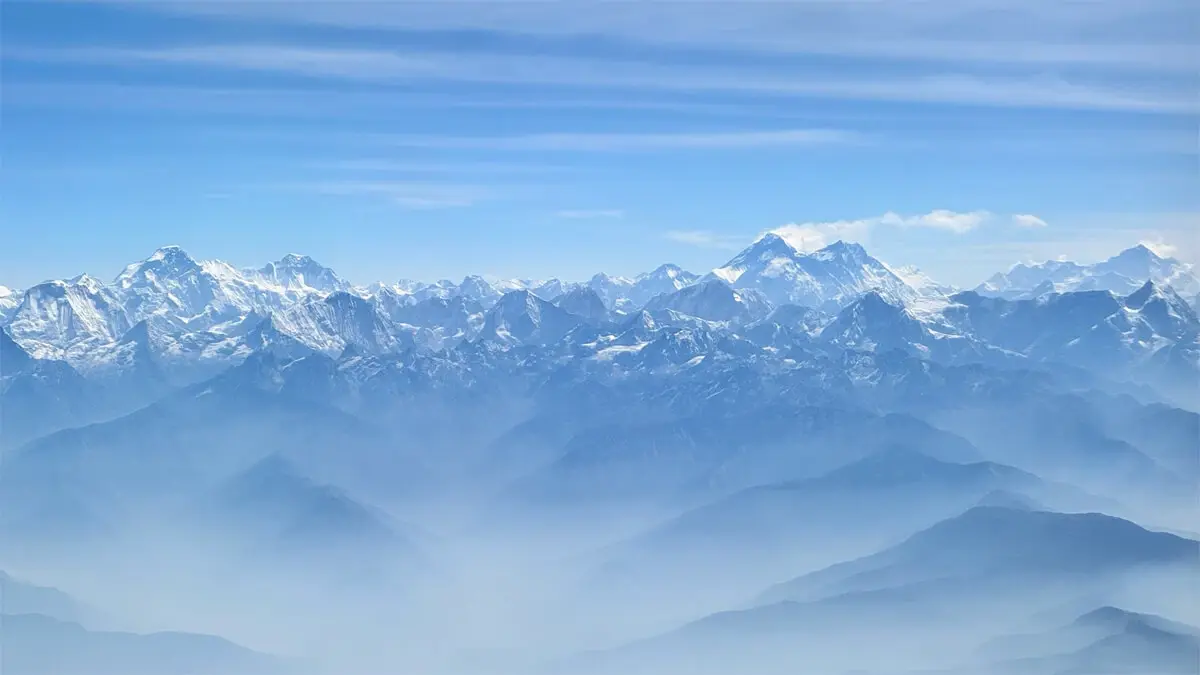
- Panoramic views of Mt. Everest, Ama Dablam, Makalu, Baruntse, Thamserku, Kusum Kanguru, and Mera Peak
- Experience two distinct Himalayan valleys Hinku and Khumbu connected by a single dramatic pass crossing
- Visit the historic Tengboche Monastery, the spiritual heart of the Khumbu with sweeping mountain backdrops
- Walk through remote high camps like Kongme Dingma and Seto Pokhari, rarely visited by trekkers outside Mera Peak/Amphu Lapcha parties
- Explore Sherpa culture and villages including Namche Bazaar, the Khumbu's famous trading hub
- Scenic mountain flights to and from Lukla's Tenzing-Hillary Airport
- Guided cultural sightseeing in Kathmandu Valley's UNESCO World Heritage Sites
- A true test of endurance and technical skill ideal for experienced trekkers seeking something beyond standard teahouse treks
- Camp beneath glaciers and moraine fields in some of the most untouched high-altitude terrain in Nepal
Amphu Lapcha Pass Trek Route
The route begins with a flight to Lukla, then branches off the main Everest trail over the Zatrwa La pass into the remote Hinku Valley, following the trail through Thuli Kharka, Thangnak, and Khare.
From Khare, the trek turns wild and unsupported, crossing high camps at Kongme Dingma and Seto Pokhari before reaching Amphu Lapcha Base Camp setting up for the trek’s defining challenge.
The route then crosses the technical, glaciated Amphu Lapcha Pass into the Khumbu, descending via fixed ropes into the Chhukung Valley on the far side.
From Chhukung, the trail rejoins the classic Everest Base Camp route, passing through Tengboche Monastery with its iconic mountain backdrop and on to the bustling Sherpa hub of Namche Bazaar.
The final stretch retraces the well-trodden path back to Lukla, closing the loop before the scenic return flight to Kathmandu.
In total, the route links two remote Himalayan valleys Hinku and Khumbu through one of the most demanding and rewarding pass crossings in the Everest region.
Include
- Airport pick-up and drop-off (international arrival/departure transfers)
- Standard hotel accommodation in Kathmandu (before and after the trek, twin/double sharing)
- Kathmandu Valley guided sightseeing tour with private vehicle and entrance fees
- Kathmandu–Lukla–Kathmandu domestic flights (or private jeep alternative, if applicable)
- All necessary trekking permits (Sagarmatha National Park, Makalu Barun National Park, Khumbu Pasang Lhamu Rural Municipality Permit, TIMS card)
- Experienced, government-licensed trekking guide
- Porter service (typically 1 porter per 2 trekkers) for carrying duffel bags
- Camping equipment for the unsupported stretch (tents, kitchen tent, dining tent, mattresses) from Khare/Kongme Dingma through Amphu Lapcha Base Camp
- Technical climbing gear for the pass crossing (fixed ropes, group climbing hardware — personal gear like harness/crampons usually separate, confirm with operator)
- All meals during the trek (breakfast, lunch, dinner) — teahouse meals up to Khare, camp-cooked meals on the remote section
- Boiled/purified drinking water during the trek
- Staff costs, including salaries, insurance, equipment, food, and accommodation for guide and porters
- First-aid medical kit carried by the guide
- All government and local taxes, VAT, and official expenses
- Welcome and farewell dinner in Kathmandu
Exclude
- International airfare to and from Nepal
- Nepal entry visa fees
- Travel and medical/emergency evacuation insurance (mandatory — must cover high-altitude trekking and helicopter rescue)
- Personal technical gear (harness, crampons, ice axe, carabiners, ascender/descender) unless explicitly included by the operator
- Personal trekking equipment and clothing (sleeping bag, down jacket, trekking boots, etc., unless rental is arranged)
- Meals in Kathmandu (except welcome/farewell dinner)
- Alcoholic beverages, soft drinks, bottled water, and hot showers/Wi-Fi charges during the trek
- Personal expenses (souvenirs, laundry, phone/internet charges, battery charging fees at lodges)
- Tips/gratuities for guide, porters, and support staff (customary and expected)
- Tips/gratuities for guide, porters, and support staff (customary and expected)
- Emergency evacuation costs (covered separately by insurance)
- Extra costs due to flight delays, cancellations, or itinerary changes caused by weather, strikes, or natural events
- Peak climbing permits and related costs, if combining with Mera Peak or Island Peak
- Any expense not specifically mentioned under "included"
Amphu Lapcha Pass Trek – 16 Days Itinerary
Your journey begins with arrival at Tribhuvan International Airport in Kathmandu, Nepal’s chaotic and colorful capital city sitting at about 1,350 m in the Kathmandu Valley. A representative from your trekking agency will greet you at the terminal and transfer you to your hotel.
Depending on your arrival time, the rest of the day is free to settle in, recover from jet lag, and take a first stroll through the surrounding streets. If you’re staying near Thamel, the city’s traditional tourist hub, you’ll find it packed with gear shops, bakeries, and rooftop restaurants a good place to pick up any last-minute trekking items. In the evening, many trekking companies host a welcome dinner where you’ll meet your guide and go over a broad outline of the trek ahead
The second day is split between culture and logistics. In the morning, a guided sightseeing tour typically covers a handful of Kathmandu Valley’s UNESCO World Heritage Sites commonly Swayambhunath (the “Monkey Temple”) on its hilltop overlooking the city, the sacred Hindu temple complex of Pashupatinath on the banks of the Bagmati River, and the medieval red-brick squares of Kathmandu Durbar or Bhaktapur.
These stops offer a good introduction to Nepal’s blended Hindu-Buddhist heritage before you head into the mountains. In the afternoon, attention turns to trek preparation: your guide will review the route, safety protocols for the Amphu Lapcha crossing, and required technical gear (harness, crampons, ascender, carabiners, ice axe), most of which can be rented or purchased in Thamel if you haven’t brought your own. This is also the time for a final equipment check, permit paperwork (Sagarmatha National Park entry and a TIMS/local permit), and repacking duffel bags for the flight to Lukla.
An early-morning flight takes you from Kathmandu to Lukla’s Tenzing-Hillary Airport, one of the world’s most dramatic mountain airstrips, cut into a hillside at around 2,840 m. The 30-40 minute flight offers striking views of the foothills and, on a clear day, distant snow peaks. From Lukla, rather than following the main Everest Base Camp trail, you branch off onto the quieter path leading up toward Chutanga.
The walk climbs steadily through pine and rhododendron forest for roughly 3-4 hours, gaining significant elevation right from the start, and ends at the small camp of Chutanga at approximately 3,020–3,050 m, your first overnight camp of the trek.
This is a tough early test for the legs and lungs. From Chutanga, the trail climbs steeply along a ridge above the Dudh Koshi drainage before reaching the Zatrwa La (also spelled Zatrwog La or Chhetra La), a pass at around 4,600 m that marks the crossing point between the Dudh Koshi and Hinku valleys. The ascent is steep and can be exposed to strong wind, so an early start is common to beat afternoon weather.
From the top of the pass, the reward is a wide panorama that, on clear days, takes in Kongde, Karyolung, and other peaks along the ridge lines to the west. A descent on the far side brings you down to Thuli Kharka, a high yak-grazing pasture at roughly 4,300 m, where you make camp for the night. Total walking time is usually 5-6 hours.
Leaving Thuli Kharka, the trail drops through rhododendron and pine forest into the Hinku Valley, often passing through or near the small settlement of Kothe before continuing upstream along the Hinku Khola. As you follow the river north, the terrain gradually shifts from forest to more open, alpine scenery, with views opening up toward Peak 43, Kusum Kanguru, and the southern flanks of Mera Peak.
After around 5-6 hours of walking, you arrive at Thangnak, a small cluster of stone lodges at approximately 4,350-4,360 m set against a backdrop of glacial moraine — this is where the true high-altitude phase of the trek begins.
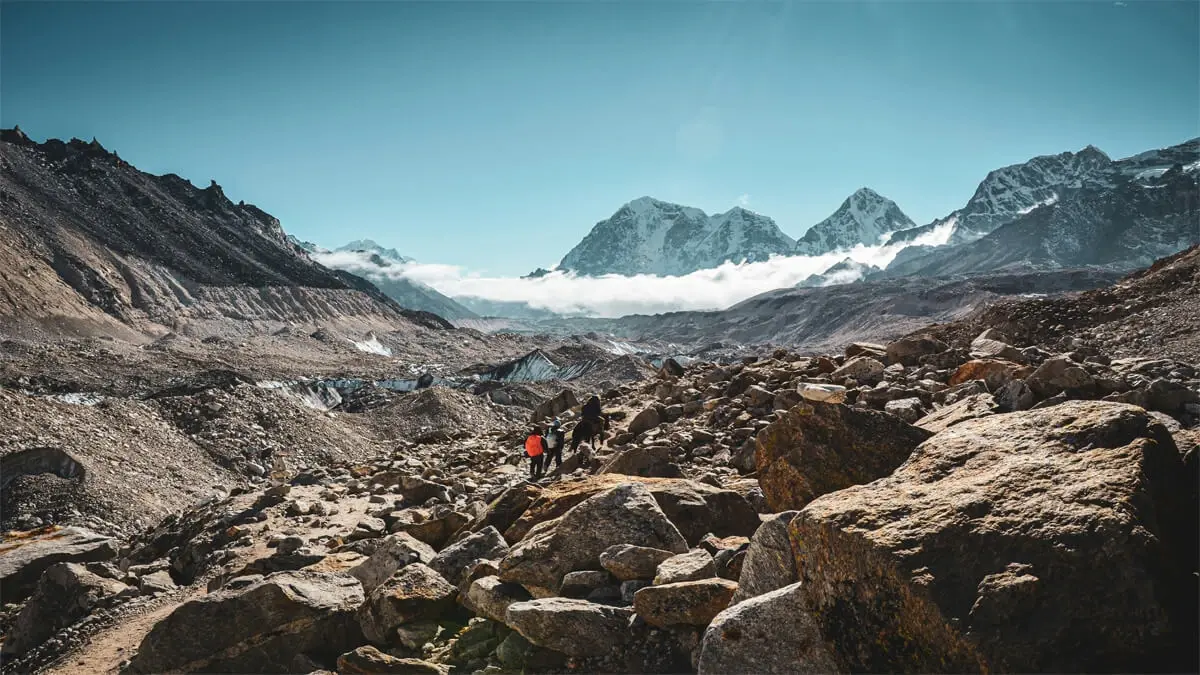
The trek from Thangnak to Khare is comparatively short in distance but climbs meaningfully in altitude, taking you along the edge of the Dig Glacier’s moraine wall for much of the way. The path threads across boulder fields and glacial debris with views of Mera Peak’s western flank close at hand, before dropping slightly to reach Khare at around 5,000-5,045 m.
Khare functions as the main base camp for Mera Peak climbers and is the last point with reasonably regular teahouse-style accommodation before the route moves into full camping territory. Walking time is typically 3-4 hours, kept intentionally short to help with acclimatization.
A full rest day is scheduled at Khare to let your body adjust to the altitude before pushing higher toward Amphu Lapcha. Rather than sitting still, most itineraries use the day for a short acclimatization hike up nearby slopes — climbing high and sleeping low — along with a technical refresher on rope work, using crampons, an ice axe, and a harness, since these skills will be needed both for any side excursions near Khare and, more critically, for the pass crossing later in the trek.
This is also a good opportunity for the guide team to check everyone’s health, fitness, and gear before committing to the remote, unsupported section ahead.
From Khare, the trail leaves the main Mera Peak route and turns toward the remote Hongu Valley. Depending on the specific routing used by your operator, this stretch may involve crossing or skirting the Mera La (around 5,400-5,415 m) before descending into a stark, high-altitude landscape of glacial moraine, scree, and rock. After 5-6 hours of walking through this remote terrain, you reach Kongme Dingma, a bleak, high camping ground at roughly 4,850 m used almost exclusively by parties heading for Amphu Lapcha.
There are no permanent settlements here, so the group camps with full tent support.
The trail continues deeper into the Hongu Valley, a wild and rarely visited basin ringed by high peaks. Walking for around 5-6 hours across rough, rocky ground and past small glacial tarns, you arrive at Seto Pokhari (“white lake” in Nepali), a high camp near a cluster of glacial lakes at approximately 5,035 m. The scenery here is stark and dramatic barren alpine terrain framed by the surrounding wall of mountains and the camp sits noticeably closer to the foot of the Amphu Lapcha climb.
This day’s trek pushes further up the valley toward the base of the pass itself, climbing over moraine and rocky slopes for roughly 5-6 hours to reach Amphu Lapcha Base Camp South at around 5,650 m. This exposed high camp is the final staging point before the crossing, and the afternoon and evening are typically spent resting, hydrating, and going over the plan for the technical climb ahead, since the following day is the most demanding of the entire trek.
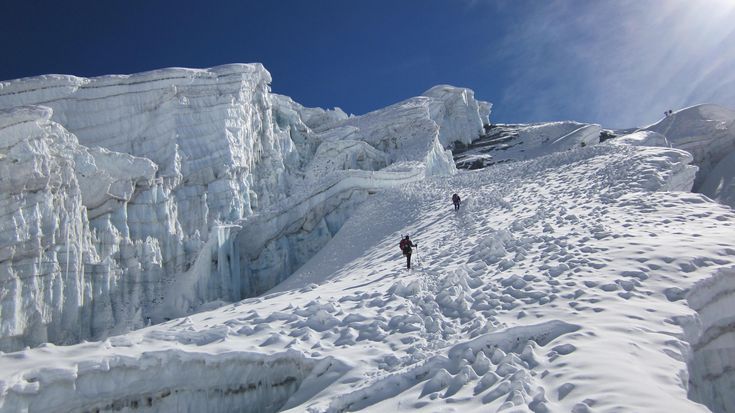
The crossing of Amphu Lapcha Pass is the technical and physical centerpiece of the trek, and this is typically the longest day, taking anywhere from 9-10 hours or more depending on conditions and group size. An early alpine-style start, often well before dawn, is standard so that the snow and ice on the pass are still firm and the group can be off the exposed terrain before the afternoon sun softens the route.
The ascent to the pass (reported at various points between roughly 5,845 m and 6,000+ m depending on the source and measurement point) involves steep snow and ice slopes tackled with crampons and ice axe, and the final approach and the far side descent typically require fixed ropes and rappelling down a rock-and-ice headwall on the Chhukung side this descent is the most exposed and technically serious section of the entire trek.
Once off the technical ground, a long descent over moraine and rough trail leads down into the Chhukung Valley, ending at the village of Chhukung (around 4,750 m) in the Khumbu region, where a proper lodge bed and hot meal feel especially well earned.
After the exertion of the pass, this day feels comparatively gentle. The trail descends through the broad Imja/Chhukung valley, rejoining the main Everest Base Camp trekking route near Dingboche or Pangboche, then continues down through pine and rhododendron forest to Tengboche. Tengboche is home to the region’s most famous Buddhist monastery, dramatically sited on a forested ridge with sweeping views of Ama Dablam, Everest, Lhotse, and Nuptse. Walking time is usually around 4-5 hours, and if timed well, you can catch the monks’ evening prayer ceremony at the monastery.
From Tengboche, the trail descends through forest to cross the Dudh Koshi River, then climbs back up the well-trodden main trail toward Namche Bazaar, the bustling Sherpa trading hub of the Khumbu at around 3,440 m. After the remoteness of the Hongu Valley and the technical intensity of the pass, Namche’s bakeries, gear shops, and lodges feel like a return to civilization. Walking time is typically 4-5 hours.
The final trekking day retraces the classic Everest Base Camp approach trail in reverse, descending steeply from Namche down to the Dudh Koshi, crossing suspension bridges, and passing through villages such as Monjo and Phakding before climbing back up to Lukla. This is a long day, typically 6-7 hours, and marks the end of the trekking portion of the trip — a good night’s rest in Lukla is well deserved.
A short scenic flight (weather permitting) returns you from Lukla to Kathmandu. Mountain flights here are notoriously weather-dependent, so it’s wise to keep this day flexible in case of delays. Once back in Kathmandu, the rest of the day is free many trekkers use it to shower properly for the first time in two weeks, do some souvenir shopping in Thamel, and enjoy a celebratory dinner with their guide and crew.
Depending on your international flight schedule, you’ll have some final free time in Kathmandu before being transferred to Tribhuvan International Airport for your departure flight, bringing the Amphu Lapcha Pass Trek to a close.
Video
Packing List – Amphu Lapcha Pass Trek
Documents & Essentials
- Passport + visa, passport photos
- Trekking permits (Sagarmatha National Park, local Rural Municipality permit)
- Travel/medical/evacuation insurance details
- Cash (NPR) for personal expenses
Technical & Climbing Gear (essential for the pass crossing)
- Climbing harness
- Ascender/jumar
- Descender/figure-8 or ATC
- Crampons (fitted to trekking boots)
- Ice axe
- Locking and non-locking carabiners (4-6)
- Prusik loops/slings
- Climbing helmet
- Trekking poles (collapsible)
Footwear
- Insulated, waterproof mountaineering/trekking boots (crampon-compatible)
- Camp shoes/sandals for evenings
- Warm wool or synthetic trekking socks (4-5 pairs)
- Liner socks
- Gaiters
Upper Body
- Base layers (thermal, moisture-wicking) – 2-3
- Fleece or down mid-layer jacket
- Heavyweight down jacket (essential above Khare)
- Waterproof, windproof outer shell jacket
- Trekking t-shirts (2-3)
Lower Body
- Thermal base layer leggings
- Fleece or softshell trekking pants
- Waterproof/windproof shell pants
- Quick-dry trekking shorts (lower altitude days)
Head, Hands & Face
- Warm insulated hat/beanie
- Sun hat or cap
- Buff/neck gaiter
- Warm gloves (insulated, waterproof)
- Thin liner gloves
- UV-protection sunglasses (glacier-rated, category 3-4)
- Headlamp + spare batteries (essential for early alpine start on pass day)
Sleeping & Camping
- Four-season sleeping bag (rated to at least -20°C)
- Sleeping bag liner
- Sleeping mat/inflatable pad (some operators provide tents/mats — confirm with agency)
- Down booties (optional, camp comfort)
Backpack & Bags
- Daypack (30-40L) for daily carry
- Duffel bag for porter-carried gear
- Dry bags/waterproof stuff sacks
- Rain cover for pack
Health & Hygiene
- First-aid kit (personal meds, blister care, altitude medication like Diamox if prescribed)
- Sunscreen (high SPF) and lip balm with SPF
- Hand sanitizer, wet wipes
- Toothbrush/toothpaste, biodegradable soap
- Quick-dry towel
- Water purification tablets/drops or filter
- Personal medications
Food & Hydration
- Insulated water bottles or thermos (2L capacity)
- Energy bars, snacks, electrolyte powder
Miscellaneous
- Trekking map/guidebook
- Power bank + charging cables
- Camera (optional)
- Earplugs
- Multi-tool/knife
- Repair kit (duct tape, gear repair patches)
- Sunglasses case
- Ziplock bags for organization
Notes:
- Technical gear (harness, crampons, rope work equipment) can often be rented in Kathmandu, but ensure fit and function are checked before departure.
- Layering is critical — temperatures range from warm lowland forest near Lukla to well below freezing at Amphu Lapcha Base Camp and the pass itself.
- Confirm with your operator exactly what’s provided (tents, ropes, cooking gear) versus what you need to bring personally.
Amphu Lapcha Pass Trek – 16 Days FAQs
It’s considered one of the most demanding treks in Nepal a difficult, technical route suitable for experienced trekkers and mountaineers with prior high-altitude experience, since the pass itself requires technical skills like ice climbing, rope work, and glacier travel. It’s generally not recommended for first-time trekkers or those without any mountaineering background.
Sources vary slightly, but the pass is most commonly listed at around 5,845 meters (19,178 feet), with some itineraries citing figures closer to 6,000m depending on the exact measurement point used.
Yes — most operators recommend prior experience with trekking peaks, glacier travel, and basic use of crampons, ropes, and ice axes before attempting Amphu Lapcha Pass.
The route typically requires permits for Sagarmatha National Park, Makalu Barun National Park, and the Khumbu Pasang Lhamu Rural Municipality, along with a TIMS card. Some agencies also note that crossing the pass itself calls for a special permit issued by the Nepal Mountaineering Association.
Most permits can be arranged through a registered trekking company in Kathmandu, though the Sagarmatha National Park permit can be purchased at Monjo, the Makalu Barun permit at Kothe, and the Khumbu Rural Municipality permit at Lukla once the trek is underway.
Costs vary by operator and group size, but as a reference point, one Kathmandu-based agency quotes roughly USD 3,000 per person for a couple’s trek package, which typically bundles permits, guide, porter, accommodation, meals, and transport. Solo or larger group treks may be priced differently.
Most itineraries run 16 to 18 days, though this can extend to 19+ days if combined with Mera Peak or Island Peak climbing
Spring (April to early June) offers stable weather and clear skies, while autumn (September to December) brings clear skies and minimal rainfall — these are the two recommended windows for attempting the pass safely.
It’s technically possible with proper acclimatization and a strong guide team, but newcomers may encounter significant challenges, and the trek isn’t really recommended for beginners given the altitude and technical demands
Yes — with the route reaching close to 5,845m, Acute Mountain Sickness is a real risk, and prevention relies on gradual acclimatization with rest days built in at points like Namche Bazaar and Chhukung.
Beyond standard trekking gear, climbers need technical equipment such as a harness, crampons, ice axe, carabiners, and rope-work equipment, since fixed ropes are typically set up on both sides of the pass to assist with the steep, icy ascent and descent.
Yes, this is a common combination — many operators offer packages linking Amphu Lapcha Pass with a Mera Peak or Island Peak summit attempt, extending the total trip length to around 19 days and requiring additional peak climbing permits.
It can be done safely with an experienced guide, proper acclimatization, and appropriate technical gear, but it remains inherently more hazardous than standard teahouse treks due to the glacier travel and steep, exposed sections on the pass itself.
Unlike EBC, this route ventures into the remote, undeveloped Hinku Valley, involves camping (not just teahouses) for several days, and requires an actual technical mountain pass crossing rather than following an established trekking trail throughout.
Reviews
No reviews found.