
Valley of Flowers Trek from Nepal – 7 Days
Destination:
Valley of Flowers National Park, Uttarakhand, India
Trip Duration:
7 Days / 6 Nights
Max Altitude:
4,329 m (14,200 ft) – Valley of Flowers
Activities:
Trekking, Nature Walk, Alpine Flower Exploration, Himalayan Sightseeing, Photography
Start Point:
Dehradun, India
Ending Point:
Dehradun, India
Region:
Uttarakhand, Garhwal Himalayas, Chamoli
Trip Grade:
Moderate
Group Size:
2–15 people
Accomodation:
3-Star Hotels, Comfortable Guesthouses/Lodges
Meals:
Breakfast, Lunch and Dinner
Transportation:
Private Tourist Vehicle, Local Transfer, Domestic/International Flights as per Nepal–India connection
Permits Required:
Valley of Flowers National Park Entry Permit, Forest/Environmental Fees and applicable local registration
Best Season:
June to October; July to September is generally the main flowering period.
Valley of Flowers Trek from Nepal
The Valley of Flowers Trek from Nepal is a beautiful Himalayan adventure that takes travelers from Nepal into the spectacular mountain landscapes of northern India. This journey is designed for travelers who want to experience one of the most distinctive alpine environments of the Indian Himalayas while enjoying a carefully organized adventure from Nepal. Rather than focusing only on the trekking trail, the experience brings together mountain scenery, biodiversity, traditional Himalayan communities, peaceful valleys and the unique atmosphere of Uttarakhand.
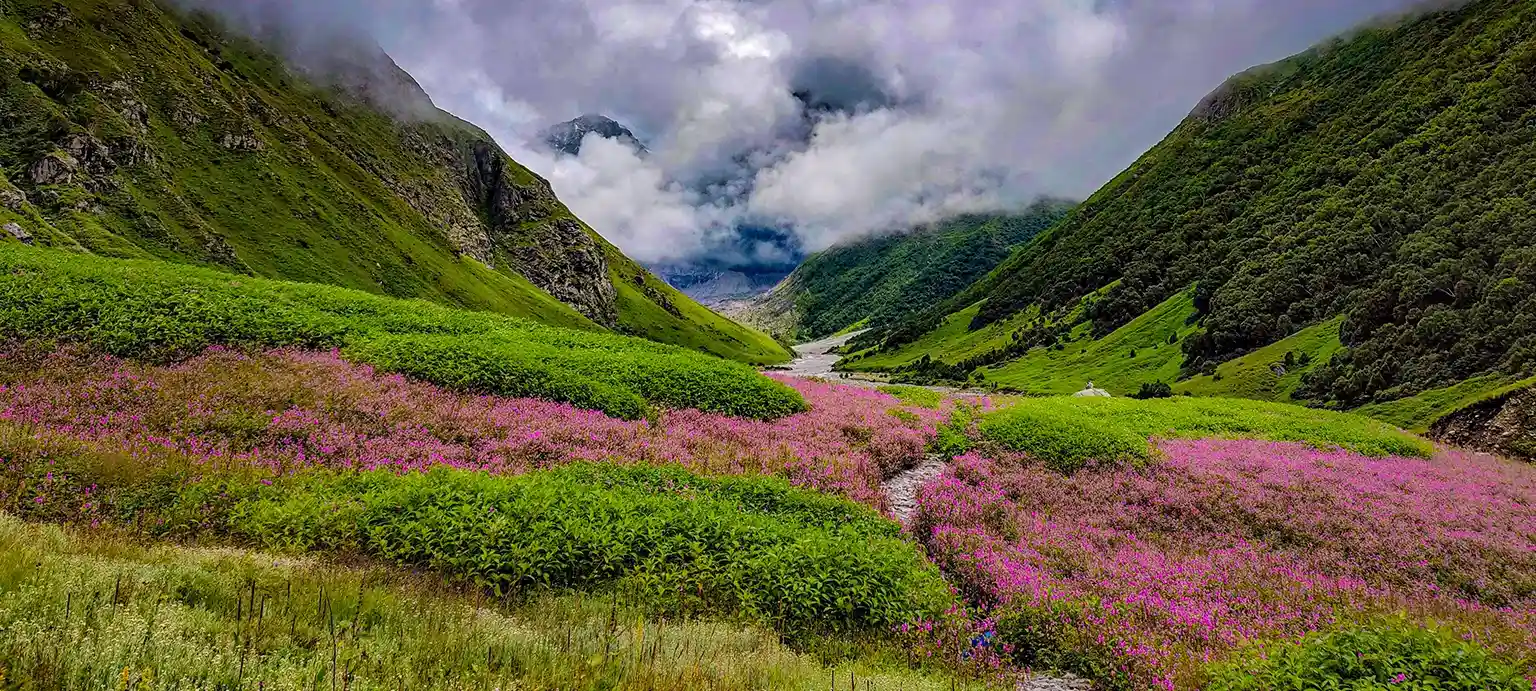
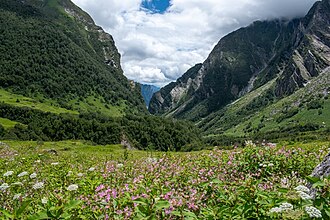
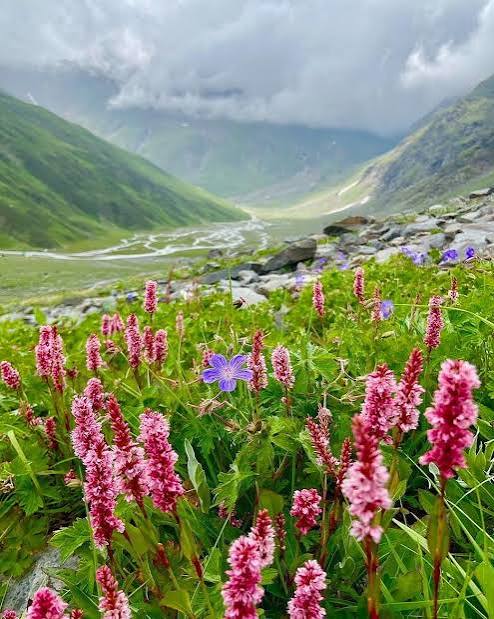
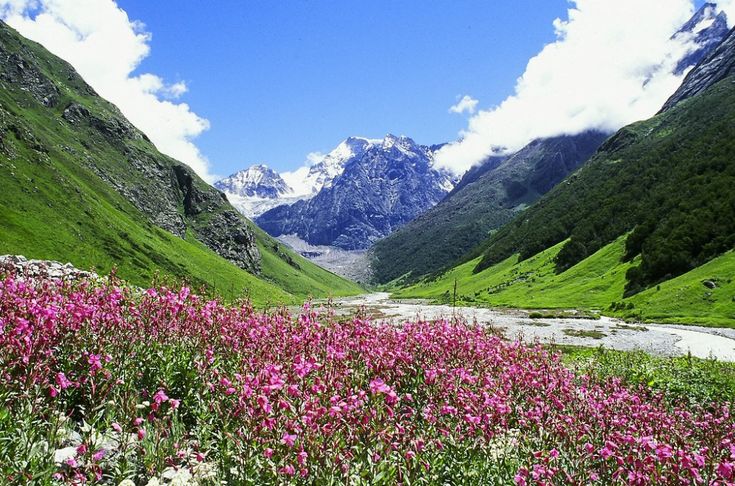
The Valley of Flowers is particularly special because its landscape changes dramatically with the seasons. During the flowering months, the high-altitude meadows become a colourful natural landscape filled with seasonal Himalayan plants. The surrounding mountains, flowing streams and changing light create an environment that feels very different from the lower valleys. For nature lovers and photographers, the destination provides opportunities to observe the relationship between alpine vegetation, mountain terrain and seasonal weather.
Discovering Uttarakhand Beyond the Trek
A major part of the Valley of Flowers Trek India experience is the journey through Uttarakhand itself. The Garhwal region is known for its dramatic topography, where deep river valleys rise toward high Himalayan terrain. The landscape changes gradually as the journey moves farther into the mountains. Lower elevations are characterized by greener valleys and settlements, while higher sections become increasingly rugged and alpine.
Travelers can observe traditional villages built along steep mountain slopes, agricultural terraces, forested hillsides and rivers cutting through narrow valleys. These landscapes provide an important cultural and geographical introduction to the region before reaching the high-altitude environment around Ghangaria and the Valley of Flowers.
The road journey also demonstrates how communities in the Himalayan interior are connected by winding mountain roads. Small settlements appear along the valleys, while larger mountain towns serve as important centers for transportation, trade and tourism.
The Natural Character of the Valley
The defining attraction of a Valley of Flowers trekking package is its natural environment. The valley is not simply a destination to visit for photographs; it is a protected Himalayan ecosystem where altitude, rainfall, temperature and seasonal changes influence the landscape.
During the flowering period, different species appear across the meadows, creating variations in colour and texture. Some areas may be covered with dense flowering plants, while others reveal grasses, rocks, streams and exposed mountain slopes. The appearance of the valley can therefore change from one visit to another and even from one part of the season to another.
This seasonal character makes the experience particularly rewarding for travelers interested in nature. Instead of expecting a fixed landscape, visitors experience a living environment that responds to the Himalayan climate.
A Journey for Nature and Photography
Photography is one of the natural highlights of the Valley of Flowers Trek package from Nepal. The combination of alpine flowers, mountain peaks, waterfalls, streams and changing weather creates a variety of subjects throughout the journey.
Early morning and late afternoon can produce different light conditions across the mountain slopes. Mist and clouds may also move through the surrounding peaks, changing the appearance of the landscape. Travelers interested in photography should therefore allow time to observe rather than rushing from one viewpoint to another.
The region is also attractive for travelers who simply want to spend time away from busy urban environments. The sound of mountain streams, forest surroundings and open alpine landscapes creates a peaceful setting that encourages slow travel and appreciation of nature.
Understanding the Himalayan Environment
The Valley of Flowers forms part of a broader protected Himalayan landscape. Its ecological importance is connected to the high-altitude environment, where plants and wildlife have adapted to challenging conditions.
Visitors should approach the area responsibly. Flowers should not be picked, vegetation should not be disturbed, and waste should never be left along the trail. Staying on designated paths helps protect fragile alpine vegetation and reduces unnecessary impact on the landscape.
Responsible trekking is especially important in popular Himalayan destinations because increased visitation can place pressure on natural resources. Travelers can contribute by carrying reusable bottles, minimizing plastic waste, respecting local instructions and leaving natural features exactly as they are found.
Experiencing Ghangaria
Ghangaria plays an important role in the overall experience because it provides the connection between the lower Himalayan approach and the high-altitude valley. The settlement has developed around the needs of trekkers and pilgrims traveling into the surrounding mountains.
Spending time in Ghangaria gives visitors an opportunity to experience the atmosphere of a Himalayan mountain settlement. The pace of life is different from cities and lower-elevation destinations. Weather can change quickly, and evenings can become noticeably cooler.
The stay here is also an important part of the trekking experience because the following day’s exploration takes place in a significantly different landscape. Travelers move from the forested approach into the open alpine environment of the Valley of Flowers.
Himalayan Culture and Mountain Communities
The journey also provides opportunities to observe the culture of Uttarakhand’s mountain communities. Traditional settlements, temples, local markets, agricultural practices and mountain architecture form part of the wider cultural landscape.
The region has long been shaped by pilgrimage, agriculture, seasonal movement and trade. Today, tourism and trekking have become important additional sources of livelihood for many communities along popular Himalayan routes.
Travelers can support local communities by using locally operated accommodation and transportation services where possible, purchasing appropriate local products and respecting community customs.
Why Choose a Valley of Flowers Tour from Kathmandu?
A Valley of Flowers tour from Kathmandu provides a practical way for travelers based in Nepal to extend their Himalayan experience beyond Nepal’s borders. The journey introduces a different Himalayan region while maintaining many of the elements that attract visitors to mountain destinations: dramatic scenery, traditional settlements, alpine environments and walking trails.
For travelers who have already explored popular destinations in Nepal, Uttarakhand offers an opportunity to experience the Himalayas from another geographical and cultural perspective. The mountain environment is familiar in its grandeur but different in its landscapes, infrastructure and regional character.
The cross-border nature of the journey also makes it suitable for international travelers who are already visiting Nepal and want to add an Indian Himalayan adventure to their travel plans.
Seasonal Experience
The character of the Valley of Flowers depends strongly on the season. The flowering period is the principal attraction, but mountain conditions can vary considerably. Rain, cloud cover and changing temperatures can influence trail conditions and visibility.
Travelers should therefore approach the journey with realistic expectations. The valley may not look identical in every visit, and weather can affect the experience. The changing conditions are part of the character of high-altitude Himalayan travel.
The best experience comes from allowing the landscape to dictate the pace rather than expecting every day to provide clear mountain views. Clouds, mist, sunlight and rain can each create different perspectives across the valley.
A Meaningful Himalayan Adventure
The Valley of Flowers Trek from Nepal is more than a straightforward mountain excursion. It provides an opportunity to experience the natural diversity of Uttarakhand while traveling through some of the most dramatic landscapes of the Garhwal Himalayas.
The combination of alpine meadows, seasonal flowers, mountain rivers, forests and traditional communities gives the journey considerable variety. The experience is particularly suited to travelers who value nature, photography, peaceful mountain environments and responsible adventure travel.
From the first views of the Garhwal mountains to the final exploration of the flower-filled valley, the journey offers a different perspective on the Himalayas. It allows visitors from Nepal and international travelers traveling through Nepal to discover a protected alpine environment that is distinctive within the broader Himalayan region.
For travelers searching for a Valley of Flowers Trek India experience that begins from Nepal, this journey offers an organized way to discover Uttarakhand’s high-altitude landscapes while combining cultural encounters, nature exploration and Himalayan trekking into one memorable adventure.
Frequently Asked Questions
1. Can I do the Valley of Flowers Trek from Nepal?
Yes. Travelers from Nepal can join the Valley of Flowers Trek by traveling from Kathmandu to India and continuing toward Uttarakhand. The journey connects Nepal with the Garhwal Himalayan region and includes the approach to Govindghat, Ghangaria and the Valley of Flowers.
2. What is the best time for the Valley of Flowers Trek?
The main trekking season is generally from June to October, with July to September being particularly associated with the flowering season. The exact appearance of flowers depends on seasonal weather, rainfall and local conditions, so the landscape can vary during the season.
3. How difficult is the Valley of Flowers Trek?
The Valley of Flowers Trek is generally considered a moderate Himalayan trek. The main challenge comes from the sustained walking, uphill and downhill sections and increasing altitude rather than technical climbing. Travelers should have reasonable fitness and be comfortable walking for several hours on mountain trails.
4. How high is the Valley of Flowers?
The Valley of Flowers is located at roughly 3,500–3,600 metres above sea level, while the wider trekking route reaches higher elevations depending on the exact point visited. Because the trek takes place at high altitude, travelers should maintain a comfortable pace and stay properly hydrated.
5. How many days are needed for a Valley of Flowers Trek from Nepal?
A practical organized Valley of Flowers Trek from Nepal can be arranged as a 7-day journey, including international travel between Kathmandu and India, the road journey into Uttarakhand, trekking to Ghangaria, exploration of the Valley of Flowers and the return journey.
6. Is the Valley of Flowers Trek suitable for first-time trekkers?
Yes, it can be suitable for people with limited trekking experience if they have good general fitness and prepare properly. The route does not require technical mountaineering skills, but travelers should be prepared for long walking days, uneven trails, altitude and changing mountain weather.
7. What should I expect during the Valley of Flowers Trek?
Travelers can expect forest trails, mountain streams, waterfalls, alpine meadows, seasonal flowers and dramatic Himalayan scenery. The experience also includes time in mountain settlements and a gradual transition from lower Himalayan valleys to the high-altitude environment of the Valley of Flowers.
8. Do I need a permit for the Valley of Flowers Trek?
Yes. Entry into the Valley of Flowers National Park is regulated, and travelers need to follow the applicable entry, forest and local registration requirements. Permit and fee requirements can change, so current regulations should be confirmed before departure.
9. What is the difference between the Valley of Flowers Trek and other Himalayan treks?
The Valley of Flowers is particularly known for its seasonal alpine flora and protected natural environment. Instead of focusing primarily on reaching a mountain pass or summit, the trek centers on exploring a high-altitude valley surrounded by Himalayan landscapes and seasonal wildflowers.
10. Can I combine the Valley of Flowers Trek with a Nepal holiday?
Yes. The trek can be added to a broader Nepal holiday because Kathmandu provides an international starting point for the journey. Travelers can combine their Nepal sightseeing or trekking plans with a Valley of Flowers tour from Kathmandu for a cross-border Himalayan experience.
Valley of Flowers Trek from Nepal – 7 Days Highlights
- Trek through the spectacular Valley of Flowers National Park in Uttarakhand.
- Explore colourful alpine meadows filled with seasonal Himalayan wildflowers.
- Experience the scenic Garhwal Himalayas and surrounding snow-capped peaks.
- Trek from Pulna to Ghangaria, the gateway to the Valley of Flowers.
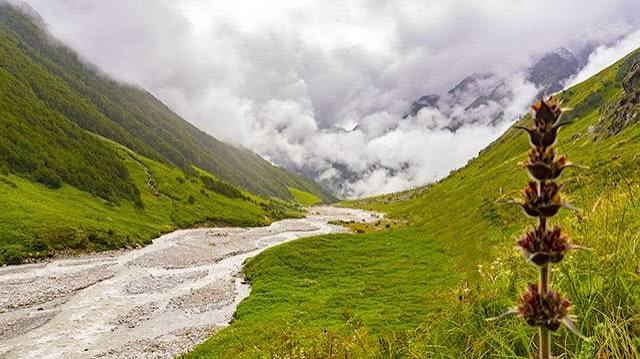
- Walk through forests, mountain streams, waterfalls and Himalayan landscapes.
- Spend a full day exploring the Valley of Flowers from Ghangaria.
- Experience the peaceful mountain environment of Ghangaria.
- Scenic road journey through Rishikesh, Devprayag, Rudraprayag, Karnaprayag and Joshimath.
- Enjoy the dramatic landscapes of the Alaknanda River valley.
- Comfortable hotel and guesthouse accommodation throughout the journey.
- Private transportation for the long Himalayan road sections.
- Conveniently designed as an inbound trekking package from Nepal.
- Capture spectacular Himalayan landscapes and seasonal wildflowers through photography.
- Experience one of India's most renowned Himalayan high-altitude flower valleys.
Valley of Flowers Trek from Nepal – Complete Himalayan Route
The Valley of Flowers Trek from Nepal begins in Kathmandu and takes you across the Nepal–India travel route into the Garhwal Himalayas of Uttarakhand. After flying from Kathmandu to Delhi, continue to Dehradun, the main gateway for the Uttarakhand section of the journey. From Dehradun, the route enters the Himalayan foothills and follows the scenic mountain roads through Rishikesh, Devprayag, Rudraprayag, Karnaprayag and Joshimath before reaching Govindghat, the starting area for the trek.
From Govindghat, a short local vehicle transfer takes you toward Pulna, where the walking section begins. The trail follows the mountain valley through forests, streams, waterfalls and scenic Himalayan landscapes toward Ghangaria, the main trekking base for the Valley of Flowers. The gradual ascent allows trekkers to adjust to the increasing altitude while enjoying the changing vegetation and mountain scenery.
The main trekking experience begins from Ghangaria with the excursion into Valley of Flowers National Park. The trail passes through alpine landscapes and opens into the famous flower-filled valley during the flowering season. The route offers views of dramatic mountain slopes, seasonal wildflowers, streams and waterfalls. After exploring the permitted area of the valley, return along the same trail to Ghangaria for an overnight stay.
The following day, descend from Ghangaria to Pulna, continue by vehicle to Govindghat, and then drive to Joshimath. From Joshimath, the return journey follows the Alaknanda River through the Himalayan valleys toward Dehradun. After an overnight stay in Dehradun, continue to Delhi for the return flight to Kathmandu.
Complete Route:
Kathmandu → Delhi → Dehradun → Rishikesh → Devprayag → Rudraprayag → Karnaprayag → Joshimath → Govindghat → Pulna → Ghangaria → Valley of Flowers → Ghangaria → Pulna → Govindghat → Joshimath → Dehradun → Delhi → Kathmandu
This route combines international travel, scenic Himalayan road journeys and a moderate high-altitude trek, making it suitable for travelers from Nepal looking to explore the Valley of Flowers, Uttarakhand and the Garhwal Himalayas in one organized itinerary.
Include
- Airport pickup and drop-off in India as per the itinerary.
- Kathmandu–Delhi–Kathmandu international flights.
- Delhi–Dehradun–Delhi transportation as per the itinerary.
- Private tourist vehicle for the Uttarakhand road journey.
- Local transportation between Govindghat and Pulna, where applicable.
- 3-star hotel accommodation in Dehradun.
- Comfortable hotel/guesthouse accommodation in Govindghat.
- Comfortable lodge/guesthouse accommodation in Ghangaria.
- Hotel accommodation in Joshimath.
- Daily breakfast throughout the trip.
- Lunch and dinner during the trekking and road journey days as mentioned in the itinerary.
- Packed lunch for the Valley of Flowers excursion.
- Experienced English-speaking trekking guide.
- Trekking support staff as required.
- Valley of Flowers National Park entry permit.
- Applicable forest and environmental entry fees.
- Required local trekking registration and applicable government fees.
- Basic first-aid kit carried by the trekking team.
- Trekking route coordination and assistance.
- All applicable accommodation and service taxes.
Exclude
- Nepal airport transfers unless specifically mentioned.
- Visa or entry requirements for India, where applicable.
- Personal travel and medical insurance.
- Personal expenses such as laundry, telephone calls and internet.
- Snacks, soft drinks, bottled water and alcoholic beverages.
- Meals and services not specifically mentioned in the itinerary.
- Personal trekking equipment and clothing.
- Trekking shoes, walking poles, rain gear, warm clothing and backpacks.
- Porter or personal porter service unless specifically arranged.
- Emergency evacuation and rescue expenses.
- Medical treatment and hospital expenses.
- Additional accommodation caused by delays, weather or road closures.
- Flight, transport or accommodation costs resulting from itinerary changes outside the operator's control.
- Tips for guides, drivers, hotel staff and support crew.
- Any additional sightseeing or activities not mentioned in the itinerary.
- Any expenses arising from natural disasters, landslides, strikes, political disturbances or other unforeseen circumstances.
Valley of Flowers Trek from Nepal – 7 Days Itinerary
Duration: Full day travel
Transport: International flight + road/domestic connection
Accommodation: Hotel in Dehradun
Meals: Breakfast and dinner
Begin your journey from Kathmandu with a flight to Delhi, followed by onward travel to Dehradun. Depending on the flight schedule, the Delhi–Dehradun section can be arranged by domestic flight or private vehicle. Upon arrival in Dehradun, meet your trekking representative and transfer to the hotel. The evening is reserved for rest and trek preparation. Your guide will brief you about the Valley of Flowers route, weather, altitude, walking conditions and required equipment. Overnight at a comfortable hotel in Dehradun.
Duration: 10–11 hours drive
Distance: Approximately 300–310 km
Transport: Private vehicle
Accommodation: Hotel/guesthouse in Govindghat
Meals: Breakfast and dinner
After an early breakfast, drive from Dehradun toward Govindghat through the spectacular Garhwal Himalayas. The route passes through Rishikesh, Devprayag, Rudraprayag, Karnaprayag and Joshimath, following the mountain river valleys and winding roads deeper into Uttarakhand. Stop along the way for lunch and short breaks. As you approach Govindghat, the landscape becomes increasingly mountainous, with forested slopes, waterfalls and dramatic Himalayan valleys. Arrive in Govindghat in the evening, check into your hotel and prepare your trekking equipment. Overnight at a hotel or guesthouse in Govindghat.
Duration: 5–7 hours trekking
Trek distance: Approximately 13 km
Transport: Local vehicle, where applicable
Accommodation: Hotel/guesthouse in Ghangaria
Meals: Breakfast, lunch and dinner
After breakfast, travel by local vehicle toward Pulna, the roadhead for the trekking section. From Pulna, begin walking toward Ghangaria along the well-established mountain trail. The route follows the valley through forests and alongside mountain streams, with several bridges, waterfalls and scenic viewpoints along the way. Maintain a steady pace because the trail gradually gains altitude. Stop for lunch along the route before continuing toward Ghangaria. After several hours of trekking, arrive at Ghangaria, the principal base for the Valley of Flowers. Check into your hotel or lodge, freshen up and rest. Overnight in Ghangaria.
Duration: 6–7 hours trekking
Trek distance: Approximately 10–12 km round trip
Accommodation: Hotel/guesthouse in Ghangaria
Meals: Breakfast, packed lunch and dinner
Start early after breakfast for the main excursion into the Valley of Flowers National Park. Follow the designated trail from Ghangaria toward the valley entrance and continue through alpine forests before reaching the open meadows. During the flowering season, the valley is covered with seasonal Himalayan flowers, surrounded by steep mountain walls, streams, waterfalls and high Himalayan peaks. Spend several hours exploring the permitted sections of the valley, enjoying the landscape and photographing the natural scenery. A packed lunch will be carried for the day’s excursion. After completing the exploration, retrace the trail and return to Ghangaria in the afternoon. Enjoy dinner and rest at the hotel. Overnight in Ghangaria.
Duration: 5–6 hours trekking/drive
Trek distance: Approximately 13 km downhill
Transport: Local vehicle + private vehicle
Accommodation: Hotel in Joshimath
Meals: Breakfast, lunch and dinner
After breakfast, begin your descent from Ghangaria toward Pulna. The downhill trail passes through the same Himalayan landscape but offers a different perspective of the valley, forests and surrounding mountains. Take regular breaks and walk carefully on steeper or slippery sections. After reaching Pulna, continue by local vehicle to Govindghat. Meet your private vehicle and drive onward to Joshimath, an important mountain town in the Garhwal Himalayas. Arrive at the hotel, check in and relax after completing the trekking portion of the journey. Overnight in Joshimath.
Duration: Approximately 9–10 hours drive
Distance: Approximately 275–300 km
Transport: Private vehicle
Accommodation: Hotel in Dehradun
Meals: Breakfast, lunch and dinner
After breakfast, begin the scenic return drive from Joshimath to Dehradun. Follow the Alaknanda River through the mountain valleys, passing Joshimath’s surrounding settlements, Karnaprayag, Rudraprayag, Devprayag and Rishikesh. Stop for lunch and refreshments during the journey. The road offers spectacular views of Himalayan ridges, rivers, forests and traditional mountain villages. Continue toward Dehradun and arrive in the evening. Check into your hotel and enjoy a relaxed evening after the long journey. Overnight in Dehradun.
Duration: Full day travel
Transport: Private vehicle/domestic flight + international flight
Accommodation: Not included
Meals: Breakfast
After breakfast, transfer from Dehradun toward Delhi according to your international flight schedule. Depending on the departure time, the transfer can be arranged by private vehicle or domestic connection. Continue to Delhi International Airport for your flight back to Kathmandu. Arrive in Kathmandu with the Valley of Flowers Trek completed, bringing your inbound Himalayan adventure in Uttarakhand to an end.
Video
Valley of Flowers Trek – Packing List
Clothing
- Lightweight trekking T-shirts
- Quick-dry trekking trousers
- Thermal inner layers
- Fleece or warm mid-layer
- Down/synthetic jacket
- Waterproof and windproof jacket
- Waterproof trekking trousers
- Warm sweater or fleece
- Comfortable sleepwear
- Underwear and socks
- Warm woollen socks
- Sun hat/cap
- Warm hat or beanie
- Lightweight gloves
Trekking Gear
- Comfortable waterproof trekking boots
- Lightweight sandals or camp shoes
- Trekking poles
- Daypack (20–30 L)
- Duffel bag for main luggage
- Backpack rain cover
- Headlamp with spare batteries
- Reusable water bottle
- Water purification tablets or filter
- Sunglasses with UV protection
- Sleeping bag suitable for cold mountain conditions
Personal & Travel Items
- Passport and required travel documents
- Indian entry/visa documents where applicable
- Copies of passport and permits
- Travel insurance documents
- Flight and hotel confirmations
- Cash in Indian currency
- Mobile phone
- Power bank
- Charging cables and adapters
- Small travel lock
- Waterproof document pouch
Personal Care
- Toothbrush and toothpaste
- Biodegradable soap
- Shampoo
- Hand sanitizer
- Wet wipes and tissues
- Quick-dry towel
- Lip balm with SPF
- Sunscreen
- Moisturizer
- Personal toiletries
- Small garbage bags
Health & First Aid
- Personal prescription medicines
- Basic first-aid kit
- Bandages and blister treatment
- Pain-relief medicine
- Antiseptic solution or wipes
- ORS/electrolytes
- Basic altitude-related medication, only if advised by a qualified medical professional
- Any regular medication required during the trip
Recommended Extras
- Camera and spare batteries
- Binoculars
- Small waterproof dry bags
- Lightweight rain poncho
- Trekking snacks and energy bars
- Notebook and pen
- Small sewing/repair kit
Packing Tip: Keep your trekking backpack light and carry only essential items during the Ghangaria–Valley of Flowers section. Store unnecessary luggage securely at the designated accommodation or luggage facility where available.
Reviews
No reviews found.