
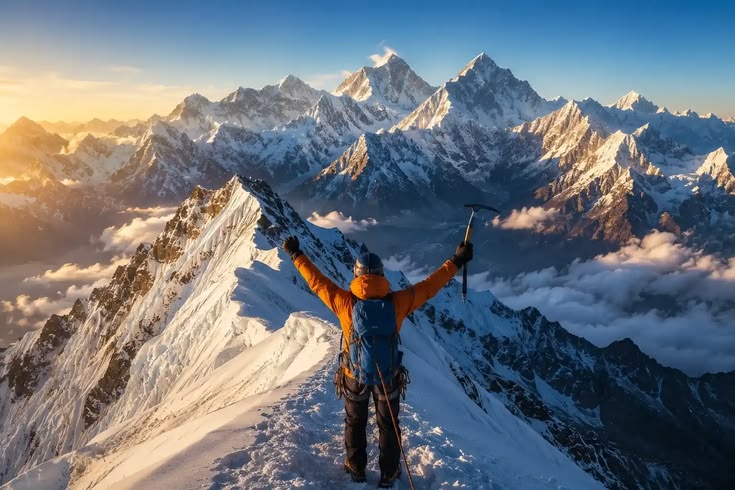
Mera Peak Climbing 13 Days | Guided Mera Peak Expedition Nepal
Destination:
Mera Peak, Nepal
Trip Duration:
13 Days
Max Altitude:
6,461m / 21,193ft (Mera Peak Summit)
Activities:
Peak Climbing, High-Altitude Trekking, Glacier Walking, Mountaineering Training, Himalayan Sightseeing
Start Point:
Kathmandu
Ending Point:
Kathmandu
Region:
Everest Region (Hinku Valley), Solukhumbu, Nepal
Trip Grade:
Challenging
Group Size:
2–12 People
Accomodation:
Teahouses/Lodges during the trek and Tent at Mera High Camp
Meals:
Breakfast, Lunch & Dinner (BLD) during the trek and climb
Transportation:
Domestic Flights (Kathmandu–Lukla–Kathmandu) and Airport Transfers
Permits Required:
Mera Peak Climbing Permit, Makalu Barun National Park Entry Permit, Local Area Permit (Khumbu Rural Municipality)
Best Season:
Spring (March–May) and Autumn (September–November)
Mera Peak Climbing: Nepal’s Highest Trekking Peak
Mera Peak Climbing is one of Nepal’s most rewarding high-altitude adventures, combining remote trekking, glacier travel, and an unforgettable Himalayan summit into a single expedition. Rising to 6,461 meters (21,193 feet), Mera Peak is the highest officially designated trekking peak in Nepal, attracting trekkers and aspiring climbers from around the world. Unlike highly technical mountaineering expeditions, Mera Peak offers an achievable challenge for physically fit adventurers who wish to experience the thrill of climbing a Himalayan peak with the support of experienced guides.
This expedition provides an excellent introduction to high-altitude mountaineering while allowing participants to immerse themselves in Nepal’s breathtaking mountain landscapes. Every stage of the journey offers new scenery, fresh challenges, and rewarding experiences that create memories lasting a lifetime. Whether your goal is to stand on a Himalayan summit or simply push your personal limits, Mera Peak delivers an adventure unlike any other.
Why Choose the Mera Peak Expedition?
A Mera Peak Expedition is about much more than reaching the summit. It is an opportunity to explore one of Nepal’s most peaceful mountain regions while learning the fundamentals of alpine climbing. Unlike crowded trekking routes, the journey to Mera Peak follows quieter trails where the beauty of nature remains largely untouched.
Throughout the expedition, experienced climbing guides share their knowledge of mountain safety, glacier travel, and climbing techniques. Participants gain valuable experience using technical equipment in a controlled environment before attempting the summit. This combination of trekking and practical mountaineering makes Mera Peak one of the best choices for anyone hoping to begin their Himalayan climbing journey.
The sense of accomplishment gained from completing this expedition extends far beyond reaching the summit. Every day builds confidence, endurance, and appreciation for the incredible landscapes that surround you.
Experience the Untouched Beauty of the Mera Peak Trek
The Mera Peak Trek passes through the remote Hinku Valley, an area celebrated for its pristine wilderness and spectacular mountain scenery. Dense rhododendron forests, alpine meadows, glacial rivers, rocky valleys, and expansive snowfields create an ever-changing landscape that keeps every day exciting.
Unlike Nepal’s busiest trekking destinations, this region offers peaceful walking trails where trekkers can fully appreciate the sounds of nature and the grandeur of the Himalayas. The gradual transition from lush forests to rugged alpine terrain provides countless opportunities for photography and wildlife observation.
Seasonal changes add another dimension to the journey. Spring brings blooming rhododendrons and colorful alpine flowers, while autumn offers crystal-clear skies and exceptional mountain visibility, making every viewpoint even more spectacular.
High-Altitude Adventure and Safe Acclimatization
Altitude is one of the defining challenges of Mera Peak Climbing, making proper acclimatization essential for a successful expedition. The carefully planned itinerary allows climbers to gradually adapt to increasing elevation while maintaining steady progress toward the summit.
Walking at a comfortable pace, staying well hydrated, eating nutritious meals, and taking sufficient rest all contribute to successful acclimatization. Experienced guides closely monitor each participant throughout the expedition, ensuring safety remains the highest priority at every stage of the journey.
This balanced approach helps reduce the risk of altitude-related illnesses while increasing both comfort and summit success. By respecting the mountains and allowing the body adequate time to adjust, climbers can enjoy the experience with greater confidence.
Learn Essential Mountaineering Skills
One of the greatest advantages of this expedition is the opportunity to develop practical climbing skills. Before the summit attempt, participants receive professional instruction covering the safe use of crampons, harnesses, helmets, ice axes, ascenders, and fixed ropes.
These training sessions are designed specifically for first-time Himalayan climbers and provide valuable hands-on experience before entering glacier terrain. Under the guidance of certified climbing professionals, participants gain confidence while learning techniques that can be applied to future mountain adventures.
The experience transforms the expedition from a trekking holiday into a genuine mountaineering adventure, making it an ideal stepping stone toward more advanced Himalayan climbs.
Spectacular Himalayan Mountain Views
One of the biggest rewards of Mera Peak Climbing 13 Days is the extraordinary mountain scenery encountered throughout the expedition. Every day reveals new panoramic views of towering Himalayan peaks, glaciers, deep valleys, and snow-covered ridgelines.
The summit itself offers one of the finest mountain panoramas anywhere in Nepal. On clear days, climbers can admire five of the world’s fourteen highest mountains—Everest, Lhotse, Makalu, Cho Oyu, and Kanchenjunga—along with numerous surrounding peaks stretching across the horizon.
Witnessing sunrise illuminate these giant mountains is an unforgettable experience that few destinations on Earth can match.
Discover Authentic Himalayan Culture
The journey also provides meaningful opportunities to experience the traditions and hospitality of Nepal’s mountain communities. Family-run teahouses welcome trekkers with warm meals and comfortable accommodation, offering insight into daily life in the Himalayas.
Prayer flags flutter across mountain passes, ancient mani walls line the trails, and Buddhist traditions remain deeply woven into local culture. Respecting these customs and interacting with local people adds a rich cultural dimension to the adventure.
These authentic experiences remind visitors that the Himalayas are not only home to magnificent mountains but also to vibrant communities whose traditions have been preserved for generations.
Rich Biodiversity and Natural Beauty
The Hinku Valley is home to remarkable biodiversity, making the expedition appealing for nature lovers as well as climbers. Depending on the season and weather conditions, trekkers may encounter Himalayan thar, musk deer, colorful pheasants, snow pigeons, and numerous alpine bird species.
The protected mountain environment showcases diverse ecosystems ranging from temperate forests to high-altitude glaciers. As elevation changes throughout the expedition, the landscape transforms dramatically, providing a fascinating glimpse into Nepal’s incredible ecological diversity.
This ever-changing environment ensures that every trekking day offers something unique to discover.
Who Can Join Mera Peak Climbing?
A Mera Peak Climbing Package Nepal is suitable for adventurous travelers with good physical fitness who are prepared for several days of trekking at high altitude. Previous trekking experience is highly recommended, although advanced technical climbing experience is not essential.
Regular hiking, running, cycling, swimming, or gym training before the expedition significantly improves endurance and overall enjoyment. Mental determination, patience, and a positive attitude are equally valuable, especially during challenging sections of the climb.
With proper preparation and professional guidance, many first-time climbers successfully achieve the summit and gain confidence for future Himalayan expeditions.
Responsible and Sustainable Adventure
Modern Himalayan travel places great importance on responsible tourism. During the expedition, trekkers are encouraged to minimize plastic waste, respect local customs, conserve natural resources, and support locally owned businesses whenever possible.
Following Leave No Trace principles helps preserve the fragile mountain environment while ensuring future generations can continue enjoying these extraordinary landscapes. Sustainable travel also benefits local communities by supporting employment, education, and conservation efforts throughout the Everest region.
By choosing responsible trekking practices, every visitor contributes to protecting Nepal’s unique natural and cultural heritage.
Begin Your Mera Peak Climbing Adventure
For travelers seeking the perfect combination of adventure, achievement, and natural beauty, Mera Peak Climbing delivers an unforgettable Himalayan experience. From peaceful valleys and towering glaciers to world-class mountain panoramas and practical mountaineering skills, every moment of the expedition offers something extraordinary.
Whether your dream is to stand atop Nepal’s highest trekking peak, experience your first Himalayan climb, or challenge yourself in one of the world’s most spectacular mountain environments, this Mera Peak Expedition provides the ideal opportunity. Combining expert guidance, carefully planned logistics, and breathtaking scenery, the Mera Peak Climbing Package Nepal promises an inspiring adventure that will remain one of the greatest achievements of your lifetime.
Trekking Similar to Mera Peak Climbing
- Annapurna Circuit Trek: 15 Night – 16 Days
- Manaslu Circuit trek-14N/15D
- Everest Base Camp Trek- 12 Days/ 11 Night
Nepal Pilgrimage & Cultural Tours
- Buddhist Pilgrimage Tour 6 Nights / 7 Days
- Kathmandu, Pokhara & Muktinath 7 Nights / 8 Days
- 8 Days Culture, Wildlife & Heritage of Nepal
- Mani Rimdu Festival in Everest Region 11 Nights / 12 Days
- 1-Day Kathmandu UNESCO Heritage Tour with Complimentary Nagarkot Sunrise & Rani Jhula
Book Your Mera Peak Climbing Adventure Today
The Himalayas are calling, and there is no better time to begin your journey than now. Whether you are an experienced trekker aiming for your first Himalayan summit or an adventure enthusiast looking to challenge yourself at high altitude, Mera Peak Climbing offers an unforgettable experience filled with breathtaking scenery, personal achievement, and lifelong memories.
Our experienced trekking and climbing team is committed to providing a safe, well-organized, and rewarding expedition from the moment you arrive in Nepal until your successful return to Kathmandu. With professional climbing guides, carefully planned acclimatization, quality logistics, and dedicated support throughout the journey, you can focus entirely on enjoying the adventure and reaching your goal.
Join our Mera Peak Expedition and discover why this iconic Himalayan climb continues to inspire adventurers from around the world. If you’re looking for the perfect Mera Peak Climbing Package Nepal, we’re here to help you every step of the way.
Ready to Reach the Summit?
Book your Mera Peak Climbing 13 Days adventure today and take the first step toward standing on Nepal’s highest trekking peak.
Guru Travels Ltd.
Durbarmarg, Kathmandu
+977-9851035699 | +977-9802342087
[email protected]
www.gurutravelsltd.com
Contact us today for availability, customized departures, private groups, and the best package price. Your Himalayan adventure starts here!
Mera Peak Climbing 13 Days | Guided Mera Peak Expedition Nepal Highlights
- Summit Mera Peak (6,461m), Nepal's highest trekking peak.
- Enjoy a thrilling scenic flight between Kathmandu and Lukla.
- Cross the spectacular Zatrwa La Pass (4,600m) with panoramic Himalayan views.
- Trek through the peaceful and less-crowded Hinku Valley.
- Experience authentic Sherpa culture and traditional mountain villages.
- Receive professional pre-climb mountaineering training at Khare.
- Walk across glaciers using crampons and fixed ropes under expert guidance.
- Stay overnight at Mera High Camp (5,780m) before the summit push.
- Witness breathtaking sunrise views over Everest, Lhotse, Makalu, Cho Oyu, Kanchenjunga, Baruntse, and Chamlang from the summit.
- Climb with experienced, government-licensed trekking and climbing guides.
- Enjoy comfortable teahouse accommodation throughout the trek and a fully equipped tented camp at High Camp.
- Perfect adventure for trekkers looking to take their first Himalayan climbing expedition.
Mera Peak Climbing 13 Days Route Details
The Mera Peak Climbing 13 Days adventure begins with a scenic flight from Kathmandu to Lukla before following the quieter trail through Chutanga and crossing the spectacular Zatrwa La Pass (4,600m) into the pristine Hinku Valley. Unlike the busy Everest Base Camp route, this trail offers a peaceful trekking experience through rhododendron forests, alpine meadows, glacial rivers, and remote mountain landscapes, allowing trekkers to immerse themselves in the untouched beauty of the Himalayas.
The route continues through the traditional mountain settlements of Thuli Kharka, Kothe, Thaknak, and Khare, where each day’s gradual ascent helps your body acclimatize to the increasing altitude. Along the way, you’ll encounter yak pastures, glacier-fed streams, prayer flags, and spectacular views of snow-capped peaks while experiencing the warm hospitality of local teahouses in the Hinku Valley.
After reaching Khare (5,045m), a dedicated acclimatization day includes professional mountaineering training covering the use of crampons, ice axes, ropes, harnesses, and glacier travel techniques. The expedition then ascends to Mera High Camp (5,780m), where climbers spend the night before making an early morning summit attempt under the guidance of experienced climbing professionals.
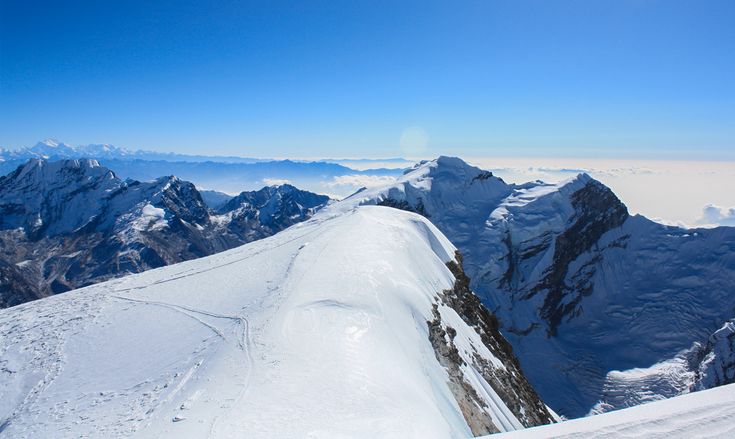
The final ascent to Mera Peak (6,461m) rewards climbers with one of the most breathtaking panoramas in the Himalayas, including Mount Everest, Lhotse, Makalu, Cho Oyu, Kanchenjunga, Baruntse, and Chamlang. After celebrating the successful summit, the expedition descends safely through the Hinku Valley, crosses Zatrwa La Pass once more, returns to Lukla, and concludes with a scenic flight back to Kathmandu, marking the end of an unforgettable Himalayan climbing adventure.
Include
- Airport pick-up and drop-off by private tourist vehicle.
- Two domestic flights: Kathmandu – Lukla – Kathmandu (or Ramechhap–Lukla during peak season if applicable).
- All required airport transfers.
- Experienced, government-licensed English-speaking trekking and climbing guide.
- One professional climbing guide for the summit push.
- Porter service (1 porter for every 2 trekkers; maximum 20 kg combined luggage).
- Mera Peak Climbing Permit.
- Makalu Barun National Park Entry Permit.
- Khumbu Rural Municipality Entry Permit.
- Teahouse/lodge accommodation during the trek.
- Fully equipped tented accommodation at Mera High Camp.
- Three meals daily (Breakfast, Lunch, and Dinner) during the trek and climbing period.
- Seasonal fresh fruits after dinner where available.
- Mountaineering training and climbing briefing at Khare.
- Group climbing equipment, including ropes, ice screws, snow bars, and other technical safety gear.
- Sleeping bag and down jacket (available on request and to be returned after the trip).
- Comprehensive first aid kit carried by the guide.
- Government taxes and company service charges.
- Official completion certificate after the successful expedition.
Exclude
- International airfare to and from Nepal.
- Nepal entry visa fees.
- Travel and high-altitude rescue insurance (mandatory).
- Personal climbing gear (boots, crampons, harness, ice axe, ascender, helmet, trekking poles, etc.) if not rented.
- Personal trekking equipment and clothing.
- Meals in Kathmandu before and after the trek.
- Hot and cold drinks, bottled water, alcoholic beverages, snacks, and desserts.
- Hot showers, Wi-Fi, charging fees, laundry, and other personal expenses at teahouses.
- Tips for guides, climbing guides, porters, and other staff (highly appreciated).
- Costs arising from flight delays, cancellations, bad weather, natural disasters, political unrest, or itinerary changes beyond the company's control.
- Personal medical expenses and emergency evacuation costs.
- Any services not specifically mentioned in the Trip Includes section.
Mera Peak Climbing 13 Days | Guided Mera Peak Expedition Nepal Itinerary
Flight: 35 minutes
Trekking: 4–5 hours • 7 km
Your Mera Peak adventure begins with an early morning scenic flight from Kathmandu to Lukla, flying over the hills and mountains of eastern Nepal before landing at Tenzing-Hillary Airport. After meeting the trekking crew and organizing your equipment, begin walking through peaceful forests of pine, rhododendron, and fir. The trail gradually climbs away from Lukla toward Chutanga, with the changing landscape offering your first taste of the remote Himalayan wilderness. Upon reaching Chutanga, settle into a local teahouse and enjoy a warm meal while preparing for the higher-altitude days ahead. Overnight at a teahouse in Chutanga.
Trekking: 5–6 hours • 10 km
Elevation: +1,500 m gain / -300 m loss
Today is one of the first challenging days of the trek as you cross the spectacular Zatrwa La Pass at approximately 4,600 meters. The trail climbs steadily through rugged terrain before reaching the pass, where you can enjoy impressive views of Numbur Himal, Kongde Ri, and other Himalayan peaks in clear weather. After spending some time taking in the mountain scenery, descend carefully toward Thuli Kharka, a remote pastureland traditionally used for grazing yaks and other livestock. The combination of steep ascents, changing terrain, and increasing altitude makes this an important day for acclimatization. Overnight at a teahouse in Thuli Kharka.
Trekking: 6–7 hours • 13 km
Leaving Thuli Kharka behind, the trail descends through beautiful forests filled with rhododendron, juniper, and moss-covered trees. The route winds along the hillsides with occasional glimpses of dramatic mountain scenery before entering the remote Hinku Valley. You will cross several small streams and pass through peaceful woodland surroundings as the trail gradually follows the Hinku River. Eventually, you reach Kothe, a small settlement situated beside the river and surrounded by forested hills. After a long day of walking, enjoy a relaxing evening at the teahouse and prepare for the climb toward higher elevations. Overnight at a teahouse in Kothe.
Trekking: 4–5 hours • 9 km
Elevation: +667 m gain
Today, follow the Hinku River deeper into the valley as the landscape begins to change noticeably with increasing altitude. The trail passes through scattered forests and open mountain terrain while providing increasingly impressive views of Mera Peak and Kusum Kanguru. Along the way, you pass through Lungsumgba, where ancient mani stones decorated with Tibetan inscriptions reflect the Buddhist culture of the Himalayan region. Continuing gradually uphill, you eventually arrive at Thaknak, a small seasonal settlement used by local herders and trekkers. Spend the afternoon resting and allowing your body to adjust to the increasing elevation. Overnight at a teahouse in Thaknak.
Trekking: 4–5 hours • 8 km
Elevation: +687 m gain
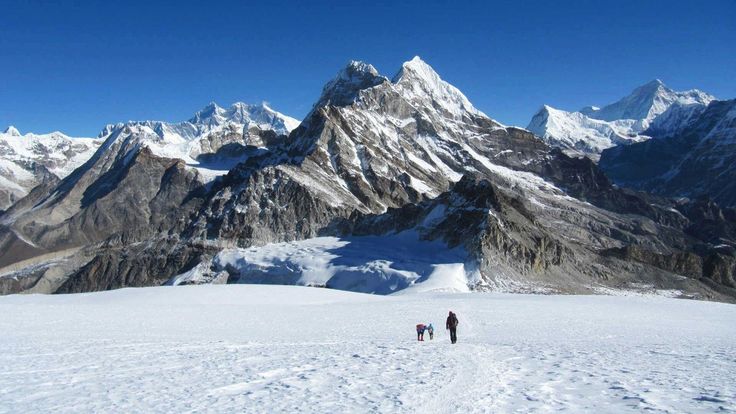
The trek continues toward Khare, the main staging point for Mera Peak climbing. The trail climbs steadily through increasingly rugged terrain and glacial moraine landscapes. As you gain altitude, vegetation becomes sparse and the surrounding mountains become more dominant. Mera Peak gradually rises above the valley, with its impressive north face creating a spectacular backdrop throughout the journey. After several hours of trekking, arrive at Khare, situated at more than 5,000 meters. The remainder of the day is dedicated to resting, staying hydrated, and preparing for the acclimatization and climbing activities ahead. Overnight at a teahouse in Khare.
Today is an important acclimatization and preparation day before moving toward Mera High Camp. Rather than undertaking a long trek, you will spend the day allowing your body to adjust to the high altitude. Your climbing guide will also provide practical training on the equipment and techniques required for the summit attempt, including the use of crampons, ice axe, harness, ascender, and fixed ropes. Depending on weather and group condition, you may take a short acclimatization hike around the Khare area to gain additional altitude before returning to camp. The day provides an opportunity to review climbing procedures, check equipment, and prepare mentally and physically for summit day. Overnight at a teahouse in Khare.
Trekking: 5–6 hours • 6 km
Elevation: +735 m gain
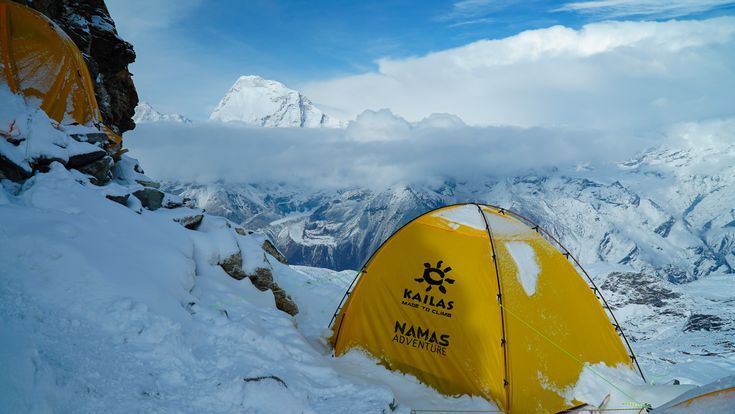
Today you leave Khare and enter the high-altitude glacial environment of Mera Peak. The route initially climbs toward the Mera Glacier before becoming steeper as you move across snow-covered terrain. Depending on the conditions, crampons are used for secure movement on the glacier and snow slopes. The trail continues toward Mera High Camp, located on a rocky ridge at approximately 5,780 meters. As you approach camp, the surrounding Himalayan panorama becomes increasingly spectacular, with views extending toward Everest, Lhotse, Makalu, Cho Oyu, and Kanchenjunga in favorable weather. Upon reaching High Camp, settle into the tented camp, have an early meal, and rest as much as possible in preparation for the early-morning summit attempt. Overnight in a tented camp at Mera High Camp.
Trekking: 11–12 hours • 14 km
Elevation: +681 m gain / -1,416 m loss
Today is the main highlight of your Mera Peak adventure. You will wake well before dawn and begin the summit climb while the temperatures are still extremely cold. The ascent follows snow and glacier terrain, with crampons and other climbing equipment used according to the conditions. As you climb higher, the surrounding peaks gradually appear above the horizon. After reaching the summit of Mera Peak at approximately 6,461 meters, take time to celebrate your achievement and enjoy breathtaking panoramic views of some of the world’s highest mountains, including Everest, Lhotse, Makalu, Cho Oyu, and Kangchenjunga. After the summit, begin the long descent back toward High Camp and continue down to Khare. The descent can be physically demanding, but reaching Khare marks the successful completion of the main climbing objective. Overnight at a teahouse in Khare.
This day is reserved as a contingency day in case weather, snow conditions, strong winds, or other unforeseen circumstances prevent a safe summit attempt on Day 8. If the summit has already been successfully completed, the day can be used for additional rest and recovery at Khare or, depending on weather and the group’s physical condition, the descent can begin earlier. Keeping a contingency day provides greater flexibility and improves the chances of completing the summit safely without having to rush the climbing schedule. Overnight at a teahouse in Khare.
Trekking: 8–10 hours • 18 km
Elevation: -1,354 m loss / +609 m gain
After completing the Mera Peak climb, begin the descent through the Hinku Valley. The trail retraces the route through Thaknak and continues toward Kothe, where the surrounding landscape becomes greener as you lose altitude. After passing Kothe, the route involves another gradual climb toward Thuli Kharka. Although the day involves a significant amount of walking, descending to lower elevations provides a welcome change after spending time above 5,000 meters. The forests, rivers, and warmer atmosphere create a noticeable contrast to the high-altitude environment around Mera Peak. Overnight at a teahouse in Thuli Kharka.
Trekking: 7–8 hours • 16 km
Elevation: +300 m gain / -1,760 m loss
Your final trekking day takes you back toward Lukla, with another crossing of Zatrwa La Pass. Begin with an ascent from Thuli Kharka toward the pass and take a final opportunity to enjoy the mountain scenery surrounding the route. After crossing Zatrwa La, begin the long descent toward Lukla, passing through increasingly green landscapes as the elevation decreases. Upon reaching Lukla, the trekking and climbing portion of your Mera Peak adventure officially comes to an end. In the evening, relax with your trekking crew, celebrate the successful journey, and enjoy a well-earned rest in Lukla. Overnight at a teahouse in Lukla.
Flight: 35 minutes
Take an early morning scenic flight from Lukla back to Kathmandu, enjoying one final aerial view of the Himalayan landscape. Upon arrival at Tribhuvan International Airport, transfer to your hotel and check in. After several demanding days in the mountains, the remainder of the day is intentionally kept free for rest and recovery. You can relax at the hotel, enjoy a comfortable meal, visit a café, or explore the nearby streets at your own pace. Overnight at a hotel in Kathmandu.
Enjoy a relaxed final day in Kathmandu after your Mera Peak adventure. Depending on your departure schedule, you can spend the morning resting or exploring some of the city’s cultural attractions, such as Boudhanath Stupa, Pashupatinath Temple, Swayambhunath (Monkey Temple), or Kathmandu Durbar Square. You may also use the day for souvenir shopping in Thamel or simply relax at the hotel after the demanding trek and climb. If your international flight is scheduled for later in the day, our representative will transfer you to Tribhuvan International Airport according to your flight schedule. Your Mera Peak adventure concludes in Kathmandu with unforgettable memories of the Himalayas.
Video
Mera Peak Climbing 13 Days Packing List
Clothing
- Moisture-wicking base layers (top & bottom)
- Insulated fleece or softshell jacket
- Down jacket (expedition quality)
- Waterproof and windproof shell jacket
- Waterproof trekking pants
- Insulated down pants (for summit day)
- Trekking shirts (2–3)
- Trekking pants (2 pairs)
- Thermal underwear
- Warm hat/beanie
- Sun hat or cap
- Buff or neck gaiter
- Balaclava or face mask
- Lightweight liner gloves
- Insulated waterproof climbing gloves
- Extra socks (4–5 pairs)
- Gaiters
Footwear
- Mountaineering boots (compatible with crampons)
- Lightweight trekking boots
- Camp shoes or sandals
- Crampons
- Microspikes (optional)
Climbing Gear
- Climbing harness
- Ice axe
- Climbing helmet
- Ascender (Jumar)
- Descender (Figure 8 or ATC)
- Locking carabiners (2–3)
- Safety sling
- Prusik loops
- Trekking poles
Bags
- 60–70L duffel bag (for porter)
- 30–40L daypack
- Waterproof backpack cover
- Dry bags or compression sacks
Sleeping Gear
- Four-season sleeping bag (-20°C or lower)
- Sleeping bag liner (optional)
- Inflatable pillow (optional)
Personal Essentials
- Sunglasses (Category 4 UV protection)
- Sunscreen (SPF 50+)
- Lip balm with SPF
- Reusable water bottles (2L total capacity)
- Thermos flask
- Water purification tablets or filter
- Headlamp with spare batteries
- Quick-dry towel
- Toiletries and biodegradable soap
- Wet wipes and hand sanitizer
- Toilet paper
- Personal identification and passport
- Passport-sized photos
- Cash (Nepalese Rupees)
First Aid & Medications
- Personal prescription medicines
- Diamox (consult your doctor)
- Pain relievers
- Blister treatment (Compeed/Moleskin)
- Bandages and adhesive tape
- Antiseptic cream
- ORS (Oral Rehydration Salts)
- Cold and cough medicine
- Anti-diarrheal medication
Electronics
- Mobile phone
- Camera
- Power bank (20,000mAh+)
- Charging cables
- Universal travel adapter
- Spare camera batteries and memory cards
Optional Items
- Energy bars and trail snacks
- Binoculars
- Notebook and pen
- Playing cards or travel games
- Lightweight book/e-reader
- Earplugs
Note: Technical climbing equipment such as ropes, snow anchors, and other group safety gear is generally provided by the expedition team, while personal climbing gear can usually be rented in Kathmandu if you do not own it.
Reviews
No reviews found.