

Gaumukh Tapovan Trek from Nepal – 12 Days
Destination:
Gaumukh – Tapovan, Uttarakhand, India
Trip Duration:
12 Days / 11 Nights
Max Altitude:
4,460 m / 14,632 ft (Tapovan)
Activities:
Trekking, High-Altitude Trekking, Glacier Exploration, Mountain Camping, Acclimatization, Himalayan Photography, Cultural & Temple Visit
Start Point:
Kathmandu, Nepal
Ending Point:
Kathmandu, Nepal
Region:
Garhwal Himalaya, Uttarakhand, India
Trip Grade:
Moderate to Challenging
Group Size:
2–15 People
Accomodation:
Hotels/Guesthouses in cities and villages; Camping in Bhojbasa and Tapovan
Meals:
Breakfast, Lunch & Dinner; Packed Lunch during trekking days
Transportation:
International Flight, Private Tourist Vehicle, Mountain Road Transfers, Trekking on Foot
Permits Required:
Gangotri National Park Entry Permit; Gaumukh Trek Permit; applicable local/forest permissions
Best Season:
May–June and September–October
Gaumukh Tapovan Trek from Nepal
A Unique Himalayan Adventure from Nepal to India
The Gaumukh Tapovan Trek from Nepal is a remarkable Himalayan journey connecting the landscapes, cultures and mountain traditions of Nepal and northern India. It offers travelers an opportunity to explore the Garhwal Himalaya of Uttarakhand, where ancient pilgrimage traditions meet glaciers, towering peaks, remote valleys and vast alpine landscapes.
For travelers beginning in Nepal, this adventure provides a different perspective on Himalayan trekking. Instead of limiting the experience to the well-known trekking regions around Nepal, the journey introduces the dramatic mountain environment of Uttarakhand and the culturally significant landscape surrounding Gangotri, Gaumukh and Tapovan.
Discover the Sacred Garhwal Himalaya
The Garhwal Himalaya is one of India’s most culturally and geographically significant mountain regions. Its valleys have been traveled by pilgrims, spiritual seekers, explorers and mountaineers for centuries.
The upper Bhagirathi valley is particularly important because of its connection with the origin of the Bhagirathi River, one of the principal headwaters associated with the Ganges. This combination of sacred traditions and extraordinary mountain scenery gives the Gaumukh Tapovan Trek a distinctive character.
Travelers can experience the mountains not simply as a wilderness destination but as a landscape deeply connected with religion, mythology and local traditions.
Experience the Bhagirathi Valley
The Bhagirathi valley provides the natural setting for much of this Himalayan adventure. As the journey progresses toward the higher mountains, the landscape changes dramatically.
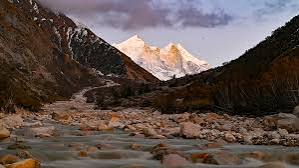
Lower areas contain forests, river valleys and mountain settlements. Farther into the upper valley, vegetation becomes increasingly sparse and the terrain becomes more rugged. Alpine meadows, enormous rock formations, glacial landscapes and snow-covered peaks gradually replace the greener lower mountain environment.
This changing scenery is one of the most rewarding aspects of the Gaumukh Trek from Nepal, as travelers can observe the gradual transition from inhabited Himalayan valleys to a powerful high-altitude environment.
Gaumukh and Its Glacial Landscape
Gaumukh is one of the most recognizable natural features of the region. The name is traditionally associated with the appearance of a cow’s mouth and refers to the terminus of the Gangotri Glacier.
The surrounding landscape provides an impressive opportunity to observe the relationship between glaciers, rivers and mountains. From this high Himalayan environment, meltwater contributes to the Bhagirathi River before it continues through the mountain valleys toward the plains.
Standing near this glacial environment provides a powerful reminder of how Himalayan ice and snow contribute to some of the great river systems of the Indian subcontinent.
The Dramatic Landscape of Tapovan
Tapovan is the defining destination of the adventure and is renowned for its spectacular high-altitude surroundings.
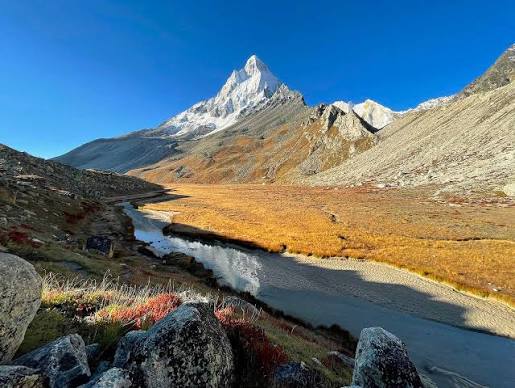
The area is particularly famous for views of Mount Shivling, one of the most distinctive peaks in the Garhwal Himalaya. Its sharp profile has made it an iconic mountain among photographers, climbers and Himalayan enthusiasts.
The surrounding panorama also includes impressive Himalayan formations such as Meru and the Bhagirathi group. When skies are clear, the scale of the mountains creates an unforgettable alpine setting.
A Trek Through Changing Himalayan Ecosystems
One of the most interesting characteristics of the Gaumukh Tapovan Trek is the gradual transformation of the environment.
The lower portions of the journey are characterized by Himalayan forests and river valleys. As elevation increases, vegetation becomes shorter and more limited. Eventually, the landscape becomes dominated by rock, ice, alpine meadows and exposed mountain terrain.
This ecological transition makes the trek particularly interesting for travelers who want to understand how Himalayan landscapes change with altitude.
A Journey for Mountain Photographers
The region provides exceptional opportunities for landscape photography. The combination of glaciers, rivers, mountain faces, alpine terrain and traditional Himalayan settlements creates a diverse collection of subjects.
The distinctive profile of Shivling is naturally one of the most recognizable photographic features, while the Bhagirathi peaks and surrounding valleys provide expansive mountain panoramas.
Changing Himalayan weather can also transform the appearance of the landscape. Mountains may disappear behind clouds before becoming visible again as the weather changes, creating different photographic conditions throughout the journey.
Spiritual and Cultural Significance
The Gaumukh Tapovan Trek from Nepal is also a cultural journey. Gangotri and the surrounding region have an important place in Hindu pilgrimage traditions connected with the Ganges.
The river, temples, pilgrimage routes and surrounding mountains have shaped the cultural identity of the region for generations. Travelers therefore encounter a destination where natural scenery and spiritual traditions are closely connected.
For visitors coming from Nepal, this provides an interesting opportunity to explore another Himalayan region where mountain landscapes and religious traditions are similarly intertwined.
A Different Perspective for Experienced Trekkers
The trek is particularly appealing to travelers who have already experienced popular Himalayan routes and want to explore a different mountain environment.
Uttarakhand offers many characteristics familiar to Himalayan trekkers: dramatic peaks, remote valleys, mountain rivers, traditional communities and high-altitude landscapes. At the same time, the region has its own distinctive cultural identity and trekking character.
The Gaumukh Tapovan Trek from Kathmandu therefore provides an opportunity to expand a traveler’s Himalayan experience beyond the conventional trekking destinations of Nepal.
High-Altitude Wilderness and Adventure
As the journey progresses into the upper mountains, the environment becomes increasingly remote and exposed. Human settlements become less prominent, while the scale of the surrounding mountains becomes more impressive.
This high-altitude environment creates a genuine sense of wilderness. The combination of rugged terrain, glacial surroundings and enormous Himalayan peaks gives the adventure a stronger expedition-style atmosphere than an ordinary mountain sightseeing trip.
Trekkers should expect the experience to require patience, physical preparation and careful pacing. The reward is access to an environment that remains visually dramatic and relatively wild.
Responsible Travel in the Himalaya
The Himalayan environment around Gaumukh and Tapovan is fragile. Glacial areas, alpine meadows and high-altitude ecosystems can be particularly sensitive to waste and human disturbance.
Responsible trekking is therefore an important part of the experience. Travelers should follow local regulations, stay on designated routes, minimize waste and respect religious sites, wildlife and local communities.
Preserving the natural and cultural character of the region helps ensure that future travelers can experience the same landscapes.
Weather and the Mountain Experience
Mountain weather contributes significantly to the character of the journey. Conditions can change rapidly at higher elevations, and visibility may vary throughout the day.
A cloudy morning can completely obscure the surrounding peaks, while improving weather can suddenly reveal enormous mountain faces and glaciers. These changing conditions are a natural part of the Himalayan experience and add an element of unpredictability to the adventure.
Rather than expecting identical conditions every day, travelers should approach the journey with flexibility and an appreciation for the constantly changing mountain environment.
Why Choose the Gaumukh Tapovan Trek from Nepal?
The Gaumukh Tapovan Trek from Nepal brings together several experiences within one Himalayan adventure: cross-border travel, spiritual heritage, glacial landscapes, dramatic peaks, alpine wilderness and high-altitude trekking.
Its greatest attraction is the contrast between different environments and experiences. The journey connects the familiar Himalayan setting of Nepal with the culturally rich Garhwal Himalaya of India, eventually reaching a remote mountain landscape dominated by glaciers and towering peaks.
For travelers seeking an alternative Himalayan adventure, the trek provides an opportunity to discover a less familiar side of the greater Himalayan region while experiencing the remarkable natural and cultural heritage surrounding Gaumukh and Tapovan.
A Journey Beyond Ordinary Trekking
Ultimately, the Gaumukh Tapovan Trek from Nepal is more than a mountain trail. It is a journey through landscapes that have shaped rivers, religious traditions and Himalayan communities for generations.
From the spiritual atmosphere of the Garhwal Himalaya to the immense scale of the upper mountains, the experience offers a combination of nature, culture and adventure. The journey is especially suited to travelers who want more than mountain scenery and are interested in understanding the deeper relationship between people, rivers, glaciers and the Himalaya.
The result is a memorable Himalayan experience that connects two countries, two cultural landscapes and some of the most dramatic mountain environments of the region.
Frequently Asked Questions – Gaumukh Tapovan Trek from Nepal
1. How difficult is the Gaumukh Tapovan Trek from Nepal?
The Gaumukh Tapovan Trek from Nepal is generally considered a moderate-to-challenging high-altitude trek. The section between Gaumukh and Tapovan is particularly demanding because of steep ascents, rocky and uneven terrain, and the altitude reaching approximately 4,460 m. Good physical fitness, appropriate acclimatization and previous trekking experience are recommended.
2. What is the best time for the Gaumukh Tapovan Trek?
The commonly recommended trekking seasons are May to June and September to October. These periods generally provide more suitable trekking conditions and better mountain visibility. The monsoon period can bring heavy rainfall and landslide risks on the approach roads and trekking route, while winter brings severe cold and snow at higher elevations.
3. What is the highest altitude reached on the Gaumukh Tapovan Trek?
The highest point of the trek is Tapovan, at approximately 4,460 m (14,600 ft) above sea level. The high altitude makes acclimatization and a controlled walking pace important, particularly during the ascent beyond Gaumukh.
4. Do I need a permit for the Gaumukh Tapovan Trek?
Yes. The trek passes through Gangotri National Park, so trekkers need the applicable forest or national park permissions. Additional permission may be required for the Tapovan section. Permit requirements, fees and daily visitor limits can change, so they should be confirmed with the relevant authorities before departure.
5. Do I need a guide for the Gaumukh Tapovan Trek?
A registered or authorized guide is required for the Tapovan section according to current Uttarakhand Tourism information. A guide is also particularly useful on the steep and rocky terrain beyond Gaumukh, where route conditions can vary.
6. How long does the Gaumukh Tapovan Trek take?
The trekking portion commonly takes several days, depending on the itinerary and acclimatization plan. Standard routes from Gangotri generally cover the Gangotri–Bhojbasa–Gaumukh–Tapovan section and return, while a package starting from Nepal requires additional days for international travel and road transfers. Current trek guides commonly describe the core trek as approximately 5–8 days depending on the itinerary.
7. Can beginners do the Gaumukh Tapovan Trek?
Beginners with good physical fitness may be able to undertake the trek with appropriate preparation and professional support, but the Tapovan section should not be treated as an easy beginner trek. The altitude and steep terrain beyond Gaumukh make previous hiking or high-altitude trekking experience beneficial.
8. What type of accommodation is available during the Gaumukh Tapovan Trek?
Accommodation varies according to the section of the journey. Hotels or guesthouses are used in the road-accessible locations, while the higher trekking sections rely on permitted accommodation and camping arrangements. Camping at the Gaumukh glacier snout itself is not permitted, so trekkers normally stay at designated locations such as Bhojbasa before and after visiting Gaumukh.
9. What can I expect to see during the Gaumukh Tapovan Trek?
The trek combines Himalayan valleys, the Bhagirathi River, Gangotri Glacier scenery, Gaumukh and high-altitude alpine landscapes. From Tapovan, trekkers can experience views toward major Himalayan formations including Mount Shivling, Meru and the Bhagirathi peaks, depending on weather and visibility.
10. How can I prepare for the Gaumukh Tapovan Trek from Nepal?
Preparation should include regular cardiovascular and leg-strength training, progressively longer hikes, and practice walking with a loaded backpack. Because the trek reaches approximately 4,460 m, acclimatization is particularly important. Travelers should also prepare for rapidly changing mountain weather and carry appropriate high-altitude trekking equipment. A pre-trek medical consultation can be useful for travelers with relevant health concerns.
Gaumukh Tapovan Trek from Nepal – 12 Days Highlights
- Trek from Kathmandu, Nepal to Gangotri, India, combining an international journey with a high-altitude Himalayan adventure.
- Explore the sacred Gangotri, one of the most important pilgrimage destinations in the Indian Himalayas.
- Trek through the spectacular Gangotri National Park toward the source region of the Bhagirathi River.
- Walk through the dramatic Gangotri Glacier landscape and reach the iconic Gaumukh Glacier.
- Experience the challenging Gaumukh to Tapovan Trek, including steep high-altitude terrain.
- Reach Tapovan at approximately 4,460 m, surrounded by dramatic Himalayan peaks.
- Enjoy magnificent views of Mount Shivling, Meru and the Bhagirathi peaks from Tapovan.
- Spend nights camping in the high Himalayas at Bhojbasa and Tapovan.
- Experience the changing Himalayan landscape from forests and river valleys to barren alpine terrain and glaciers.
- Include a dedicated acclimatization day at Gangotri before entering the higher trekking region.
- Experience traditional mountain settlements including Harsil, Dharali and Uttarkashi.
- Follow the Bhagirathi valley and experience the contrasting landscapes of the Garhwal Himalaya.
- Combine Indian Himalayan trekking, pilgrimage, glacier scenery and high-altitude camping in one journey.
- Complete the classic Gangotri–Bhojbasa–Gaumukh–Tapovan–Bhojbasa–Gangotri trekking circuit.
- Return to Nepal after completing one of Uttarakhand's renowned high-altitude trekking routes.
Gaumukh Tapovan Trek from Nepal – Kathmandu to Gaumukh & Tapovan Route
Include
- Airport pickup and drop-off in Delhi, India, as per the itinerary.
- International flight tickets between Kathmandu and Delhi.
- Private tourist vehicle for all scheduled road transportation in India.
- Accommodation in 3-star or equivalent hotels/guesthouses in Rishikesh, Uttarkashi and Gangotri.
- Accommodation in permitted camping/guesthouse facilities at Bhojbasa.
- Full camping arrangement at Tapovan, including tents, mattresses and sleeping bags.
- All meals during the trek: breakfast, lunch and dinner.
- Packed lunch during the longer trekking days where required.
- Professional, experienced and licensed Gaumukh–Tapovan trekking guide.
- Required trekking support staff and porters/mule support for group equipment, where applicable.
- Gangotri National Park entry permit and applicable trekking/forest permits.
- Camping and kitchen equipment required for the high-altitude trekking section.
- Cook and kitchen support during camping sections.
- Accommodation and meals for the trekking crew.
- Trekking route briefing and pre-trek preparation in Gangotri.
- Acclimatization day in Gangotri.
- First-aid kit and basic emergency trekking support.
- Government/local taxes applicable to the trekking package.
- Applicable service charges.
Exclude
- Nepal visa, Indian visa or any other immigration-related charges, where applicable.
- Personal travel insurance and emergency helicopter evacuation insurance.
- Medical expenses, hospitalization or treatment costs.
- Personal expenses such as laundry, telephone calls, Wi-Fi and additional beverages.
- Alcoholic drinks, bottled drinks and soft drinks.
- Personal trekking equipment and clothing.
- Sleeping bag or personal high-altitude gear if not specifically included in the final package.
- Tips and gratuities for guides, drivers, porters and other support staff.
- Additional hotel nights caused by early arrival, late departure, flight cancellation or itinerary changes.
- Meals and accommodation not specifically mentioned in the itinerary.
- Costs arising from flight delays, cancellations, road blockages, landslides, bad weather, natural disasters or other circumstances beyond the operator's control.
- Additional transportation outside the scheduled itinerary.
- Personal porter service for luggage beyond the included allowance.
- Any rescue or evacuation costs not covered by the traveler's insurance.
- Camera/video fees or other site-specific charges, if applicable.
- Any expenses resulting from itinerary changes requested by the traveler.
- Anything not specifically listed under Trip Includes.
Gaumukh Tapovan Trek from Nepal – 12 Days Itinerary
Duration: Full day
Transportation: International flight + private vehicle
Accommodation: Hotel in Rishikesh
Meals: Breakfast, Lunch & Dinner
Your Gaumukh–Tapovan adventure begins in Kathmandu with a flight to Delhi, India. After completing immigration and customs formalities, meet the representative at the airport and continue by road toward Rishikesh. Depending on the flight arrival time and road conditions, the transfer can take several hours. Rishikesh is the gateway to the Garhwal Himalayas and an important starting point for journeys toward Uttarkashi and Gangotri. Upon arrival, check into your hotel and rest after the international journey. If time permits, take a relaxed evening walk around the Ganges and explore the riverside atmosphere of Rishikesh. An early night is recommended because the following day involves a long mountain drive.
Overnight: Hotel in Rishikesh
Meals: Breakfast, Lunch & Dinner
Duration: 6–8 hours drive
Distance: Approximately 170–200 km, depending on route
Transportation: Private vehicle
Accommodation: Hotel in Uttarkashi
Meals: Breakfast, Lunch & Dinner
After breakfast, begin the scenic drive toward Uttarkashi. The road gradually leaves the plains and follows the Himalayan valleys, with the landscape changing from populated foothills to steep mountains, forests and river gorges. The journey passes through several settlements along the route before reaching Uttarkashi, an important administrative and pilgrimage centre in the Bhagirathi valley. On arrival, check into the hotel and meet the trekking team for a briefing. Your guide will check your trekking equipment and review the upcoming route, permits, weather conditions and high-altitude precautions. Spend the evening relaxing and preparing for the journey to Gangotri.
Overnight: Hotel in Uttarkashi
Meals: Breakfast, Lunch & Dinner
Duration: 5–7 hours drive
Transportation: Private vehicle
Accommodation: Hotel/Guesthouse in Gangotri
Meals: Breakfast, Lunch & Dinner
After breakfast, continue toward Gangotri following the Bhagirathi River. The road becomes increasingly mountainous as you pass through picturesque villages and the Harsil valley. Harsil is surrounded by forests and high Himalayan peaks and is one of the most scenic settlements on the approach to Gangotri. Continue through Dharali and onward to Gangotri, situated at roughly 3,000 m or higher depending on the reference used. Gangotri is the traditional roadhead for the Gaumukh trek and lies within the high Himalayan landscape of Uttarkashi district.
After checking into the hotel, take a short and relaxed walk around Gangotri. Visit the Gangotri Temple and the Bhagirathi River if conditions and time permit. Avoid strenuous activity because this is your first night at significant altitude.
Overnight: Hotel/Guesthouse in Gangotri
Meals: Breakfast, Lunch & Dinner
Duration: Full day
Activity: Acclimatization / sightseeing
Accommodation: Hotel/Guesthouse in Gangotri
Meals: Breakfast, Lunch & Dinner
Today is reserved for acclimatization before entering Gangotri National Park. After breakfast, take an easy walk around Gangotri and visit the temple and nearby areas. The objective is not to complete a strenuous hike but to allow your body to adjust to the altitude. The guide will also finalize the trekking arrangements, check permits, organize camping equipment and explain the rules for entering the national park.
Permits are required for the Gaumukh route because the trek passes through Gangotri National Park, and official tourism information notes that access is limited. Uttarakhand Tourism also specifically states that a guide is required for the Tapovan section.
Spend the afternoon resting and preparing your daypack for the first trekking day. Keep your clothing and essential items easily accessible because the next morning requires an early departure.
Overnight: Hotel/Guesthouse in Gangotri
Meals: Breakfast, Lunch & Dinner
Duration: 8–9 hours trekking
Trek Distance: Approximately 14 km
Altitude: Gangotri → Chirbasa → Bhojbasa
Accommodation: Camp / permitted accommodation at Bhojbasa
Meals: Breakfast, Lunch & Dinner
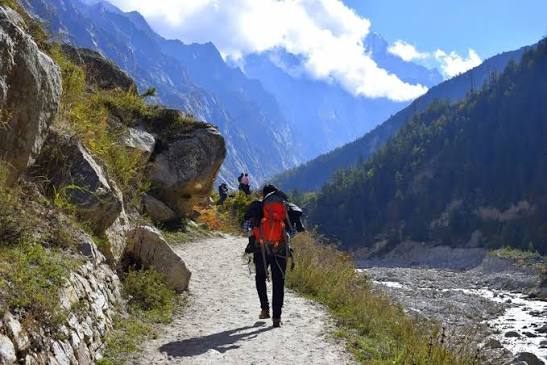
Start very early, preferably around 5:00 AM, because entry into Gangotri National Park is controlled and the official itinerary recommends reaching the park checkpoint when it opens. After completing the entry formalities, begin walking along the Bhagirathi valley. The trail initially passes through sections of forest and gradually becomes more open as you gain elevation.
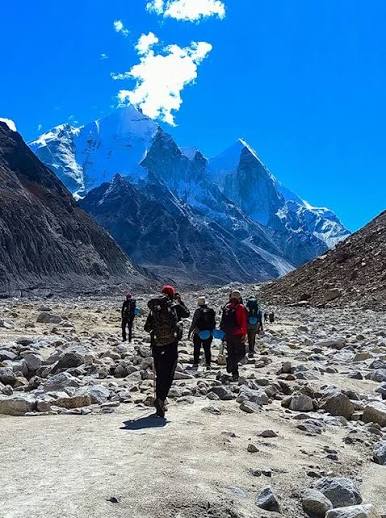
After approximately 6 km, you reach Chirbasa, situated around 3,400–3,600 m. This is a natural stopping point for lunch and a short rest. From Chirbasa, the landscape becomes increasingly rugged, with rockfall sections and fewer trees. Continue toward Bhojbasa while following the Bhagirathi River and enjoying views of the surrounding Himalayan peaks.
After another approximately 6 km, reach Bhojbasa, around 3,800 m. The official Uttarakhand Tourism itinerary describes the complete Gangotri–Bhojbasa trek as approximately 14 km and indicates around five hours to Chirbasa followed by another four hours to Bhojbasa.
Check into the permitted accommodation or camp, have a hot dinner and rest. Camping beyond Bhojbasa toward Gaumukh is prohibited, so Bhojbasa is the appropriate overnight base before the Tapovan section.
Overnight: Camp/Guesthouse at Bhojbasa
Meals: Breakfast, packed Lunch & Dinner
Duration: 7–9 hours trekking
Trek Distance: Approximately 9 km
Highest Point: Tapovan – approx. 4,460 m
Accommodation: Camp at Tapovan
Meals: Breakfast, Packed Lunch & Dinner
This is the main and most challenging day of the trek. Start early after breakfast and leave Bhojbasa for Gaumukh. The trail becomes considerably more rugged, with boulders, loose rocks and sections where careful route-finding is required. After approximately 4 km, reach Gaumukh, the famous glacial source area of the Bhagirathi River.
The official itinerary estimates approximately three hours from Bhojbasa to Gaumukh and places Gaumukh at around 4,000 m. Trekkers should remain at a safe distance from the glacier face and follow the guide’s instructions because the terrain around the glacier can be unstable.
After spending some time at Gaumukh, continue toward Tapovan. The route becomes much steeper, particularly toward the final section. The official route describes the approximately 5 km ascent from Gaumukh to Tapovan as steep, with the final kilometre involving a very steep climb and crossing the Akash Ganga stream.
Reach Tapovan, a high-altitude meadow at approximately 4,460 m, where you will see spectacular views of Shivling and the surrounding Himalayan peaks when weather conditions are clear. Your crew will establish camp and prepare a hot meal. Because of the altitude, keep the evening relaxed and avoid unnecessary physical activity.
Overnight: Tent at Tapovan
Meals: Breakfast, Packed Lunch & Dinner
Duration: Full day
Activity: Acclimatization / short exploration
Accommodation: Camp at Tapovan
Meals: Breakfast, Lunch & Dinner
Spend an additional day at Tapovan to experience the high-altitude environment and allow your body to acclimatize. After breakfast, take a short guided walk around the meadow if weather and trail conditions permit. The spectacular surroundings include views toward Mount Shivling, Meru and the Bhagirathi peaks.
This is not intended to be a strenuous hiking day. The guide will determine how far the group should walk according to weather, snow, trail conditions and the condition of individual trekkers. Spend the afternoon relaxing around camp, photographing the landscape and enjoying the dramatic Himalayan scenery.
A warm lunch and dinner will be served at camp. Keep yourself hydrated and inform the guide immediately if you experience symptoms associated with altitude illness.
Overnight: Tent at Tapovan
Meals: Breakfast, Lunch & Dinner
Duration: Approximately 5–7 hours trekking
Trek Distance: Approximately 9 km
Accommodation: Camp/Guesthouse at Bhojbasa
Meals: Breakfast, Packed Lunch & Dinner
Wake early and begin descending from Tapovan toward Gaumukh. The steep descent requires concentration because loose rocks and uneven ground can make downhill walking challenging. Follow the guide carefully through the steep section until you reconnect with the Gaumukh area.
From Gaumukh, continue along the rocky trail toward Bhojbasa. As you lose altitude, the walking gradually becomes more comfortable and the valley begins to open up. The official itinerary gives approximately 9 km and around five hours for the Tapovan-to-Bhojbasa section.
Arrive at Bhojbasa and settle into camp or permitted accommodation. Enjoy a hot meal and spend the evening recovering after the high-altitude section.
Overnight: Camp/Guesthouse at Bhojbasa
Meals: Breakfast, Packed Lunch & Dinner
Duration: Approximately 7–8 hours trekking
Trek Distance: Approximately 14 km
Accommodation: Hotel/Guesthouse in Gangotri
Meals: Breakfast, Packed Lunch & Dinner
After breakfast, begin the long descent from Bhojbasa toward Gangotri. Follow the same trail through the Bhagirathi valley, passing the rocky sections before reaching Chirbasa. Continue through the forested sections toward the Gangotri National Park checkpoint.
The official itinerary estimates approximately 14 km and around eight hours for Bhojbasa to Gangotri.
After completing the park exit formalities, continue into Gangotri. Check into your hotel and enjoy the comfort of a proper bed and hot shower after several nights in the mountains. The evening can be spent relaxing or visiting the riverside area.
Overnight: Hotel/Guesthouse in Gangotri
Meals: Breakfast, Packed Lunch & Dinner
Duration: Approximately 5–7 hours drive
Transportation: Private vehicle
Accommodation: Hotel in Uttarkashi
Meals: Breakfast, Lunch & Dinner
After breakfast, leave Gangotri and begin the return drive through Harsil and the Bhagirathi valley. Take a short break around Harsil or another suitable location for refreshments and photographs before continuing toward Uttarkashi.
The road journey provides a different perspective of the Himalayan landscape that you experienced on foot during the trek. On reaching Uttarkashi, check into the hotel and rest. This evening is intentionally relaxed after the long trekking days.
Overnight: Hotel in Uttarkashi
Meals: Breakfast, Lunch & Dinner
Duration: Approximately 7–9 hours drive + onward transfer
Transportation: Private vehicle
Accommodation: Hotel near Delhi Airport / Delhi
Meals: Breakfast & Lunch
After breakfast, drive from Uttarkashi toward Rishikesh and continue onward to Delhi. The route descends from the Himalayan valleys toward the plains. Depending on the international flight schedule, the group may stop for lunch around Rishikesh or on the way to Delhi.
After reaching Delhi, check into a hotel if an overnight stay is required because of the flight schedule. This arrangement provides a practical buffer rather than attempting to combine a long mountain drive with an international flight on the same day.
Overnight: Hotel in Delhi
Meals: Breakfast & Lunch
Duration: Flight day
Transportation: International flight
Accommodation: Not included / own arrangement in Kathmandu
Meals: Breakfast
After breakfast, transfer to Delhi International Airport according to your flight schedule. Complete check-in, immigration and security procedures before boarding your flight back to Kathmandu, Nepal.
Upon arrival in Kathmandu, your Gaumukh–Tapovan Trek from Nepal (Inbound) officially concludes.
Overnight: Not included
Meals: Breakfast
Video
Gaumukh Tapovan Trek from Nepal – Packing List
Essential Documents
- Passport
- Indian visa, if required for your nationality
- Flight tickets and travel documents
- Travel insurance covering high-altitude trekking and emergency evacuation
- Trekking permits and permit copies
- Hotel and transportation booking confirmations
- Emergency contact information
- Passport-size photographs
- Copies of important documents stored separately from the originals
Clothing
- Moisture-wicking base-layer T-shirts
- Thermal inner top and bottom
- Fleece jacket
- Insulated/down jacket suitable for high altitude
- Waterproof and windproof trekking jacket
- Waterproof trekking trousers
- Trekking trousers
- Comfortable trekking T-shirts
- Warm trekking socks
- Thermal socks
- Underwear
- Warm hat/beanie
- Sun hat or cap
- Neck gaiter/buff
- Lightweight gloves
- Warm insulated gloves
- Waterproof outer gloves
- Comfortable clothes for the hotel and travel days
Trekking Equipment
- Waterproof trekking boots with good ankle support
- Lightweight camp shoes or sandals
- Trekking poles
- 40–60 litre backpack
- Waterproof backpack cover
- Duffel bag if porter support is arranged
- Headlamp with spare batteries
- Sunglasses with strong UV protection
- Water bottles or hydration bladder
- Water purification tablets or filter
- Trekking gaiters
- Sleeping bag suitable for sub-zero temperatures
- Trekking towel
- Dry bags or waterproof packing bags
Personal & Toiletries
- Toothbrush and toothpaste
- Biodegradable soap
- Shampoo
- Hand sanitizer
- Quick-dry towel
- Toilet paper
- Wet wipes
- Facial tissues
- Lip balm with SPF
- Sunscreen with high SPF
- Moisturizer
- Personal hygiene products
- Small toiletry bag
Health & First Aid
- Personal prescription medicines
- Basic first-aid kit
- Blister treatment
- Bandages
- Antiseptic wipes
- Pain-relief medicine
- Anti-inflammatory medicine
- ORS/electrolyte packets
- Personal altitude-related medication prescribed by your doctor
- Insect repellent
- Any medication you regularly use
Electronics
- Mobile phone
- Power bank
- Universal travel adapter
- Charging cables
- Camera and spare batteries
- Extra memory card
- Headphones/earphones
- Small waterproof electronics pouch
Food & Snacks
- Energy bars
- Trail mix
- Nuts and dried fruits
- Chocolate
- Biscuits
- Glucose or electrolyte drinks
- Personal snacks preferred during long trekking days
Recommended for Gaumukh–Tapovan
Because Tapovan reaches approximately 4,460 m and the route includes steep, rocky and high-altitude terrain, prioritize proper layered clothing, warm sleeping equipment, waterproof protection, sturdy trekking boots, sunglasses, sun protection and trekking poles.
Avoid carrying unnecessary weight. Keep frequently used items such as water, snacks, rain protection, gloves, sunglasses and sunscreen accessible in your daypack.
Reviews
No reviews found.