

Dhaulagiri Sanctuary Trek – 14 Days
Destination:
Dhaulagiri South Base Camp, Myagdi District, Nepal
Trip Duration:
14 Days (Kathmandu to Kathmandu)
Max Altitude:
Dhaulagiri South Base Camp, 4,050m / 4,055m (13,284 ft)
Activities:
Trekking, Village Homestay Experience, Camping, Cultural Sightseeing (Kathmandu Valley)
Start Point:
Beni (via Kathmandu – Pokhara – Kushma – Beni drive)
Ending Point:
Kathmandu (via Dagnam – Beni – Pokhara drive)
Region:
Dhaulagiri Region, Myagdi District (western Nepal)
Trip Grade:
Moderate to Strenuous (6–8 hours of walking on most trekking days; requires good physical fitness)
Group Size:
1–16 people (customizable for private/solo trekkers)
Accomodation:
Hotel in Kathmandu & Pokhara; local homestays (Jhi, Ghyasikharka, Chhari, Dagnam) and tented camps (Phedi Camp, Odar Camp, Base Camp)
Meals:
Breakfast, Lunch & Dinner (BLD) during the trek; breakfast only in Kathmandu/Pokhara (typically)
Transportation:
Private vehicle/tourist coach (Kathmandu–Pokhara–Beni–Kushma) and jeep (Beni–Jhi section); return by road to Pokhara and Kathmandu
Permits Required:
Annapurna Conservation Area Permit (ACAP), Restricted Area Permit (Myagdi/Dhaulagiri region), and TIMS Card (Trekkers' Information Management System) — worth verifying current permit requirements directly with a local agency, as restricted-area rules can change
Best Season:
Spring (March–May) for rhododendron blooms and clear mountain views; Autumn (September–November) for stable weather and visibility
Dhaulagiri Sanctuary Trek
The Dhaulagiri Sanctuary Trek is one of Nepal’s most underexplored high-altitude adventures, leading trekkers deep into the folds of the Dhaulagiri Himalaya to the foot of the world’s seventh-highest mountain. Unlike the well-trodden trails of the Everest and Annapurna regions, this route through Myagdi District remains largely untouched by mass tourism, offering a rare combination of genuine wilderness, traditional Magar village life, and close-up Himalayan scenery without the crowds.
For trekkers searching for something beyond the standard base camp experience, the Dhaulagiri Sanctuary Trek delivers a journey that feels both physically demanding and personally rewarding.
What Makes the Dhaulagiri Sanctuary Trek Special
What sets the Dhaulagiri Sanctuary Trek apart from other Himalayan journeys is its sense of discovery. Officially opened to trekkers only in 2015, the trail doesn’t carry the well-worn infrastructure of teahouse lodges every few hours; instead, it blends homestay nights in remote villages with tented camping once the trail climbs above the tree line. This mix of hospitality and rugged self-sufficiency is part of what makes the trek memorable — you’re not just walking through the mountains, you’re staying with the people who call them home.
The reward at the heart of the journey is Dhaulagiri South Base Camp itself, sitting at over 4,000 metres beneath the sheer southern wall of Mt. Dhaulagiri (8,167m). According to the Government of Nepal’s Department of Tourism, Dhaulagiri was first summited in 1960, and the mountain remains one of the most formidable peaks in the Himalaya. Standing at its base, with far fewer trekkers around than at Everest or Annapurna base camps, is an experience that few travelers to Nepal ever get to have.
Dhaulagiri South Base Camp Trek – The Trail Experience
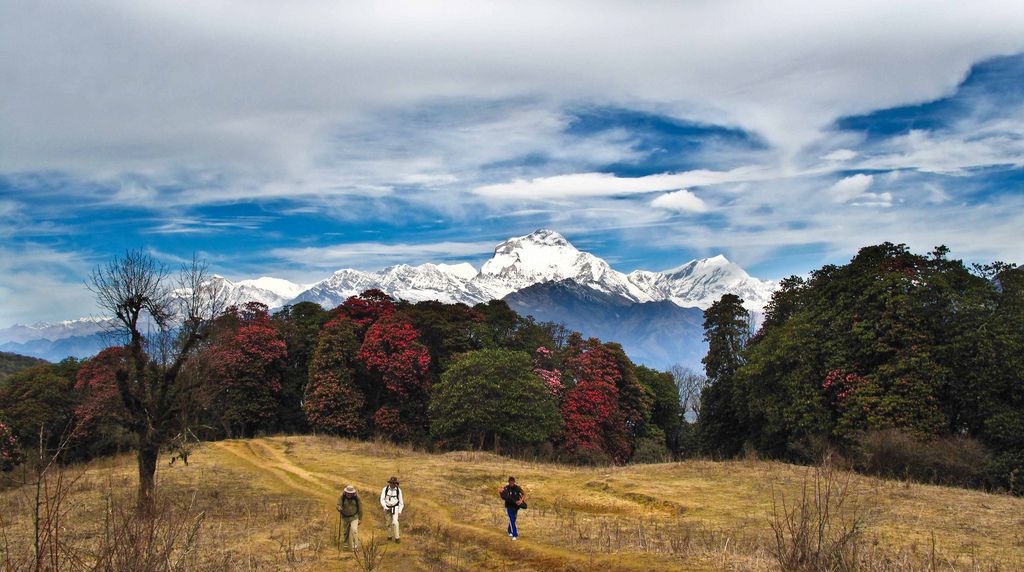
The Dhaulagiri South Base Camp Trek unfolds in distinct stages, each with its own character. The lower section, from Beni through Jhi and Ghyasikharka, winds through terraced farmland, waterfalls, and forested hillsides dotted with Magar settlements a gentler introduction that still demands 6 to 7 hours of walking on some days. As the trail climbs past Phedi Camp, the scenery shifts dramatically: dense rhododendron, pine, and bamboo forest gives way to open alpine slopes, and the accommodation shifts from homestays to tented camps, since no permanent lodges exist beyond this point.
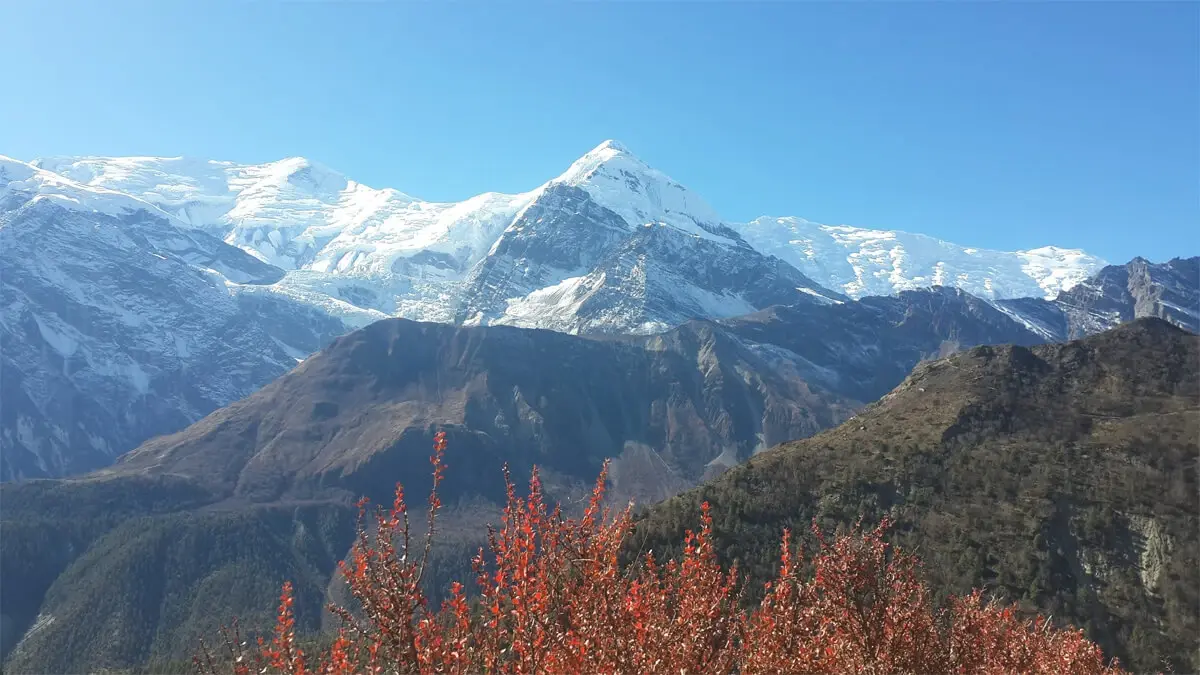
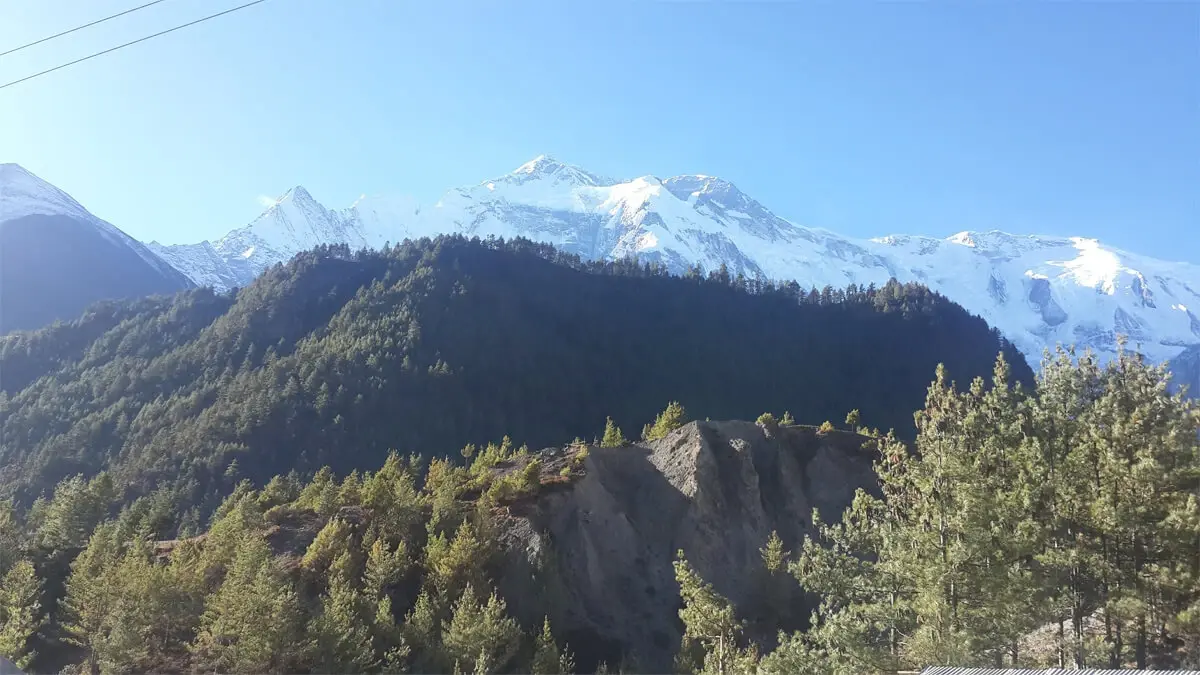
By the time you reach Odar Camp and push on toward Dhaulagiri South Base Camp, you’re walking through glacial moraine and high alpine terrain, with the massive southern face of Dhaulagiri dominating the skyline alongside views toward Annapurna, Nilgiri, Churen Himal, and Gurja Himal. It’s a landscape that feels genuinely remote a defining feature of the Dhaulagiri Sanctuary Trek that distinguishes it from more commercialized routes in Nepal.
People and Culture Along the Route
One of the most understated aspects of the Dhaulagiri Sanctuary Trek is the cultural exposure it offers. The lower and mid-elevation villages Jhi, Ghyasikharka, Chhari, and Dagnam are home to Magar communities, along with Chhantyal, Brahmin, and Chhetri households scattered through the region. Staying in local homestays rather than standardized lodges means trekkers get an authentic look at rural Himalayan life: home-cooked meals, traditional stone-roofed houses, and conversations with families whose lives are still closely tied to farming and the land.
This cultural immersion is a strong argument for choosing the Dhaulagiri Sanctuary Trek over more developed routes, where teahouse culture has, in many places, become fairly commercialized. Here, the hospitality feels personal rather than transactional, and it’s one of the details past trekkers on forums like TripAdvisor’s Nepal travel community consistently mention when discussing their experience on this trail.
Landscape and Biodiversity
The Dhaulagiri Sanctuary Trek passes through several distinct ecological zones, from subtropical river valleys near Beni to temperate pine and rhododendron forest, and finally into high alpine and glacial terrain near base camp. This range of habitats supports a notable diversity of wildlife, including Himalayan thar, musk deer, foxes, and occasionally signs of leopard activity in the forested mid-hills. Birdlife is similarly varied, particularly through the rhododendron and oak forest belts that come alive with color during the spring blooming season.
For trekkers interested in biodiversity as much as mountain views, this ecological range adds another layer to why the Dhaulagiri Sanctuary Trek is worth considering few other treks in Nepal pack such a variety of landscapes into a single route of this length.
Best Time for Dhaulagiri Sanctuary Trek
Timing matters significantly for this trek. The best time for the Dhaulagiri Sanctuary Trek falls into two windows: spring (March to May) and autumn (September to November). Spring brings blooming rhododendron forests across the lower and mid-elevation sections, along with generally stable weather for mountain visibility. Autumn, following the monsoon, tends to offer the clearest skies and the sharpest views of the Dhaulagiri massif and surrounding peaks. Trekking outside these windows particularly during the monsoon months of June to August is generally discouraged due to slippery trails, leech activity in the forest zones, and obscured mountain views.
Dhaulagiri Sanctuary Trek Cost and Difficulty
Understanding the Dhaulagiri Sanctuary Trek cost and difficulty together helps set realistic expectations before booking. Because the trail combines homestay and camping logistics, involves porter and guide support, and passes through a restricted area requiring special permits, the overall cost tends to run higher than a comparable teahouse trek of similar duration.
On the difficulty side, this is not a beginner-friendly walk expect 6 to 8 hours of walking on most days, some steep and slippery moraine sections near base camp, and basic camping conditions at higher elevations. That said, the altitude-related risk is comparatively manageable, since only one or two nights are spent above 2,500 metres.
Trekkers weighing the Dhaulagiri Sanctuary Trek cost and difficulty against other Nepal treks often find that the trade-off a higher price point and physical demand in exchange for solitude and authenticity is precisely the appeal for those seeking something off the standard circuit.
Who Should Do This Trek
The Dhaulagiri Sanctuary Trek suits trekkers who already have some high-altitude or multi-day trekking experience, are comfortable with basic camping conditions, and are drawn to remote, less-commercialized routes over well-developed ones. If you’re looking for your first trek in Nepal, routes like Poon Hill or the lower Annapurna region may be a gentler starting point. But for those who’ve done a base camp trek before and want to go somewhere quieter with the same scale of Himalayan grandeur but a fraction of the foot traffic this route delivers.
reks, largely because of the region’s rain-shadow position. The best time for Lower Mustang trek departures generally falls in spring (March to May) and autumn (September to November), when skies are clearest and mountain views are least likely to be obscured by cloud cover. What sets Lower Mustang apart from most Himalayan routes, however, is that it remains trekkable even during the summer monsoon, since the surrounding peaks block most of the rainfall that affects other regions of Nepal.
Trekking Similar to Dhaulagiri Sanctuary Trek
- Annapurna Circuit Trek: 15 Night – 16 Days
- Manaslu Circuit trek-14N/15D
- Everest Base Camp Trek- 12 Days/ 11 Night
Nepal Pilgrimage & Cultural Tours
- Buddhist Pilgrimage Tour 6 Nights / 7 Days
- Kathmandu, Pokhara & Muktinath 7 Nights / 8 Days
- 8 Days Culture, Wildlife & Heritage of Nepal
- Mani Rimdu Festival in Everest Region 11 Nights / 12 Days
- 1-Day Kathmandu UNESCO Heritage Tour with Complimentary Nagarkot Sunrise & Rani Jhula
Book Your Adventure Today
Ready to trade crowded trails for genuine Himalayan wilderness? The Dhaulagiri Sanctuary Trek offers a rare chance to stand at the base of the world’s seventh-highest peak, walk through remote Magar villages, and experience Nepal the way trekkers did before the popular routes became busy. Spots on this off-the-beaten-path adventure are limited, and permits for the restricted Dhaulagiri region need advance processing so early booking is strongly recommended, especially for the peak spring and autumn seasons.
Whether you’re trekking solo, with a partner, or organizing a small group, our experienced guides and porters are ready to take care of the logistics permits, camping gear, homestays, and meals so all you need to focus on is the journey ahead.
Get in touch today to reserve your dates, ask about custom itineraries, or request a free quote for the Dhaulagiri Sanctuary Trek.
Dhaulagiri Sanctuary Trek – 14 Days Highlights
- Trek to the South Base Camp of Mt. Dhaulagiri (8,167m), the world's seventh-highest peak
- Explore one of Nepal's least-trodden and newly-opened trekking routes, far from the crowds of Everest or Annapurna
- Panoramic Himalayan views of the Dhaulagiri Massif, Annapurna Range, Nilgiri, Churen Himal, and Gurja Himal
- Authentic homestay experience in remote Magar villages (Jhi, Ghyasikharka, Chhari, Dagnam)
- Walk through diverse landscapes — terraced farmland, waterfalls, rhododendron and bamboo forests, alpine meadows, and glacial moraine
- Chance to spot Himalayan wildlife such as musk deer, mountain goat, and signs of leopard
- Visit the historic trading town of Beni at the confluence of the Kaligandaki River and Myagdi Khola
- Relax at the natural hot spring of Tatopani in the Myagdi District
- Rich cultural immersion with the Kathmandu Valley UNESCO World Heritage tour (Pashupatinath, Boudhanath, Swayambhunath, Kathmandu Durbar Square)
- Low AMS risk compared to other 8,000m base camp treks, since only two nights are spent above 2,500m
- A true wilderness camping adventure combining remote trails with genuine local hospitality
Dhaulagiri Sanctuary Trek Route
The Dhaulagiri Sanctuary Trek route begins with a road journey from Kathmandu to Pokhara, and onward via Kushma to Beni, the historic Myagdi District headquarters set at the confluence of the Kaligandaki River and Myagdi Khola. From Beni, the trail leaves the road behind and climbs into the hills through Jhi and Ghyasikharka, passing terraced farmland and Magar villages before entering denser forest at Phedi Camp.
Beyond this point, the trail transitions from homestay to tented camping as it pushes higher through alpine terrain via Odar Camp, finally reaching the dramatic amphitheater of Dhaulagiri South Base Camp (4,050m) beneath the southern face of the world’s seventh-highest peak.
The return leg retraces a different line through the valley, descending from base camp through Chhari and Dagnam back down to Beni, where the trekking portion of the route concludes.
From here, the journey continues by road back to Pokhara and on to Kathmandu, completing a circular route through the Dhaulagiri Massif that sees far fewer trekkers than the neighboring Annapurna and Everest regions, offering a genuinely remote and immersive Himalayan experience from start to finish.
Include
- Airport pick-up and drop-off (international arrival and departure transfers)
- 3-night hotel accommodation in Kathmandu (or as per itinerary) on bed & breakfast basis
- 1–2 night hotel accommodation in Pokhara on bed & breakfast basis
- All ground transportation as per the itinerary (Kathmandu–Pokhara–Kushma–Beni–Jhi by private vehicle/jeep, and return)
- All necessary trekking permits (ACAP, Restricted Area Permit, TIMS card)
- Local homestay accommodation during the trek (Jhi, Ghyasikharka, Chhari, Dagnam)
- Tented camping accommodation at higher elevations (Phedi Camp, Odar Camp, Base Camp), including tents, kitchen tent, and dining tent
- All meals (breakfast, lunch, dinner) during the trekking days
- Experienced, government-licensed trekking guide
- Required porters to carry group and camping equipment
- Guide's and porters' salary, insurance, equipment, food, and accommodation
- Kathmandu Valley sightseeing tour with a licensed tour guide and private vehicle, including entrance fees to major sites
- All applicable government and local taxes
- First-aid kit carried by the guide
- Farewell dinner in Kathmandu
Exclude
- Nepal entry visa fees
- International airfare to and from Nepal
- Travel and health insurance (including high-altitude trekking and emergency evacuation coverage)
- Lunch and dinner in Kathmandu and Pokhara (unless otherwise specified)
- Personal trekking gear and equipment
- Extra porters beyond the standard allocation, if requested
- Tips/gratuities for guides, porters, and drivers
- Alcoholic beverages, soft drinks, bottled/boiled water, and hot showers during the trek
- Personal expenses (phone calls, laundry, battery charging, WiFi where available)
- Emergency evacuation costs (helicopter rescue, etc.), if required
- Extra costs arising from flight delays, itinerary changes, political disturbances, natural disasters, or other circumstances beyond the operator's control
- Any items not specifically mentioned under "Cost Includes"
Dhaulagiri Sanctuary Trek – 14 Days Itinerary
Your adventure begins with arrival at Tribhuvan International Airport in Kathmandu, where a representative will greet you and transfer you to your hotel. Kathmandu sits in a wide valley ringed by hills, and once you’ve settled in there’s time to relax after your flight or take a short stroll through the surrounding streets to get a first taste of Nepal. In the evening, a welcome briefing covers the days ahead, introduces your guide and crew, and gives you a chance to ask questions about gear, permits, and the route.
This is also a good time to have your trekking equipment checked so anything missing can be sourced in Kathmandu’s gear shops before departure.
After breakfast, you’ll head out on the scenic drive to Pokhara, Nepal’s second-largest city and gateway to the Annapurna and Dhaulagiri regions. The road winds along the Trishuli and Marsyangdi river valleys, passing terraced farmland, villages, and suspension bridges, with the first real glimpses of the Himalaya appearing as you approach the Pokhara valley. On a clear afternoon, the Annapurna and Machhapuchhre (Fishtail) peaks tower over the city and its lake. The rest of the day is free to explore Pokhara’s lakeside area, relax by Phewa Lake, or make final preparations for the trek.
Today’s drive takes you west from Pokhara along the Kaligandaki corridor toward Kushma, the headquarters of Parbat District, situated on the banks of the Kaligandaki River. The route offers views of terraced hillsides and rural settlements as the road descends gradually in elevation. From Kushma, you continue on to Beni, the bustling district headquarters of Myagdi and historically a trading post on the old route between Nepal and Tibet, set at the confluence of the Kaligandaki River and the Myagdi Khola.
Beni serves as the practical starting point for the trek, and you’ll spend the night here, using the time to organize permits, porters, and last-minute supplies before heading into the hills.
Leaving Beni, you follow a jeep road along the Myagdi Khola valley before the trail proper begins, climbing gradually through terraced fields, Magar villages, and forest patches toward Jhi. The walking is moderate, with pleasant views of the valley and surrounding waterfalls opening up as you gain height. Jhi is a small rural settlement where the trail leaves the last of the wider vehicle tracks behind; you’ll typically overnight in a local homestay, giving you a chance to experience village life and Magar hospitality firsthand before the trek pushes into more remote territory.
This is one of the longer walking days of the trek, taking roughly six to seven hours as the trail climbs steadily through dense forest, past scattered farms and small hamlets. The path gains and loses elevation repeatedly, weaving through rhododendron and pine woodland with occasional clearings that reveal views of the surrounding ridgelines. Ghyasikharka marks the edge of the more settled part of the valley, and beyond this point the trail becomes noticeably quieter and wilder. You’ll again stay in a homestay or simple tented camp, enjoying a restful evening before the trek moves into higher, less inhabited terrain.
From Ghyasikharka the trail continues its gradual ascent into thicker forest, climbing through rhododendron, bamboo, and pine stands that are home to Himalayan wildlife such as musk deer and occasionally mountain goat or leopard signs. This six-hour stretch marks the point where teahouse-style accommodation ends and the trek transitions to tented camping, since there are no permanent lodges beyond this point. Phedi Camp sits in a forested clearing and serves as a natural staging point before the trail climbs into the alpine zone; the crew will set up camp while you have time to rest and acclimatize.
Today’s roughly six to seven hour walk takes you out of the forest belt and into more open, alpine terrain as the trail climbs steadily above Phedi Camp. The vegetation thins with altitude, giving way to scrub and rocky slopes, and the first clear views of the Dhaulagiri massif and neighboring peaks such as Churen Himal and Gurja Himal begin to appear. Odar Camp is set in this high alpine landscape, and the noticeable gain in elevation from the previous days makes this a good stage to move at a steady pace and stay well hydrated as you acclimatize further before pushing on to the base camp itself.
The most anticipated day of the trek, this seven to eight hour walk climbs through high alpine and glacial terrain to reach the South Base Camp of Mt. Dhaulagiri. As you gain altitude the trail skirts moraine and rocky ground with the sheer southern flank of Dhaulagiri dominating the skyline, alongside sweeping views across the Dhaulagiri massif toward Annapurna, Nilgiri, and other peaks of the Myagdi Himal.
Reaching base camp, at over 4,000m, is the trek’s high point both literally and figuratively; the sense of scale standing beneath the world’s seventh-highest mountain, largely undisturbed by crowds, is the reward for the previous days of steady climbing. You’ll camp overnight here, with time to soak in the mountain panorama before starting the descent.
Leaving the high mountain amphitheater behind, today begins the descent back toward the lower valleys. The roughly seven-hour walk drops steadily in elevation, retracing alpine slopes back into forested terrain as the trail loses well over 2,000 meters over the course of the day and the following stages. Chhari is a small settlement where you’ll typically find homestay or simple camp accommodation, and the drop in altitude usually brings noticeably warmer, more comfortable conditions after the cold nights at base camp and Odar.
Continuing the descent, this day’s roughly seven-hour walk takes you further down through forest and terraced farmland toward Dagnam, a village lower in the valley system. The trail becomes progressively gentler as you re-enter more populated country, passing through rural communities that offer a contrast to the wilderness of the days spent near base camp. Overnight is spent in a local homestay in Dagnam, marking the last night of true trekking on the route.
From Dagnam, a shorter trek or drive brings you back down to Beni, where the trekking portion of the journey officially concludes. From Beni, you’ll continue by road back to Pokhara, retracing the route along the Kaligandaki valley. Arriving in Pokhara in the afternoon or evening, you’ll have the chance to enjoy a hot shower, a proper bed, and the relaxed lakeside atmosphere of the city after eight days in the mountains.
After breakfast, you’ll take the drive (or an optional short flight) back to Kathmandu, retracing the hill and river valley scenery from earlier in the trip. The rest of the day is free for rest, shopping in areas like Thamel, or simply relaxing after the physical demands of the trek. This is also a good buffer day in case of any schedule adjustments needed due to weather or road conditions earlier in the trip.
With the trekking complete, today is dedicated to exploring Kathmandu Valley’s rich cultural heritage. A guided tour typically covers a selection of UNESCO World Heritage Sites such as the ancient temples of Pashupatinath, the Buddhist stupa of Boudhanath, Swayambhunath (the “Monkey Temple”) overlooking the city, and the historic Kathmandu Durbar Square with its palaces and pagoda temples. It’s a chance to reflect on the trek while learning about Nepal’s Hindu and Buddhist traditions, architecture, and history. The evening can be spent enjoying a farewell dinner, often featuring traditional Nepali cuisine and cultural performances.
On your last day, depending on your flight schedule, you’ll have some free time for any final souvenir shopping or last impressions of the city before being transferred to Tribhuvan International Airport for your departure flight home, bringing the Dhaulagiri Sanctuary Trek adventure to a close.
Video
Dhaulagiri Sanctuary Trek – Packing List
Dhaulagiri Sanctuary Trek – 14 Days FAQs
The Dhaulagiri Sanctuary Trek is a remote, off-the-beaten-path trekking route in western Nepal that leads to the South Base Camp of Mt. Dhaulagiri (8,167m), the seventh-highest mountain in the world. It’s a relatively newly established route through the Myagdi District, first opened to trekkers around October 2015, and combines homestays in Magar villages with camping at higher elevations.
It’s generally rated moderate to strenuous, requiring 6–8 hours of walking on most days over varied terrain forest trails, steep ascents, and rocky, sometimes slippery ground near the glacial moraine close to base camp. It doesn’t demand technical climbing skills, but a good level of fitness and prior trekking experience is recommended.
Itineraries vary by operator, typically ranging from about 10 to 14 days depending on how many days are included for Kathmandu–Pokhara transport, acclimatization, and the Kathmandu Valley cultural tour at the end
The highest point is Dhaulagiri South Base Camp, at approximately 4,050–4,055m.
The risk is comparatively lower than on many other Himalayan base camp treks, since trekkers typically spend only one or two nights above 2,500m (at Odar Camp and Base Camp). Even so, proper acclimatization, hydration, and awareness of AMS symptoms are still important.
The trek uses a mix of hotels in Kathmandu and Pokhara, local homestays in the lower villages (Jhi, Ghyasikharka, Chhari, Dagnam), and tented camps at higher elevations (Phedi Camp, Odar Camp, and Base Camp), since permanent teahouse lodges aren’t established along the full route yet
Spring (March–May) and autumn (September–November) are considered the best seasons, offering clearer mountain views and more stable weather. Spring also brings rhododendron blooms along the lower trail sections.
Trekkers generally need an Annapurna Conservation Area Permit (ACAP) and a Restricted Area Permit for the Dhaulagiri region, along with a TIMS card. Permit rules for restricted areas can change, so it’s worth confirming current requirements with a licensed trekking agency before departure.
The trek typically begins with a road journey from Kathmandu to Pokhara, then on to Beni via Kushma, followed by a jeep drive and short trek to Jhi, where the main trekking trail begins.
No — it’s frequently described as one of the least-trekked routes in Nepal, offering a genuine wilderness experience with very few other trekkers on the trail compared to Everest or Annapurna region routes.
The forested sections are home to species such as Himalayan thar, musk deer, foxes, and occasionally signs of leopard, alongside diverse birdlife across the pine, oak, bamboo, and rhododendron forest zones.
Views along the route include Dhaulagiri I, the wider Dhaulagiri Massif, the Annapurna Range, Nilgiri, Churen Himal, Gurja Himal, Manapathi, and Tukuche Peak, among others.
Yes — travel insurance covering high-altitude trekking and emergency evacuation is strongly recommended, since the route passes through remote terrain with limited access to medical facilities.
Connectivity is limited to nonexistent for much of the route, particularly from Phedi Camp onward, so trekkers should expect to be largely off-grid during the higher camping stages.
Reviews
No reviews found.